
Explore gemstone geology and discover how natural gemstones are created within the Earth, from mineral crystallisation and geological processes to the environments in which gem deposits form. Learn how pressure, temperature, chemistry and geological time shape the natural gemstones we see today.
Latest Gemstone Geology Articles
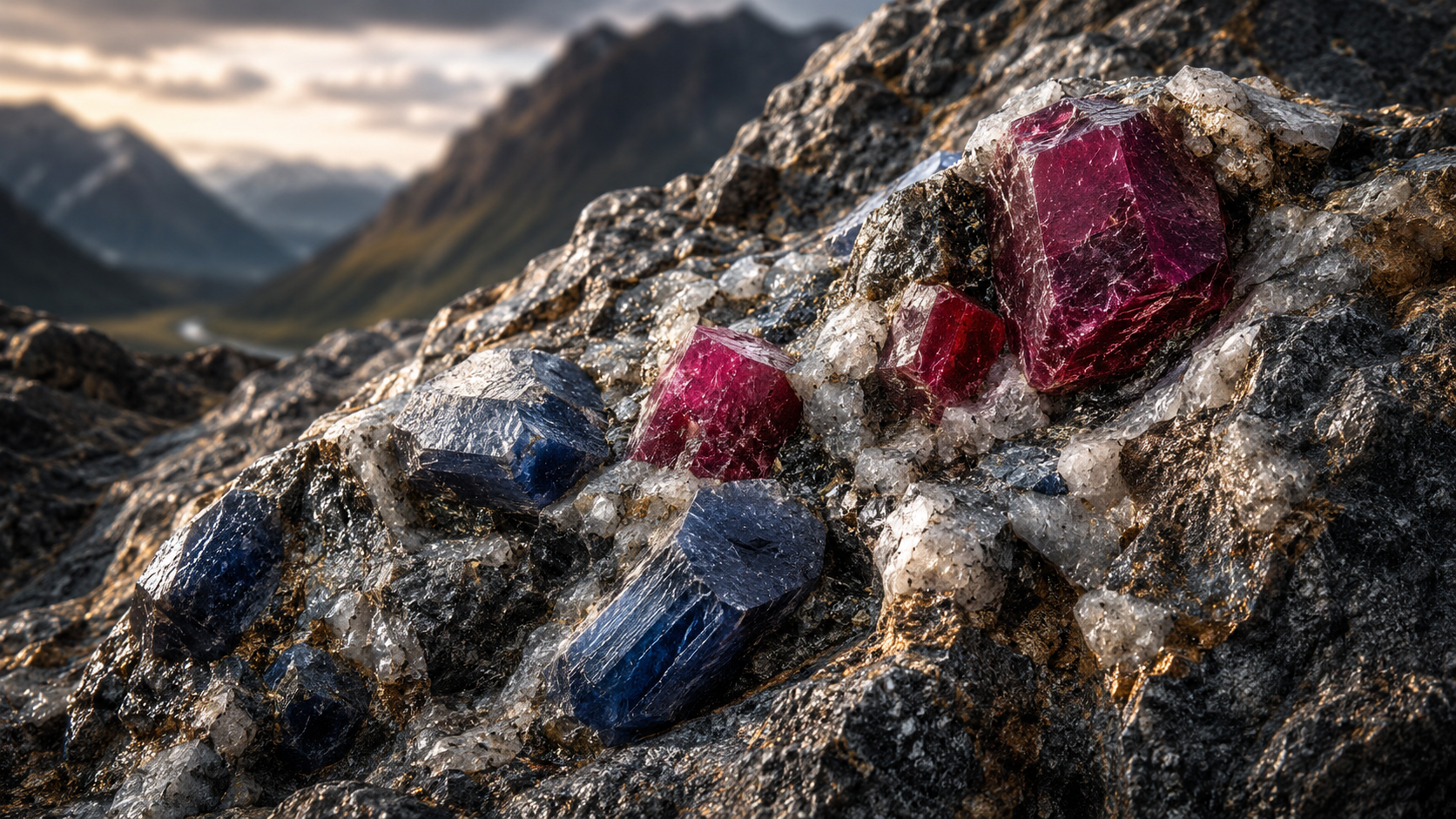
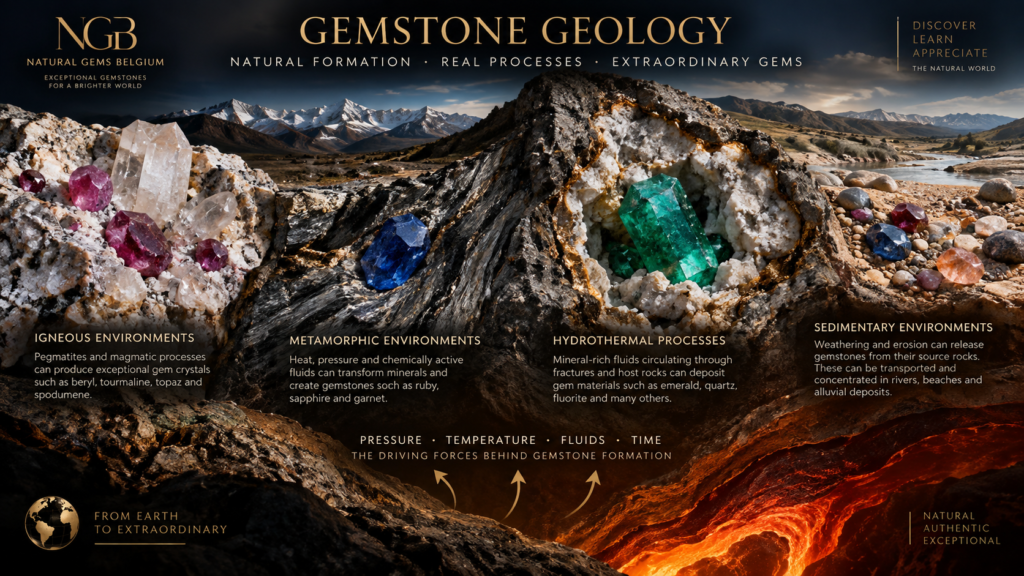
Natural gemstones are the products of geological processes that can operate over immense periods of time. Their formation depends on specific combinations of chemical composition, temperature, pressure, available fluids and geological environment. Igneous activity, metamorphism, hydrothermal processes, sedimentary environments and weathering can each contribute to the formation or concentration of gem-quality minerals.
The Natural Gems Belgium Geology & Gem Formation articles explore how minerals crystallise, where gemstone deposits occur and why particular geological environments produce specific gem materials. Topics include crystal growth, mineral chemistry, host rocks, pegmatites, metamorphic environments, hydrothermal systems, secondary deposits and the geological processes that can influence colour, inclusions and other characteristics observed in natural gemstones.
Understanding gemstone geology provides an important foundation for gemmology because many features seen within a finished stone originate during its formation or subsequent geological history. As this section develops, gemstone-specific articles will connect geological origin with mineral structure, identification and natural characteristics, providing a scientifically grounded view of how gem materials form within the Earth and eventually reach the surface.
