

Table of Contents
Introduction: A Crystal Can Preserve Its Own Growth History
A natural gemstone is not always chemically or optically uniform throughout its interior.
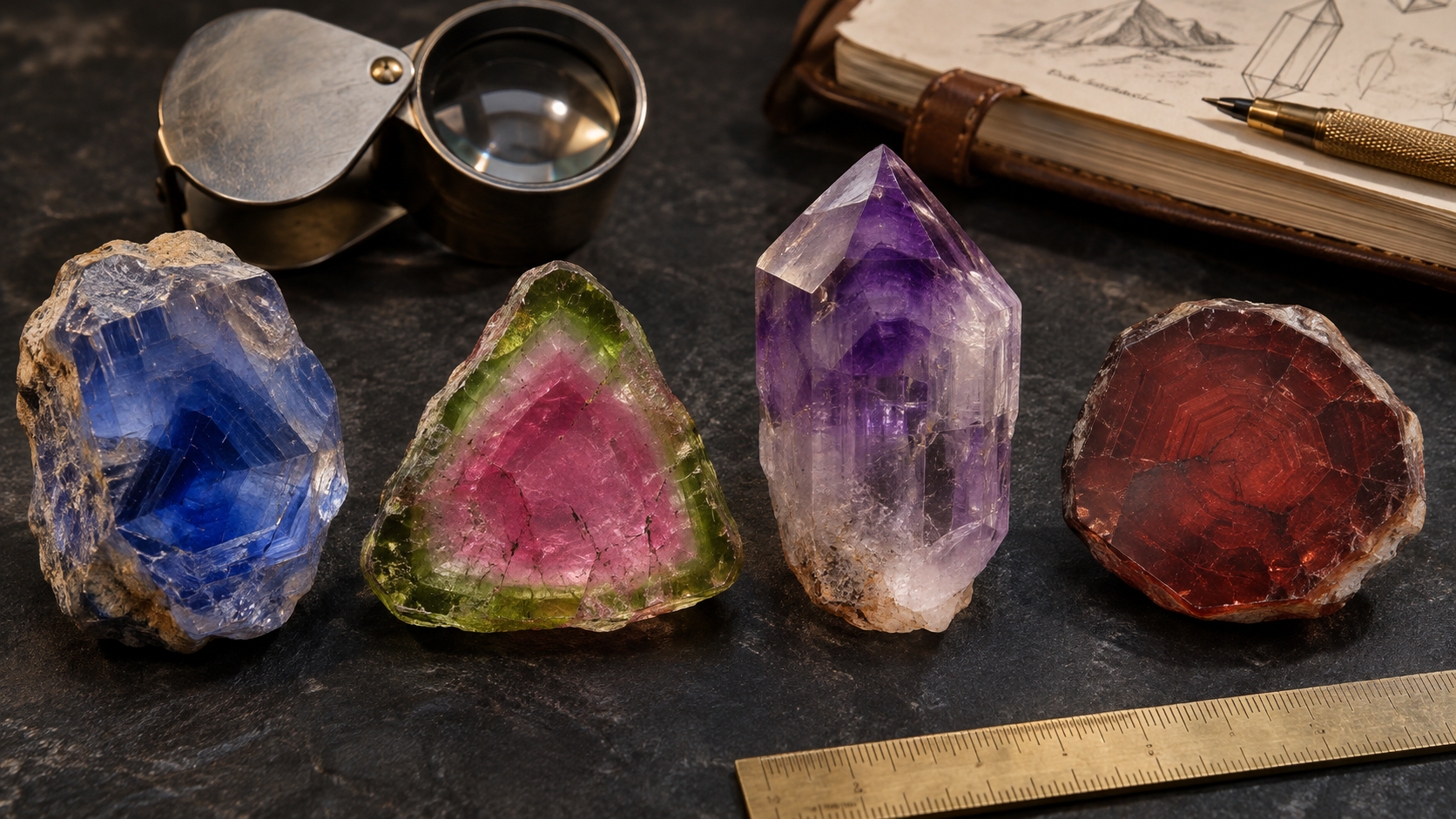
Some sapphires display angular blue and colourless bands. Tourmaline may contain green outer zones surrounding a pink centre. Garnet crystals can preserve variations in chemical composition from their cores to their rims, even when those differences are not visible to the naked eye.
These features are examples of zoning.
Zoning is particularly interesting because crystals grow through the progressive incorporation of atoms and ions into an ordered structure. If the growth environment changes, the material incorporated at one stage may differ from that incorporated earlier or later.
The resulting variations can sometimes remain preserved within the crystal.
They may record changes in fluid composition, chemical availability, crystallographic growth conditions or the geological environment.
However, an important distinction is necessary.
Not every visible colour band represents a separate growth event. Not every chemical zone is visible. And not every pattern inside a gemstone can be used to determine its geographical origin.
To understand gemstone zoning scientifically, we must distinguish between several related phenomena.
1. What Is Gemstone Growth Zoning?
Growth zoning refers to variations in composition, structure or certain physical characteristics that develop during crystal growth.
As a crystal enlarges, newly incorporated material may differ from material already present.
The differences can be preserved as zones within the crystal.
These zones may follow earlier crystal surfaces, develop in particular crystallographic sectors or occur as repeated bands.
Some zoning is visible because different regions absorb light differently.
Other zoning requires specialised analytical methods.
Growth zoning is therefore broader than visible colour zoning.
A crystal can be chemically zoned without displaying obvious colour differences.
Likewise, a gemstone may contain visually distinct colour regions whose appearance was modified after the original crystal growth.
The central scientific question is not merely whether zones exist, but how and when they formed.
2. Colour Zoning Versus Chemical Zoning
Colour zoning describes an uneven distribution of colour within a gemstone.
For example, a sapphire may contain alternating pale and dark blue regions.
A tourmaline crystal may show green and pink areas.
An amethyst crystal may have strongly coloured regions adjacent to nearly colourless quartz.
Chemical zoning describes variations in the concentrations of elements or chemical components within a crystal.
The two phenomena can be related.
If the concentration of a colouring element changes during growth, the resulting chemical variation may produce visible colour zoning.
However, the relationship is not universal.
Some chemical changes involve elements that do not significantly influence visible colour.
Other colour variations depend on oxidation states, defect-related electronic structures or later radiation effects.
Therefore, visible colour is not a complete map of chemical composition.
A scientifically responsible interpretation must distinguish observable colour distribution from measured chemical zoning.
3. Why Does Crystal Chemistry Change During Growth?
Crystal growth depends on the surrounding chemical environment.
In a hydrothermal system, a mineral may grow from a fluid containing dissolved chemical components.
In a magma, crystallising minerals interact with an evolving melt.
During metamorphism, minerals may grow as chemical reactions proceed within a rock.
The supply and relative abundance of elements can change.
Temperature and pressure may also evolve.
The crystal itself can influence the local chemical environment by selectively incorporating particular elements.
These processes may produce variations between successive growth zones.
However, zoning does not necessarily mean that a crystal experienced a dramatic external geological event.
Changes can also arise from local growth processes, chemical transport or interactions at the crystal surface.
The interpretation depends on the mineral and geological context.
4. What Is Oscillatory Growth Zoning?
Oscillatory zoning consists of repeated variations in composition or another growth-related property.
These variations may form alternating bands or shells.
The pattern can sometimes resemble a sequence of concentric layers.
Oscillatory zoning may develop through fluctuations in chemical availability, growth rate, transport conditions or processes at the crystal-fluid interface.
In some systems, zoning can emerge through feedback during crystal growth without requiring repeated large-scale geological disturbances.
This is an important qualification.
A crystal containing many bands does not necessarily record an equal number of separate geological events.
Nor can the number of bands be directly converted into years.
Growth may have occurred continuously, intermittently or at variable rates.
The interpretation of oscillatory zoning requires more than counting visible layers.
5. Sector Zoning: Different Faces, Different Chemistry
Sector zoning develops when different crystallographic growth sectors incorporate chemical components differently.
A crystal grows through the advancement of particular crystal faces.
The atomic arrangements and surface properties of those faces can influence how trace elements are incorporated.
Consequently, two sectors growing at approximately the same time may develop different compositions.
This is different from zoning caused solely by changes over time in the surrounding fluid.
Sector zoning may produce geometric patterns that correspond to crystallographic directions.
It can be especially important when interpreting angular colour distributions.
However, an angular pattern does not automatically prove sector zoning.
Other growth features, twinning and later modifications may produce superficially similar appearances.
The distinction requires appropriate crystallographic or analytical evidence.
6. Growth Interruptions and Resorption
Crystal growth is not always continuous.
A crystal may stop growing temporarily.
The surrounding environment may become unsuitable for further deposition.
Under some conditions, part of the existing crystal may dissolve.
This process is known as resorption.
Growth may subsequently resume.
The boundary between earlier and later growth can sometimes remain visible.
It may be marked by inclusions, changes in composition or differences in growth structure.
A resorbed surface can be irregular rather than following the smooth geometry of a simple growth band.
However, a visible boundary does not automatically demonstrate dissolution.
It may instead reflect a change in growth conditions or incorporation of inclusions.
The geological interpretation must remain evidence-based.
7. Sapphire: Angular Bands and Uneven Colour
Sapphire is a variety of corundum, Al₂O₃.
Blue sapphire commonly owes its colour to interactions involving iron and titanium.
Natural sapphires may display angular or geometric colour zoning.
These patterns can reflect crystal growth and variations in the incorporation of colouring components.
GIA has documented the importance of colour zoning when evaluating sapphire rough and planning faceted gemstones.
Some sapphires contain alternating darker and lighter regions.
Others display different hues in separate zones.
Parti-coloured sapphires may show blue, green, yellow or other combinations.
The appearance of the finished gemstone depends partly on how these zones are positioned relative to the cut.
However, angular colour zoning alone cannot establish a sapphire’s precise geographical origin.
Nor does it prove that the stone is untreated.
Synthetic corundum can also display growth-related features, although their patterns may differ depending on the manufacturing method.
Correct interpretation requires the combined evaluation of growth structures, inclusions, treatments and other gemmological evidence.
8. Why Colour Zoning Matters to Sapphire Cutters
A rough sapphire may contain an attractive colour concentrated in only part of the crystal.
The cutter must consider how that colour will appear through the finished stone.
A strongly coloured zone may contribute desirable saturation.
A nearly colourless region may reduce the overall visual intensity.
The cutter may orient the stone to improve face-up colour while balancing weight retention and optical performance.
Sometimes a colour band can be positioned so that its effect is less obvious when the stone is viewed from above.
In other cases, zoning remains clearly visible.
GIA identifies face-up colour uniformity as an important quality factor for many coloured gemstones.
However, unusual zoning can also be desirable when it produces an attractive multicoloured effect.
The evaluation therefore depends on both the material and the intended aesthetic result.
9. Tourmaline: A Remarkable Record of Chemical Variation
Tourmaline belongs to a chemically complex mineral supergroup.
Many gem-quality tourmalines develop in granitic pegmatites.
Their chemical compositions can vary considerably.
Tourmaline is particularly well known for pronounced colour zoning.
Some crystals display different colours along their length.
Others contain contrasting zones across their cross-section.
GIA’s 2024 research on tourmaline micro-features describes colour zoning associated with changes in the nutrient solution during crystallisation.
Such zoning can preserve evidence of changing chemical conditions.
However, the colour pattern alone does not reveal a complete chemical history.
Different colouring mechanisms may operate in different tourmaline varieties.
A full interpretation may require chemical analysis and knowledge of the specimen’s geological context.
10. Watermelon Tourmaline: Core and Rim Zoning
Watermelon tourmaline is a familiar example of visually striking zoning.
The classic appearance consists of a pink or reddish interior surrounded by green outer material.
This arrangement resembles a watermelon cross-section.
The colour pattern reflects differences in the colouring conditions of the crystal’s growth regions.
However, not every green-and-pink tourmaline has the same zoning geometry.
Some specimens display longitudinal zoning.
Others have irregular or more complex distributions.
The term watermelon tourmaline describes an appearance rather than a separate mineral species.
For collectors, the contrast and completeness of the zones can contribute to aesthetic appeal.
For gemmologists, the zoning provides an opportunity to study relationships between colour, chemistry and crystal growth.
11. Quartz and Amethyst: Growth Structure and Purple Colour
Quartz is silicon dioxide, SiO₂.
Amethyst is its purple variety.
Amethyst colour involves iron-related defects and irradiation-related processes.
Purple colour may be distributed unevenly within the crystal.
Some amethyst specimens display zones related to crystallographic growth sectors.
Others contain more complex colour distributions.
The visible pattern can reflect both the distribution of relevant defects and the subsequent processes that produce colour.
This is why amethyst colour zoning should not automatically be interpreted as a simple sequence of changing fluid colours.
The crystal may have developed structural or chemical differences during growth, while its visible purple colour was influenced by later irradiation.
Understanding the distinction is essential when discussing amethyst formation.
12. Brazil-Law Twinning Is Not the Same as Growth Zoning
Amethyst frequently exhibits Brazil-law twinning.
This involves a specific crystallographic relationship between right-handed and left-handed quartz structures.
Twinning can produce patterns visible under suitable polarised-light conditions.
However, twinning is not identical to colour zoning.
A twin boundary describes a structural relationship.
A colour boundary describes a change in optical appearance.
The two may be associated in some specimens, but they are not interchangeable concepts.
GIA research has demonstrated that Brazil-law twinning is relevant to natural and synthetic quartz investigations.
Importantly, experimental synthetic quartz has also been produced with Brazil-law twinning.
Therefore, the presence of this feature alone should not be treated as absolute proof of natural origin.
A reliable conclusion requires several independent observations.
13. Ametrine: Two Colours Within One Quartz Crystal
Ametrine contains both purple amethyst and yellow-to-orange citrine colour regions within the same quartz material.
The contrasting colours are associated with differences in iron-related colour mechanisms.
The distribution may be related to crystallographic growth sectors and the conditions under which colour developed.
GIA has discussed ametrine as an example in which distinct colour zoning is intentionally incorporated into gemstone design.
A cutter may orient the material to display both colours.
Some finished stones show relatively sharp boundaries.
Others produce more blended appearances.
Ametrine demonstrates that colour zoning is not always a negative commercial characteristic.
When the contrast is attractive, it may become the defining feature of the gemstone.
However, the presence of purple and yellow zones alone does not establish natural origin or exclude treatment.
14. Garnet: Chemical Zoning Without Obvious Colour Bands
Garnet provides a particularly important geological example.
Many garnets form during metamorphism.
As a garnet crystal grows, its composition may change in response to evolving mineral reactions and chemical conditions.
The resulting variations may involve elements such as iron, magnesium, manganese and calcium.
These changes are not necessarily visible as distinct colour bands.
Instead, they can be detected using analytical techniques.
Research published in the Journal of Metamorphic Geology in 2020 examined growth zoning in garnet porphyroblasts from Scottish metamorphic rocks.
The study demonstrated that garnet zoning can be influenced by local chemical conditions and relationships with surrounding minerals.
This is significant because chemical zoning can help geologists investigate metamorphic processes.
However, interpreting the zoning requires appropriate models and geological context.
A simple core-to-rim chemical profile cannot automatically be translated into a unique temperature-pressure history.
15. Core-to-Rim Profiles: Reading Chemical Variation
A core-to-rim profile measures how composition changes from the interior of a crystal toward its outer regions.
In a relatively simple growth history, the core may represent earlier crystallisation and the rim later growth.
However, this interpretation requires care.
Crystals can undergo resorption.
They may experience later chemical diffusion.
Some can develop replacement textures or complex growth histories.
The original zoning may therefore be modified.
A chemical profile is evidence that must be interpreted alongside textures, mineral assemblages and geological relationships.
It is not a direct chronological scale.
Without independent age information, the distance between zones does not establish the duration of growth.
16. Can Zoning Reveal Temperature and Pressure?
Under appropriate conditions, chemical zoning can contribute to the reconstruction of geological temperature and pressure histories.
This is particularly important in metamorphic petrology.
Mineral compositions may reflect equilibrium or disequilibrium relationships with surrounding phases.
Geologists use thermodynamic models and mineral chemistry to evaluate possible formation conditions.
However, zoning alone does not provide an exact temperature or pressure.
Several different processes may produce similar compositional patterns.
Later diffusion or recrystallisation can complicate the interpretation.
Therefore, claims that a particular colour band proves an exact geological temperature should be treated cautiously.
A scientifically defensible interpretation requires multiple lines of evidence.
17. Can Growth Zoning Determine Gemstone Origin?
Growth zoning can contribute useful evidence in gemstone identification.
Certain patterns may be associated with particular geological environments or growth processes.
However, similar zoning can occur in gemstones from different localities.
A blue sapphire with angular bands cannot be assigned confidently to one country solely from that feature.
A colour-zoned tourmaline does not automatically reveal its mine.
A garnet’s chemical profile may help reconstruct metamorphic history, but geographical provenance requires additional context.
Professional origin determination may combine microscopic features, trace-element chemistry, spectroscopy and reference collections.
Even then, conclusions can have limitations.
Growth zoning is therefore one component of gemmological evidence, not a universal geographical fingerprint.
18. Natural Versus Synthetic Growth Features
Natural and synthetic gemstones both grow through crystallisation processes.
Consequently, both can contain growth structures.
Some synthetic corundum produced by flame fusion displays curved growth striae or curved colour zoning.
Certain natural sapphires commonly show angular growth features.
However, this distinction should not be applied mechanically to every specimen.
Different synthetic growth methods can produce different patterns.
Natural gemstones may also contain complex or unusual structures.
A single growth feature is rarely sufficient for a definitive conclusion.
Reliable identification requires consideration of the full internal feature assemblage and, when necessary, advanced laboratory testing.
The same caution applies to quartz.
GIA’s research on synthetic Brazil-twinned quartz demonstrates why apparently diagnostic growth features must be interpreted within a broader evidence framework.
19. How Laboratories Study Growth Zoning
Growth zoning can be investigated using several complementary methods.
Standard gemmological microscopy may reveal visible colour bands, growth planes and associated inclusions.
Polarised-light observations can help investigate certain structural features.
Chemical analysis may reveal variations that cannot be seen visually.
Electron-probe microanalysis can measure chemical differences across selected regions of a mineral.
Laser-ablation inductively coupled plasma mass spectrometry can provide trace-element information at selected analytical locations.
Spectroscopic methods can help investigate particular colouring mechanisms and structural defects.
Each method has limitations.
Some require specialised equipment.
Certain chemical techniques remove tiny quantities of material.
A professional laboratory selects methods according to the question being investigated and the value or condition of the specimen.
For ordinary collectors, non-destructive observation is generally the appropriate starting point.
20. Why Zoning May Be Invisible in a Finished Gemstone
A rough crystal may display strong zoning that becomes difficult to recognise after cutting.
The final appearance depends on viewing direction, facet arrangement and the distribution of coloured regions.
Light can travel through several parts of the gemstone before reaching the observer.
Facets may redirect light through differently coloured zones.
As a result, a stone with uneven internal colour distribution can appear relatively uniform face-up.
Conversely, a particular cut may emphasise zoning.
This explains why examining a gemstone only from above does not always reveal its internal colour distribution.
Professional assessment may include observations from several directions.
However, an apparently uniform face-up colour does not prove that the crystal is chemically homogeneous.
21. When Zoning Adds Beauty and Value
Colour uniformity is generally desirable in many fine faceted gemstones.
Visible uneven colour can reduce aesthetic appeal when it creates distracting patches or unwanted contrasts.
However, this is not universal.
Parti-coloured sapphires can be intentionally selected for their contrasting hues.
Watermelon tourmaline is admired for its pink-and-green structure.
Ametrine is valued for the coexistence of purple and yellow regions.
Certain mineral specimens are collected specifically because they display growth bands or complex internal patterns.
The importance of zoning therefore depends on the gemstone category and intended use.
For a conventional blue sapphire, strong face-up zoning may be undesirable.
For a deliberately designed multicoloured gemstone, distinctive zoning may be its principal attraction.
The scientific phenomenon is the same general category of observation, but its commercial significance differs.
22. Growth Zoning and Rough Gemstone Evaluation
Growth zoning is particularly relevant when evaluating rough gemstones for faceting.
A cutter must consider the distribution of colour throughout the available material.
A strongly coloured region may be small relative to the total rough weight.
Some zones may be positioned near fractures or unsuitable cutting areas.
The best cutting orientation for colour may conflict with the orientation required for weight retention.
In tourmaline, longitudinal or cross-sectional zoning may influence whether the finished gemstone is cut to emphasise one colour or display several.
In sapphire, angular bands can affect the face-up appearance.
In ametrine, the desired visual balance between purple and yellow may influence the cutting design.
For collectors of natural rough, the zoning itself may be part of the specimen’s interest.
Thus, the same feature can influence faceting potential and decorative appeal differently.
23. Common Misconceptions About Gemstone Zoning
Every colour band represents a separate geological event.
Incorrect. Zoning can arise through local growth processes and chemical fluctuations without distinct large-scale events.
Every visible colour band is a chemical growth zone.
Incorrect. Colour may also be influenced by structural defects or later processes.
Chemical zoning must be visible.
Incorrect. Many chemical variations require analytical instruments.
Angular zoning proves a sapphire is natural.
Incorrect. Growth features must be interpreted alongside other evidence.
Growth zoning identifies the country of origin.
Incorrect. Similar patterns may occur in different geological environments.
More growth bands mean an older gemstone.
Incorrect. Band number is not a direct measure of elapsed time.
Colour zoning always reduces gemstone value.
Incorrect. Some gemstones are valued specifically for attractive multicoloured zoning.
Brazil-law twinning always proves natural amethyst.
Incorrect. GIA has documented experimental synthetic quartz with Brazil-law twinning.
A uniform-looking gemstone contains no chemical zoning.
Incorrect. Chemical variations may remain invisible.
24. Practical Workshop: Documenting Growth Zoning Safely
This workshop is intended for collectors, gemstone enthusiasts and students.
It involves observation rather than destructive testing.
Step 1 – Identify the material
Record the gemstone species or variety as reliably as possible.
If identification is uncertain, avoid assigning a specific zoning mechanism.
Step 2 – Select suitable lighting
Use moderate, diffuse white illumination.
Transparent specimens may be examined with transmitted light where appropriate.
Avoid unnecessary intense ultraviolet exposure or heat.
Step 3 – Examine the gemstone from different directions
Rotate the specimen carefully.
Observe whether the colour pattern changes with viewing direction.
Step 4 – Record the shape of the zones
Are the boundaries angular, straight, curved, concentric or irregular?
Describe what is visible without immediately assigning a cause.
Step 5 – Distinguish colour from structural features
A visible line may represent a growth boundary, inclusion plane, fracture or twin feature.
Do not assume that every line is colour zoning.
Step 6 – Photograph the specimen
Use consistent lighting and a scale reference.
For transparent stones, photograph the specimen from several directions.
Step 7 – Record uncertainties
Use terms such as “visible angular colour zoning” rather than claiming an exact geological history.
Step 8 – Preserve the material
Do not cut, heat, irradiate or chemically treat valuable specimens merely to investigate zoning.
Step 9 – Seek laboratory analysis when appropriate
If the purpose is origin determination, treatment assessment or detailed geological interpretation, consult a qualified laboratory.
The aim is to document observable characteristics accurately while recognising the limits of visual examination.
25. Growth Zoning and Scientific Transparency
Growth zoning is a valuable feature in natural gemstones, but it is frequently oversimplified.
Descriptions sometimes claim that every visible band proves ancient geological changes.
Others suggest that zoning automatically confirms natural origin.
Neither claim is sufficiently precise.
A responsible description should distinguish observation from interpretation.
For example, a sapphire may be described as displaying angular blue colour zoning.
A tourmaline may be described as possessing a pink core and green outer zone.
An amethyst crystal may be described as showing uneven purple colour distribution.
A garnet may be described as chemically zoned only when appropriate evidence supports that conclusion.
Claims about exact formation conditions, treatment history or geographical origin require additional investigation.
Scientific transparency does not diminish the beauty of a gemstone.
It allows that beauty to be understood within the limits of available evidence.
Conclusion: Crystal Layers Are Evidence, Not a Complete Geological Diary
Gemstone growth zoning provides a remarkable window into mineral formation.
Some crystals preserve changes in chemical composition as they grow.
Others display visible colour bands related to the distribution of colouring elements or structural defects.
Oscillatory zoning can record repeated variations during growth.
Sector zoning can reflect differences between crystallographic growth faces.
Growth interruptions and resorption may create additional internal boundaries.
Sapphire, tourmaline, quartz and garnet demonstrate how varied these phenomena can be.
However, zoning must be interpreted carefully.
Visible colour is not always equivalent to chemical composition.
A growth band is not automatically a separate geological event.
The number of bands does not reveal a crystal’s age.
And zoning alone rarely establishes natural origin, treatment history or geographical provenance.
The most important scientific principle is this:
Growth zoning can preserve evidence of how a crystal developed, but its geological meaning must be established through appropriate mineralogical context and analysis.
For collectors, zoning adds another dimension to the appreciation of natural gemstones.
For cutters, it influences colour distribution and cutting decisions.
For geologists, it can contribute to the reconstruction of mineral-forming processes.
And for responsible gemstone descriptions, it provides an opportunity to communicate observable natural characteristics accurately, without extending the evidence beyond what it can support.
References & Further Reading
The following references are authoritative scientific and educational publications from the Gemological Institute of America, its peer-reviewed journal Gems & Gemology, and academic geological research. They address gemstone colour zoning, growth features, chemical variation, crystallographic twinning and mineral formation.
1. Gemological Institute of America – Colored Gemstone Value Factors
Explains the significance of colour uniformity and face-up zoning in gemstone evaluation, including examples from sapphire and tourmaline.
2. Gemological Institute of America – Factors in Colored Stones That Interact to Affect Value
Examines the influence of colour zoning on cutting decisions and gemstone appearance, including sapphire, ametrine and multicoloured tourmaline.
https://www.gia.edu/gia-news-research-some-factors-that-interact-to-affect-value
3. Gemological Institute of America – Micro-Features of Tourmaline
Gems & Gemology, Summer 2024.
A scientific examination of natural tourmaline micro-features, including colour zoning, growth blockages and relationships between crystal growth and chemical conditions.
https://www.gia.edu/gems-gemology/summer-2024-micro-features-tourmaline
4. Gemological Institute of America – G&G in a Flash: Micro-Features of Tourmaline
Published 22 November 2024.
An accessible research summary explaining tourmaline’s chemical diversity and how changes in the nutrient solution can produce colour zoning.
https://www.gia.edu/gia-news-research/gems-gemology-summary-micro-features-tourmaline
5. Gemological Institute of America – Tourmaline Description
Provides mineralogical information on tourmaline, including multicoloured crystals and the characteristic pink-centre, green-rim appearance of watermelon tourmaline.
https://my.gia.edu/gia-website/tourmaline-description
6. Gemological Institute of America – Colors and Optical Effects of Oregon Sunstone
Gems & Gemology, Fall 2023.
A research article examining colour distribution in Oregon sunstone and contrasting its behaviour with growth-related colour zoning in other gemstones.
https://www.gia.edu/doc/fall-2023-gems-gemology.pdf
7. Dempster, T. J., Coleman, S., Kennedy, R., Chung, P., and Brown, R. W. – Growth Zoning of Garnet Porphyroblasts: Grain Boundary and Microtopographic Controls
Journal of Metamorphic Geology, 2020, Volume 38, Issue 9, pages 1011–1027.
A peer-reviewed geological study examining chemical growth zoning in metamorphic garnet and the influence of local mineral relationships.
https://eprints.gla.ac.uk/220871
8. Crowningshield, R., Hurlbut, C., and Fryer, C. W. – A Simple Procedure to Separate Natural from Synthetic Amethyst on the Basis of Twinning
Gems & Gemology, Fall 1986.
A foundational gemmological study discussing Brazil-law twinning and its role in natural versus synthetic amethyst identification.
https://www.gia.edu/gems-gemology/fall-1986-amethyst-twinning-crowningshield
9. Koivula, J. I., and Fritsch, E. – The Growth of Brazil-Twinned Synthetic Quartz and the Potential for Synthetic Amethyst Twinned on the Brazil Law
Gems & Gemology, Fall 1989.
An experimental study demonstrating Brazil-law twinning in synthetic quartz and explaining the limitations of relying on this feature alone for natural-origin identification.
https://www.gia.edu/gems-gemology/fall-1989-synthetic-quartz-koivula
10. Gemological Institute of America – Prasiolite with Inclusion Influenced by Brazil-Law Twinning
Gems & Gemology, Summer 2014.
A gemmological case study examining twinning-related internal features and the relationship between crystal structure and observable inclusion patterns.
https://www.gia.edu/gems-gemology/summer-2014-gemnews-prasiolite-brazil-law-twinning
Scientific Interpretation and Limitations
Growth zoning can reflect variations in chemical composition, crystallographic growth conditions, environmental changes and other processes.
Visible colour zoning is not always equivalent to chemical zoning.
The presence of growth bands does not independently establish geological age, formation temperature, pressure or geographical origin.
Natural and synthetic gemstones can both exhibit growth structures.
Twinning, colour zoning, growth boundaries and fracture-related features must be distinguished through appropriate examination.
Detailed geological interpretations may require chemical analysis, spectroscopy, crystallographic investigation and independent geological context.
This article provides general scientific education and non-destructive observation guidance. It does not replace specimen-specific laboratory identification, origin determination or treatment assessment.
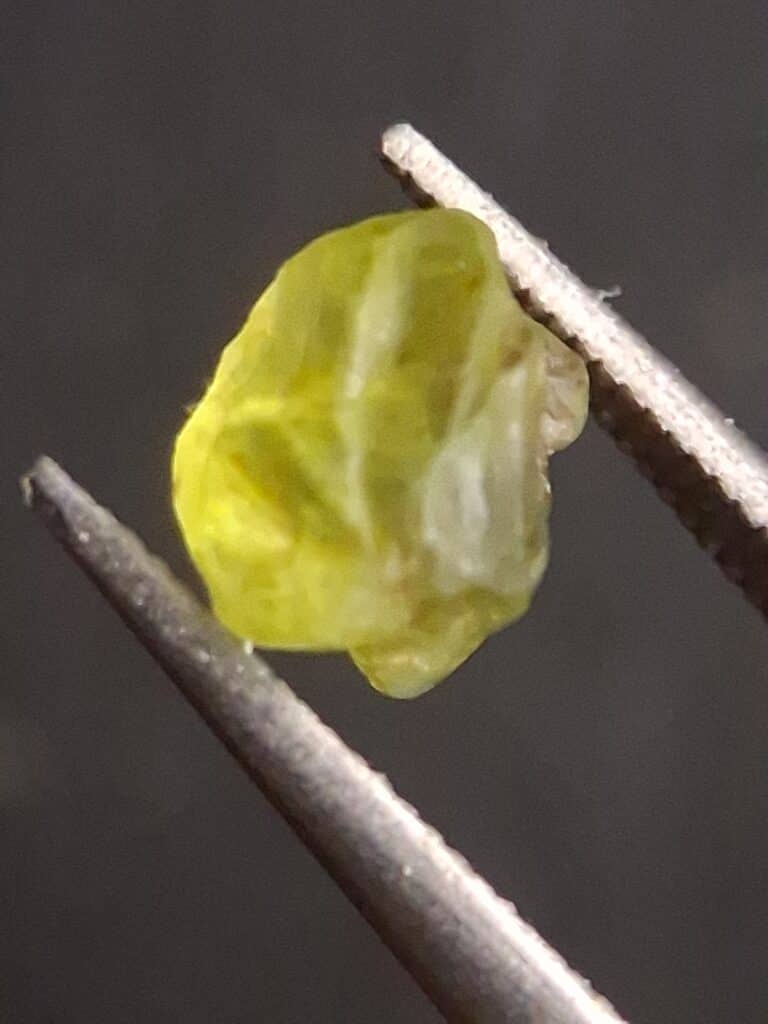
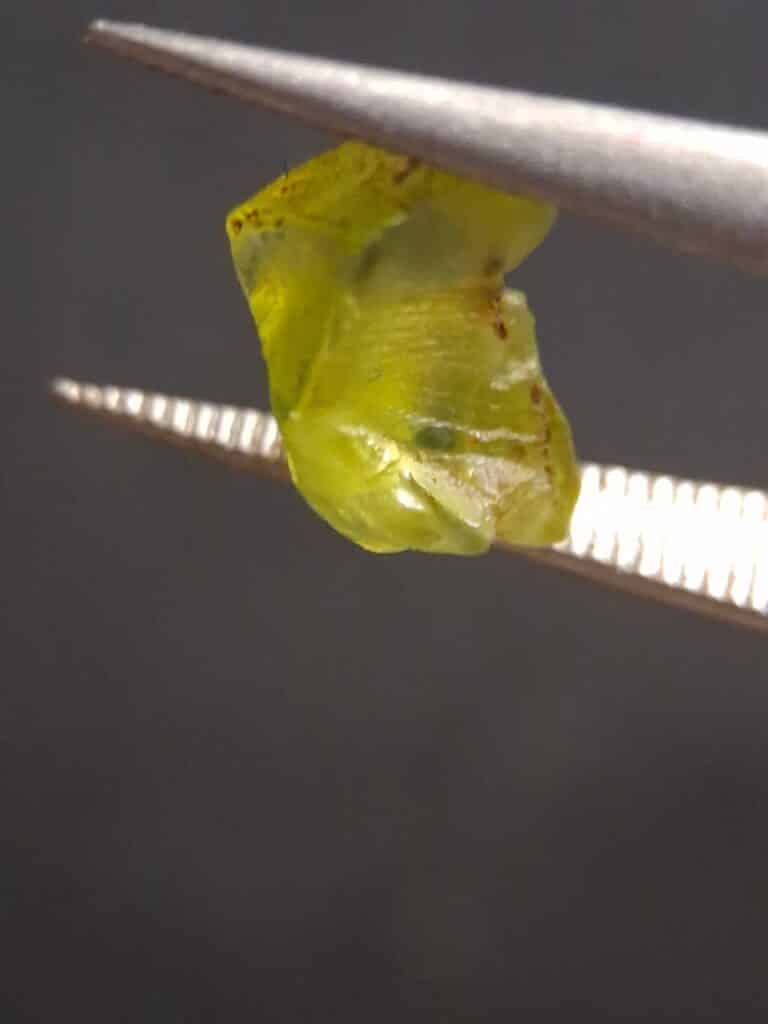
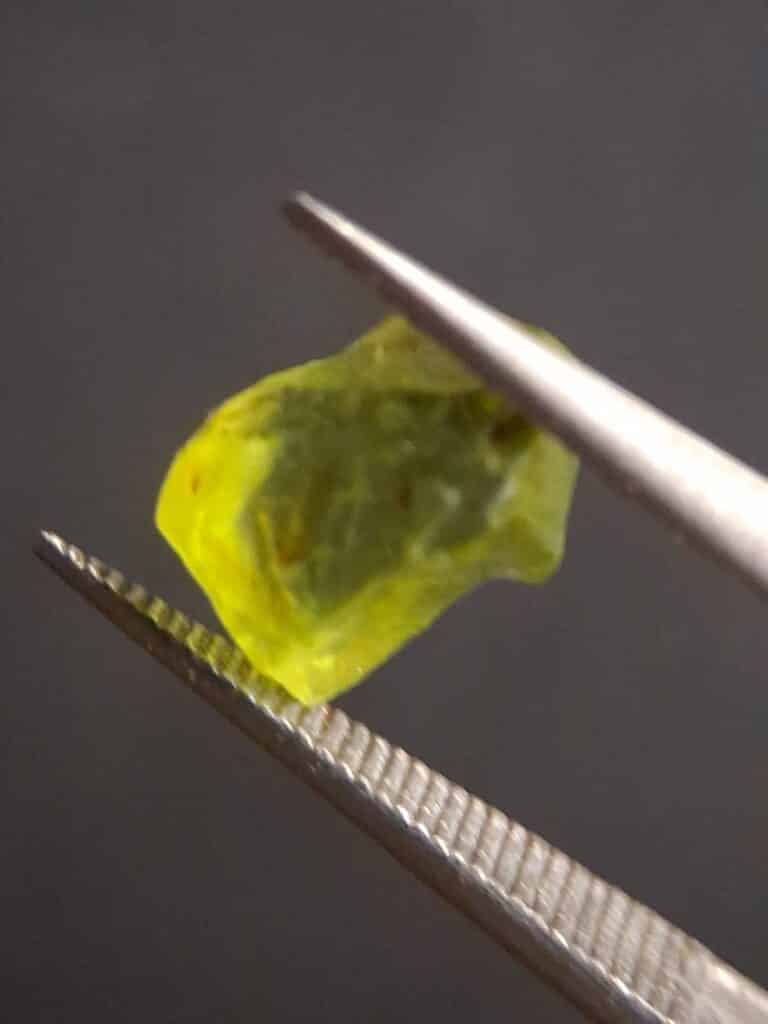
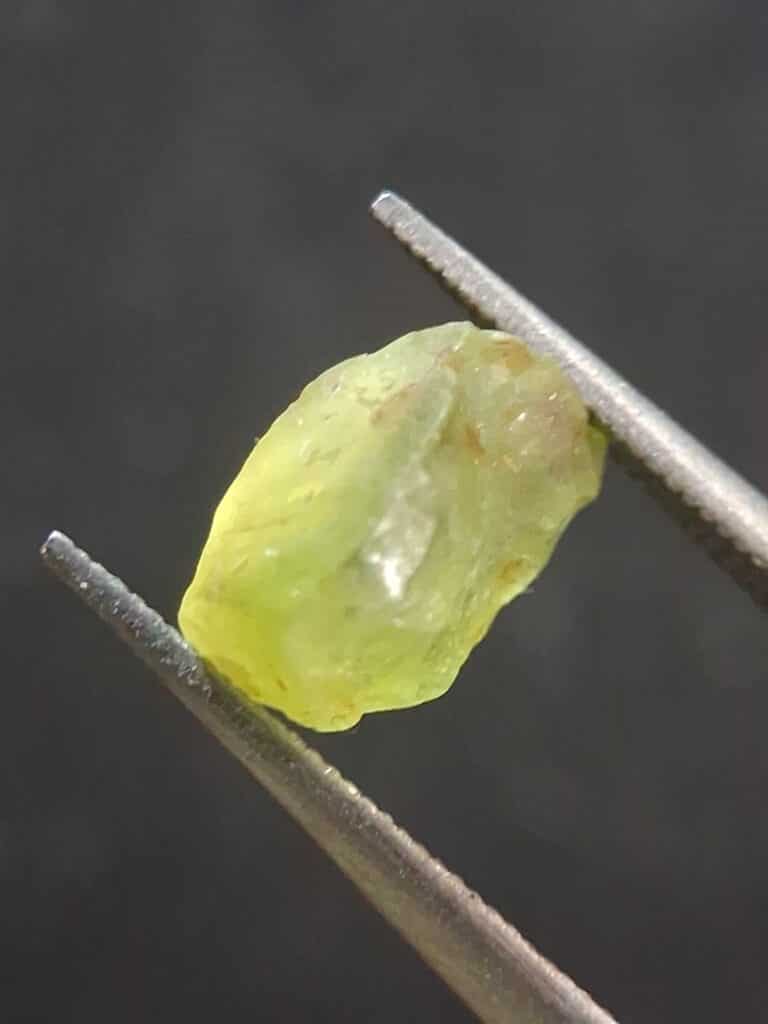
[…] green colour is fundamentally linked to iron within its own crystal chemistry rather than to a trace impurity acting on an otherwise colourless mineral. Ferrous iron, Fe²⁺, […]
[…] a crystal can grow, a stable crystalline nucleus must […]