

Table of Contents
Introduction: Why Do Natural Crystals Have Different Shapes?
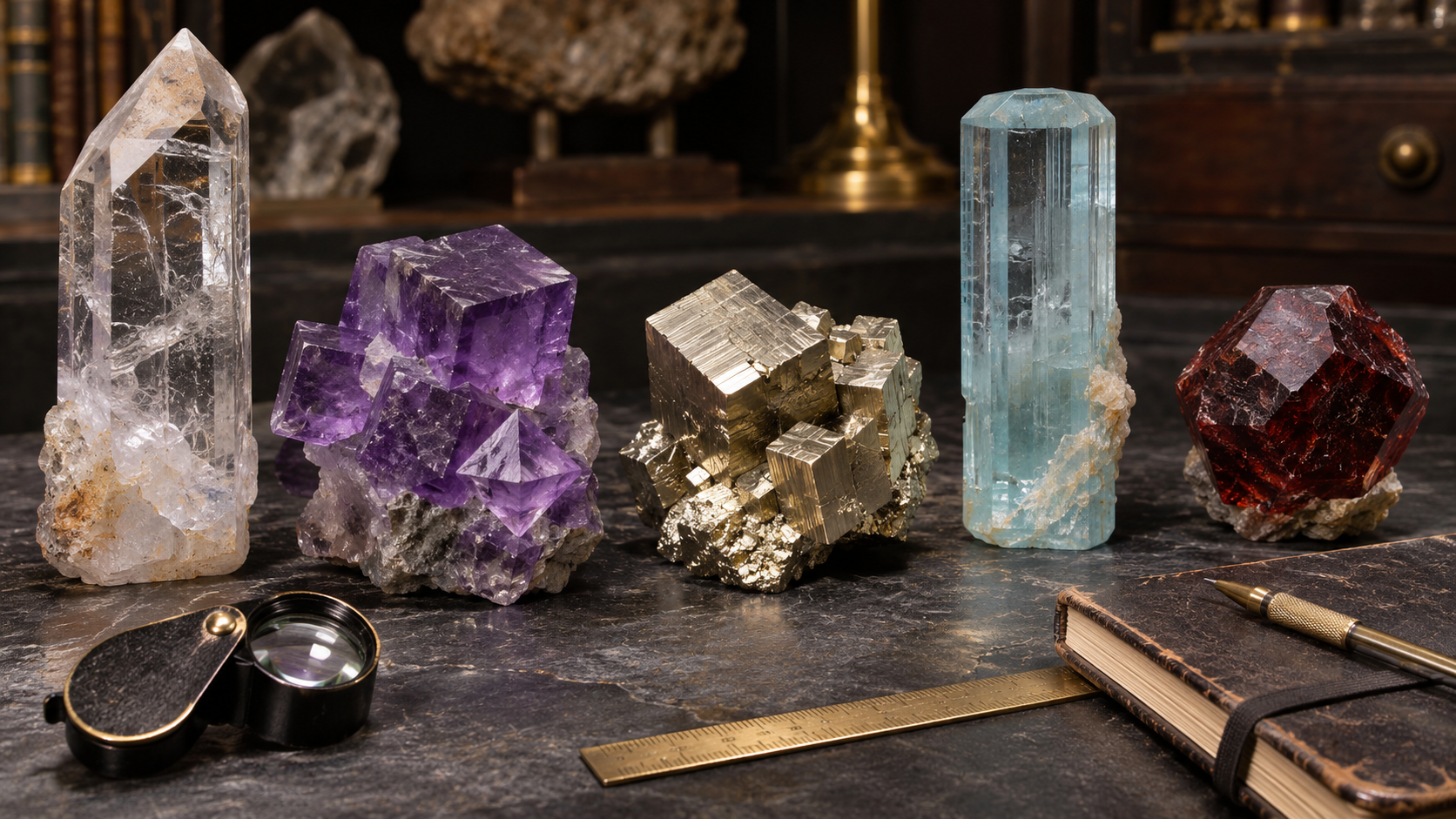
Natural crystals can display an extraordinary variety of shapes, reflecting the intriguing gemstone crystal habits.
Quartz may grow as a long, slender point or as a short, broad crystal.
Fluorite may form cubes, octahedra or combinations of several crystal forms.
Pyrite can develop sharp cubes, twelve-faced pyritohedra or complex intergrown crystals.
Beryl frequently forms elongated hexagonal prisms, while garnet commonly develops compact, many-faced crystals.
Understanding gemstone crystal habits is essential for appreciating the diversity of crystal formations.
These shapes are not arbitrary.
They reflect the interaction between a mineral’s internal atomic structure and the physical and chemical conditions under which it grows.
However, a common misconception is that every mineral species possesses one fixed external crystal shape.
In reality, the same mineral can develop several different habits.
The distinction between internal crystal structure and external crystal appearance is fundamental to mineralogy.
Understanding it helps explain why two natural crystals of the same mineral may look remarkably different, even though they share the same essential chemical composition and crystallographic symmetry.
It also provides valuable information for gemstone collectors, mineral enthusiasts and people evaluating rough gemstone material.
1. What Is Crystal Habit?
Crystal habit describes the characteristic external appearance or general shape of a crystal or crystal aggregate.
It may refer to the relative development of individual crystal faces or to the overall geometry of the specimen.
Common descriptive terms include prismatic, tabular, acicular, fibrous, equant, bladed and botryoidal.
A prismatic crystal is elongated along one direction.
A tabular crystal is flattened, with two dimensions substantially greater than the third.
An acicular crystal is slender and needle-like.
An equant crystal has dimensions that are relatively similar in several directions.
A botryoidal aggregate has a rounded, grape-like surface composed of many small growth units.
These terms describe appearance rather than mineral identity.
A prismatic crystal is not automatically quartz.
A cubic crystal is not necessarily pyrite.
And a botryoidal surface does not identify one particular mineral.
Crystal habit is useful for identification, but it must be interpreted together with other mineralogical properties.
2. Crystal System Versus Crystal Habit
A crystal system classifies a crystalline material according to aspects of its internal symmetry.
In conventional crystallography, minerals are assigned to one of seven crystal systems:
- Cubic
- Tetragonal
- Orthorhombic
- Hexagonal
- Trigonal
- Monoclinic
- Triclinic
The crystal system places constraints on the symmetry of possible crystal forms.
However, it does not require every specimen to develop the same external shape.
For example, fluorite belongs to the cubic crystal system.
Yet fluorite can form cubes, octahedra and combinations of different forms.
Quartz belongs to the trigonal crystal system.
Nevertheless, quartz commonly develops an externally hexagonal-looking prismatic habit.
This distinction is important.
A crystal can possess an external appearance that resembles a higher-symmetry shape without belonging to that higher-symmetry crystal system.
The external shape alone does not necessarily reveal the full internal symmetry.
3. What Is a Crystal Form?
In crystallography, a crystal form is a set of symmetry-related crystal faces.
A crystal may display one form or a combination of several forms.
A cube is one familiar crystallographic form.
An octahedron is another.
A dodecahedron can also occur in several crystallographic contexts, depending on its geometry and symmetry.
A mineral may develop different proportions of these forms under different growth conditions.
The faces of one form may become dominant.
Other faces may remain small or disappear from the visible external shape.
This helps explain why crystals of the same mineral can look different.
The internal structure determines which crystallographic orientations are possible.
The growth process influences the relative development of those faces.
4. How Crystals Grow
Crystals form when atoms, ions or molecules become incorporated into an ordered structure.
This can occur through several geological processes.
Minerals may crystallise from molten rock.
They may grow from aqueous solutions.
They may form through metamorphic reactions.
They may develop through precipitation from hydrothermal fluids.
Crystal growth depends on the availability of the necessary chemical components and suitable physical conditions.
Temperature, pressure, chemical composition and the degree of supersaturation can influence the growth process.
The presence of other dissolved substances may also affect which crystal faces develop most rapidly.
A crystal does not necessarily grow at the same rate in every direction.
Some faces advance more rapidly than others.
The relative growth rates influence the final external shape.
This is one reason why crystal habit can vary even within the same mineral species.
5. Why Some Crystal Faces Become Larger Than Others
A crystal face that grows slowly in the direction perpendicular to itself can remain prominent in the final crystal shape.
A rapidly advancing face may become smaller or disappear as neighbouring faces develop.
This principle helps explain the relationship between growth kinetics and crystal morphology.
However, the actual process can be complex.
Crystal growth may be influenced by surface energy, adsorption of impurities, transport of dissolved components and changing environmental conditions.
The same mineral may therefore develop different dominant faces in different geological environments.
A crystal growing freely into an open cavity may develop well-defined external faces.
A crystal growing within a crowded aggregate may be restricted by neighbouring crystals.
The final shape reflects both crystallographic possibilities and growth history.
6. Quartz: Why Some Crystals Are Long and Others Short
Quartz is silicon dioxide, SiO₂.
It belongs to the trigonal crystal system.
Quartz commonly forms six-sided prisms terminated by rhombohedral faces.
However, its external proportions vary considerably.
Some crystals are long and slender.
Others are short and broad.
Some develop unusual habits with strongly modified terminations.
Growth conditions influence the relative development of prism and terminal faces.
The availability of silica-bearing fluids, temperature, chemical environment and growth space can all affect morphology.
Quartz may grow in open cavities where individual crystals develop well-defined faces.
It may also form intergrown masses in which individual crystal boundaries are difficult to distinguish.
Amethyst, citrine, smoky quartz and rock crystal share the basic quartz structure.
Their colour differences do not automatically imply different crystal systems.
A purple amethyst crystal and a colourless quartz crystal may possess very similar external morphology.
7. Amethyst Geodes: Crystal Growth Within Cavities
Amethyst geodes provide an excellent example of crystal growth controlled by available space.
A geode is a rock cavity lined or partly filled with mineral material.
Quartz may crystallise inward from the cavity walls.
Under favourable conditions, purple amethyst crystals develop toward the remaining open space.
The crystals may form dense groups with their terminations pointing inward.
The final appearance depends on cavity geometry, fluid composition, growth history and available space.
Some geodes contain relatively short crystals.
Others display elongated points.
Colour may vary within individual crystals or across the geode.
However, crystal length alone does not establish the geological age of a specimen.
A longer crystal is not necessarily older than a shorter one.
Growth rate, interruptions, chemical conditions and available space all matter.
For collectors, geode morphology provides useful information about the specimen’s natural development, but it should not be used as a simple clock.
8. Fluorite: Cubes, Octahedra and Complex Forms
Fluorite is calcium fluoride, CaF₂.
It belongs to the cubic crystal system.
The cube is one of its most familiar natural crystal forms.
However, fluorite can also develop octahedral and other more complex forms.
Some specimens display combinations of cubic and octahedral faces.
The relative development of these faces can change the overall appearance substantially.
A crystal dominated by cubic faces may look very different from one dominated by octahedral faces.
Yet both can be fluorite.
This variation demonstrates why external crystal shape cannot be treated as a fixed characteristic of every mineral species.
Fluorite also possesses perfect octahedral cleavage.
That property is related to its internal crystal structure, but it should not be confused with its external growth habit.
A cubic fluorite crystal can break along octahedral cleavage planes.
The shape produced by breakage is not necessarily the same as the shape produced during growth.
9. Pyrite: Cubes, Pyritohedra and Striated Faces
Pyrite is iron disulfide, FeS₂.
It belongs to the cubic crystal system.
Pyrite frequently forms sharply defined cubic crystals.
However, it can also develop pyritohedra and combinations of several forms.
A pyritohedron is a twelve-faced crystallographic form associated with pyrite’s symmetry.
Pyrite crystals may display characteristic striations on their faces.
These parallel surface markings can reflect the crystal’s growth history.
Some specimens contain individual well-formed crystals.
Others consist of intergrown aggregates.
Pyrite may also form nodules, concretions and other massive or aggregate forms.
Therefore, the presence of a metallic golden colour does not imply a cubic habit.
Nor does every cubic pyrite crystal necessarily possess identical surface markings.
For collectors, the sharpness of the faces, completeness of the crystal and overall morphology can contribute to aesthetic appeal.
10. Beryl: The Familiar Hexagonal Prism
Beryl has the chemical formula Be₃Al₂Si₆O₁₈.
It belongs to the hexagonal crystal system.
Beryl commonly forms hexagonal prismatic crystals.
Aquamarine, emerald and morganite are gem varieties of beryl.
Their colours differ because of chemical and structural factors, but they share the same fundamental mineral structure.
A beryl crystal may be elongated or relatively short.
Its termination may be flat or modified by additional faces.
Some beryl crystals develop within granitic pegmatites.
Others form in different geological environments.
The habit can vary according to growth conditions.
A long hexagonal aquamarine crystal may be visually impressive, but length alone does not establish gem quality.
Transparency, fractures, colour and internal characteristics must also be evaluated.
A large opaque beryl crystal may have less faceting potential than a smaller transparent specimen.
11. Tourmaline: Prismatic Crystals and Complex Cross-Sections
Tourmaline belongs to a complex mineral supergroup.
Gem-quality tourmaline frequently occurs as elongated prismatic crystals.
Many tourmaline crystals display longitudinal striations.
Their cross-sections can appear approximately triangular or pseudo-hexagonal.
This morphology reflects tourmaline’s trigonal symmetry and the development of particular crystal faces.
Tourmaline can also display complex colour zoning.
Some crystals contain different colours along their length.
Others show colour variation across the crystal.
The external habit and internal colour distribution may both influence cutting decisions.
However, the appearance of a triangular cross-section is not sufficient to identify tourmaline conclusively.
Other minerals can develop superficially similar shapes.
Correct identification requires consideration of additional mineralogical properties.
12. Garnet: Why Many Crystals Are Compact and Multi-Faced
Garnet is a group of related minerals.
Many garnets crystallise in the cubic crystal system.
Common crystal forms include rhombic dodecahedra and trapezohedra.
These shapes can produce compact, approximately equant crystals with numerous faces.
Garnets often occur in metamorphic rocks.
They may grow within a solid host rock rather than into a large open cavity.
As a result, some garnet crystals display well-developed external faces, while others are partly constrained by surrounding minerals.
The final morphology depends on both crystallography and growth environment.
Garnet crystal form can provide useful mineralogical clues.
However, it does not automatically identify the exact garnet species.
Almandine, pyrope, grossular and other garnets may share similar external forms.
Chemical composition and additional testing are required for precise classification.
13. Crystal Habit and Geological Environment
Crystal habit can provide clues about the environment in which a mineral formed.
Large, well-developed crystals may indicate that growth occurred under conditions allowing substantial crystal development.
Open cavities can permit crystals to develop freely into available space.
Crowded environments can restrict external growth.
Rapid precipitation may favour small crystals or particular aggregate textures.
However, these relationships are not universal.
A large crystal does not necessarily prove slow growth.
A small crystal does not necessarily prove rapid growth.
Temperature, fluid chemistry, supersaturation, transport conditions and growth interruptions can all influence the final result.
Crystal habit should therefore be interpreted as one part of a broader geological investigation.
It is not a standalone method for determining the precise temperature, pressure or age of formation.
14. Why Crystals Sometimes Grow Together
Natural crystals frequently develop as aggregates rather than isolated individuals.
Several crystals may nucleate close together.
Their growth fronts can intersect.
Some crystals may partially surround others.
The resulting aggregate can display complex morphology.
Crystal clusters may contain crystals of different sizes and orientations.
Some crystals may have grown during the same general mineralising event.
Others may represent different stages of growth.
Without detailed geological evidence, the external appearance alone cannot establish the complete sequence.
Intergrowths are particularly common in mineral specimens.
They can contribute substantially to collector appeal.
However, complex intergrowths should not automatically be interpreted as evidence of unusual mineral chemistry.
They may simply reflect the physical conditions of crystal growth.
15. Twinning: When Crystals Share a Structural Relationship
Crystal twinning occurs when two or more crystal domains share a specific crystallographic orientation relationship.
Twinning can produce distinctive external shapes.
Some twins appear as interpenetrating crystals.
Others form contact twins along a shared plane.
Twinning can also produce repeated or cyclic arrangements.
Quartz, feldspar, fluorite and many other minerals can display twinning.
However, not every unusual crystal shape is a twin.
Some apparent intergrowths are simply adjacent crystals that developed independently.
Correct recognition of twinning requires understanding the relevant crystallographic relationships.
For collectors, twinned crystals can be especially interesting because they preserve evidence of particular growth or deformation processes.
For gemmologists, twinning may also influence internal features, optical behaviour and cutting considerations.
16. Skeletal and Hopper Crystals
Some crystals develop skeletal or hopper-like forms.
A hopper crystal may show a stepped or recessed appearance, with edges more strongly developed than the centre of a face.
Such morphology can occur when growth conditions favour rapid development of particular regions of the crystal.
Halite is a familiar example of hopper growth.
Other minerals can also display skeletal or hopper-like structures under suitable conditions.
These forms illustrate how growth kinetics influence morphology.
However, a hopper shape should not automatically be interpreted as proof of one specific temperature or growth rate.
Several environmental factors can contribute.
The presence of impurities, changes in supersaturation and transport limitations may all influence the resulting structure.
17. Dendritic and Branching Growth
Dendritic mineral growth produces branching structures that resemble trees or ferns.
These patterns can develop when growth is strongly influenced by diffusion and other transport processes.
Dendritic patterns are familiar in certain manganese-oxide mineral coatings.
However, not every branching mineral pattern represents a single crystal.
Some are aggregates or surface deposits.
This distinction is important.
Crystal habit can describe the appearance of an individual crystal, while aggregate habit describes the overall form of many crystals or mineral particles.
A dendritic pattern may be visually striking without being a large single crystal.
Understanding this difference helps avoid misleading mineral descriptions.
18. Botryoidal and Fibrous Mineral Aggregates
Botryoidal surfaces consist of rounded, grape-like forms.
They commonly develop through the growth of numerous small mineral units.
Fibrous aggregates consist of elongated, fibre-like crystals or crystallites.
These habits can occur in several mineral species.
Chalcedony, certain iron oxides and other minerals may display botryoidal forms.
Some amphiboles and other minerals can develop fibrous habits.
However, aggregate appearance alone is not sufficient for mineral identification.
In addition, certain fibrous minerals can present health hazards when disturbed.
Collectors should avoid cutting, grinding or creating dust from unidentified fibrous specimens.
The distinction between individual crystal habit and aggregate morphology is therefore important both scientifically and practically.
19. Crystal Habit Versus Crystal Damage
A naturally unusual crystal shape is not necessarily evidence of damage.
Some crystals develop asymmetrically because of growth conditions.
Others may have been partially dissolved or modified by later geological processes.
Still others may possess broken terminations.
These situations can sometimes appear superficially similar.
A rounded crystal edge might result from growth morphology, dissolution or mechanical abrasion.
A flat surface may represent a natural crystal face, cleavage or breakage.
The distinction requires careful examination.
Crystal habit should not be confused with specimen condition.
A mineral specimen can have an unusual but entirely natural growth form.
Conversely, a crystal with a typical habit may contain significant damage.
For collectors, both morphology and condition contribute to evaluation.
20. Why Crystal Habit Matters for Rough Gemstones
Crystal habit can influence how a rough gemstone is evaluated and cut.
An elongated crystal may favour certain finished shapes.
A compact crystal may offer different cutting possibilities.
However, external shape is only one factor.
Internal fractures, inclusions, colour zoning and cleavage directions can be more important.
A long tourmaline crystal may contain colour zoning that influences cutting orientation.
A hexagonal beryl crystal may possess fractures that reduce usable yield.
A garnet crystal may have an attractive external form but contain internal inclusions.
A large quartz crystal may be better preserved as a mineral specimen than cut into smaller gemstones.
Therefore, crystal habit can help guide preliminary assessment, but it cannot replace detailed gemmological examination.
21. Crystal Habit and Collector Value
Mineral collectors often appreciate specimens with well-developed crystal faces and distinctive natural morphology.
A sharply formed pyrite cube can be attractive because of its symmetry.
A complex fluorite crystal may be valued for unusual combinations of forms.
A tourmaline crystal may be admired for its longitudinal striations and colour zoning.
An amethyst geode may be prized for the arrangement and presentation of its crystal points.
However, collector value is not determined by habit alone.
Colour, damage, size, aesthetics, rarity of the particular form and documented locality can all influence desirability.
A specimen with an unusual habit is not automatically more valuable than a specimen with a common habit.
The overall evaluation depends on the individual material and the relevant collector market.
22. Common Misconceptions About Crystal Habits
Every mineral species has one fixed external crystal shape.
Incorrect. Many minerals can develop several habits.
A cubic crystal must belong to one particular mineral.
Incorrect. Several minerals can form cubic crystals.
Quartz belongs to the hexagonal crystal system because it often looks six-sided.
Incorrect. Quartz belongs to the trigonal crystal system, although its external morphology commonly appears hexagonal.
Every fluorite crystal grows as a cube.
Incorrect. Fluorite can develop octahedral and other forms.
A large crystal must have grown slowly.
Not necessarily. Crystal size depends on several growth conditions.
A crystal’s external shape proves its exact geological age.
Incorrect. Crystal habit alone cannot establish age.
A flat surface must be a natural crystal face.
Incorrect. Cleavage, parting and fracture can also produce flat surfaces.
An unusual shape always indicates twinning.
Incorrect. Growth modifications, intergrowths and damage can produce unusual appearances.
Crystal habit determines gem quality.
Incorrect. Transparency, colour, fractures and other characteristics must also be evaluated.
23. Practical Workshop: Observing Crystal Habit Without Damaging a Specimen
Crystal habit can be studied using simple, non-destructive observation.
Step 1 – Identify the mineral as reliably as possible
Do not rely on shape alone.
Use established identification information or professional assistance when necessary.
Step 2 – Examine the overall proportions
Is the crystal elongated, flattened or approximately equant?
Step 3 – Observe visible crystal faces
Look for flat natural faces and their relationships.
Avoid assuming that every flat surface is a growth face.
Step 4 – Examine surface features
Record striations, growth steps, unusual terminations or visible intergrowths.
Step 5 – Distinguish individual crystals from aggregates
Determine whether the specimen consists of one crystal or multiple growth units.
Step 6 – Look for possible twinning
Record unusual repeated or symmetrical arrangements, but avoid making definitive claims without supporting crystallographic evidence.
Step 7 – Document the specimen
Photograph it from several directions under consistent lighting.
Include a scale reference.
Step 8 – Record uncertainties
If a surface may be either a crystal face or a break, describe it cautiously.
Step 9 – Preserve the specimen
Do not scratch, strike, cleave or chemically treat the crystal to investigate its habit.
The objective is observation and documentation rather than destructive testing.
24. Crystal Habit in Responsible Gemstone Descriptions
Accurate mineral descriptions distinguish crystal form from commercial quality.
For example, a natural pyrite specimen may be described as displaying well-developed cubic crystals.
A tourmaline crystal may be described as prismatic with longitudinal striations.
An amethyst geode may be described as containing inward-growing quartz crystals.
A fluorite specimen may be described as displaying cubic crystals with modified faces.
These descriptions communicate observable morphology.
However, claims about exact growth temperature, geological age or unusual formation conditions require additional evidence.
A crystal’s appearance may suggest certain geological processes without proving them.
Responsible descriptions should therefore avoid presenting speculative interpretations as established facts.
Conclusion: Crystal Shape Is a Record of Structure and Growth
Natural crystal shapes reflect the interaction between internal atomic structure and external growth conditions.
The crystal system constrains possible symmetry.
Crystal forms describe symmetry-related faces.
Crystal habit describes the overall appearance of the crystal or aggregate.
Growth conditions influence which faces develop most prominently.
Quartz can form long or short prisms.
Fluorite can display cubes and octahedra.
Pyrite can develop cubes, pyritohedra and complex intergrowths.
Beryl commonly forms hexagonal prisms.
Tourmaline frequently develops striated prismatic crystals.
Garnet often forms compact, many-faced crystals.
These differences reveal the remarkable diversity of natural mineral growth.
However, external shape alone does not establish mineral identity, geological age, exact formation conditions or gem quality.
The most important principle is straightforward.
A mineral’s internal structure determines the crystallographic possibilities, while its growth history influences the external form we observe.
Understanding crystal habit enriches the study of rough gemstones and mineral specimens.
It also encourages more accurate identification, careful preservation and scientifically responsible descriptions of natural crystals.
References & Further Reading
The following references are selected from authoritative mineralogical, geological and crystallographic resources. They provide educational information on crystal systems, mineral morphology, crystal growth, quartz, fluorite, pyrite, beryl, tourmaline and garnet.
1. Encyclopaedia Britannica – Crystal Habit
Explains crystal habit as the characteristic external appearance of crystals and introduces common morphological descriptions.
https://www.britannica.com/science/crystal-habit
2. Encyclopaedia Britannica – Crystal
Provides an introduction to crystal structure, symmetry, crystal systems and the relationship between internal atomic arrangements and external morphology.
https://www.britannica.com/science/crystal
3. Encyclopaedia Britannica – Crystallography
Explains crystallographic symmetry, crystal forms and the scientific study of crystalline structures.
https://www.britannica.com/science/crystallography
4. Encyclopaedia Britannica – Quartz
Describes the mineralogical characteristics of quartz, including its chemical composition, crystal structure and common geological occurrence.
https://www.britannica.com/science/quartz
5. Encyclopaedia Britannica – Fluorite
Provides mineralogical information on fluorite, including its cubic crystal system and characteristic crystal forms.
https://www.britannica.com/science/fluorite
6. Encyclopaedia Britannica – Pyrite
Explains the mineralogical identity of pyrite, its composition and characteristic cubic crystal forms.
https://www.britannica.com/science/pyrite
7. Encyclopaedia Britannica – Beryl
Describes beryl’s chemical composition, hexagonal crystal structure and principal gemstone varieties.
https://www.britannica.com/science/beryl
8. Encyclopaedia Britannica – Tourmaline
Provides information on tourmaline mineralogy, crystal structure, chemical diversity and common prismatic morphology.
https://www.britannica.com/science/tourmaline
9. Encyclopaedia Britannica – Garnet
Explains the garnet mineral group, its chemical diversity and common crystal forms.
https://www.britannica.com/science/garnet
10. Gemological Institute of America – Gem Encyclopedia
An institutional reference for gemstone mineralogy, natural crystal characteristics, identification and gemmological properties.
https://www.gia.edu/gem-encyclopedia
Scientific Interpretation and Limitations
Crystal habit is influenced by crystallographic symmetry, growth kinetics, chemical environment, available space and geological history.
The external shape of a mineral specimen does not independently establish its precise formation temperature, pressure, geological age or geographical origin.
A crystal’s external morphology should not be treated as sufficient evidence for mineral identification.
Crystal faces, cleavage surfaces, parting and fracture surfaces may require careful examination to distinguish.
Descriptions of growth mechanisms in this article represent general mineralogical principles and should not be interpreted as definitive explanations for every individual specimen.
The practical workshop is non-destructive and intended for educational observation.
For unusual, valuable or scientifically important specimens, professional mineralogical examination may be appropriate.
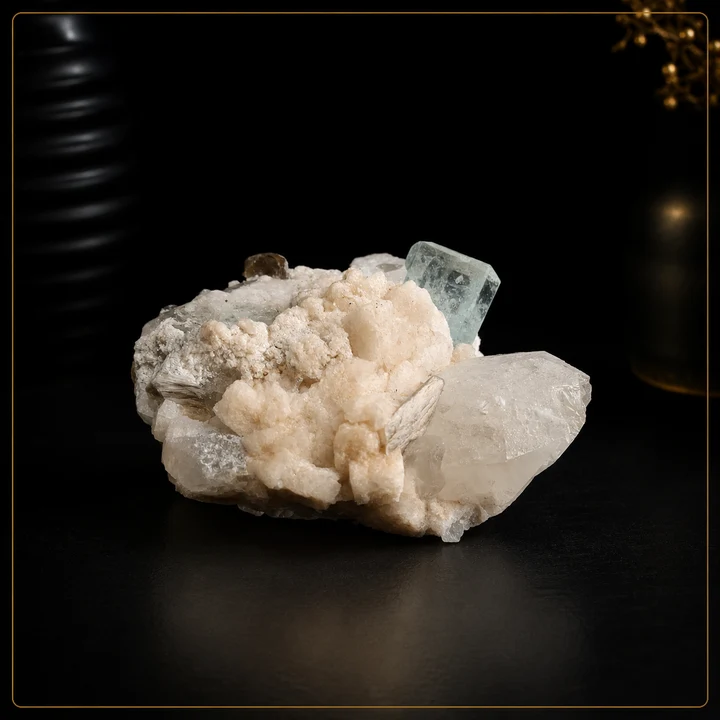
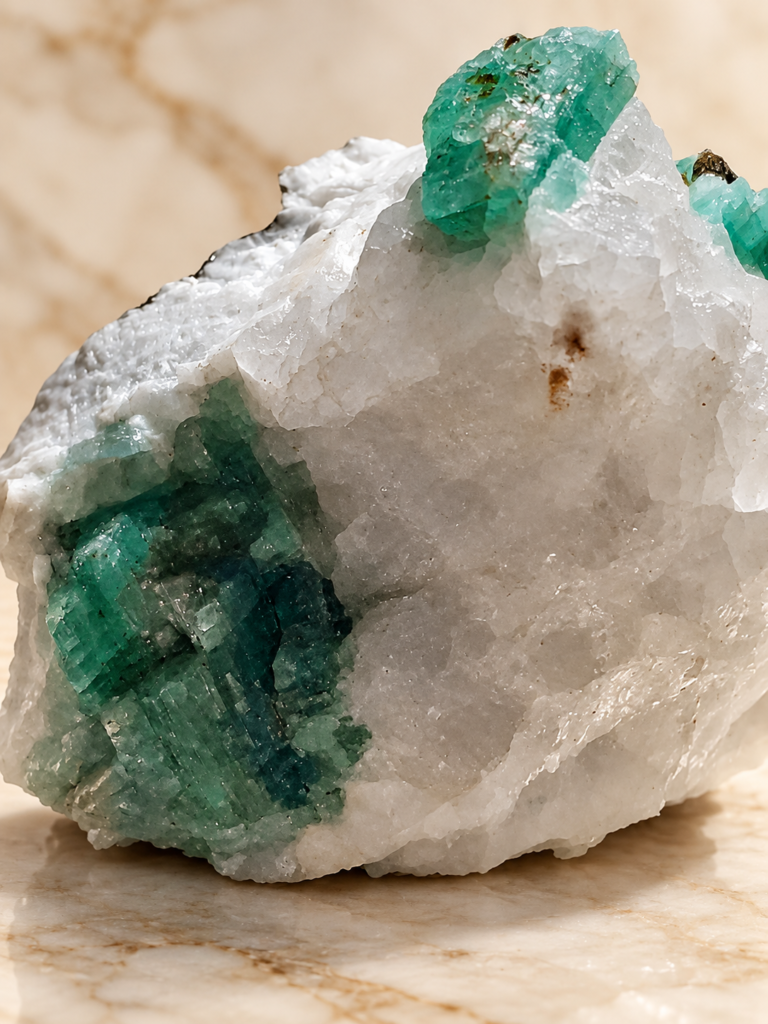
[…] Crystal growth depends on the surrounding chemical environment. […]
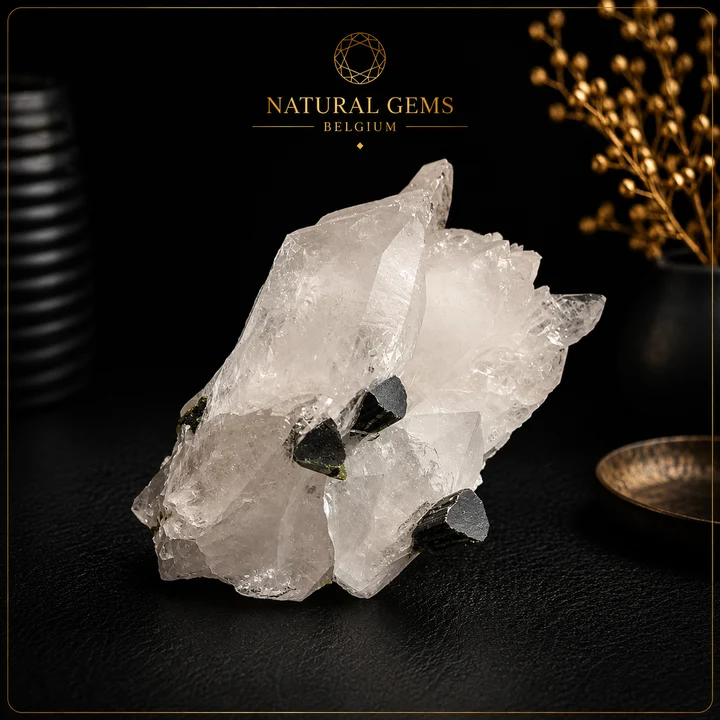
[…] Natural crystals can display short prismatic, tabular or rhombic forms. […]