Category Academies & Video Series

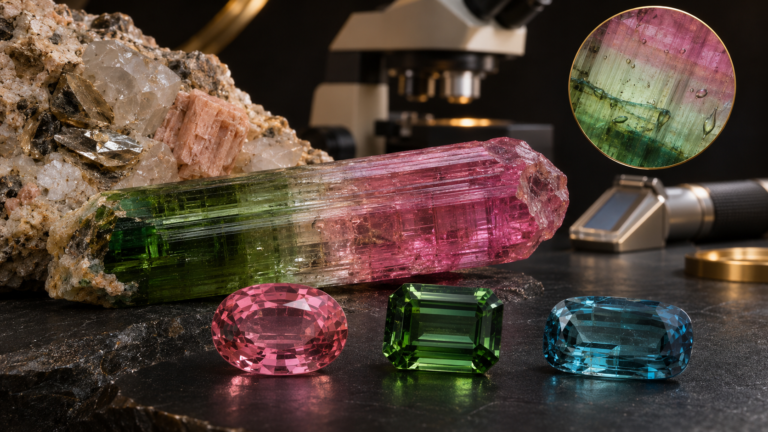
Elbaite Tourmaline: Mineralogy, Colour Chemistry & Gemmological Identification

elbaite tourmaline

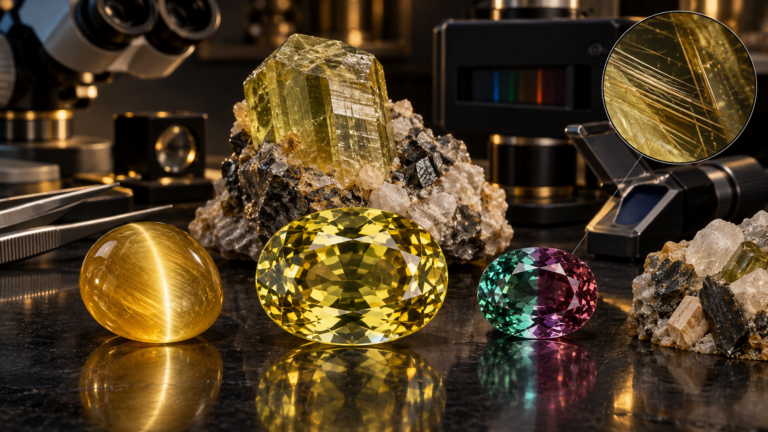
Discover the gemmology of elbaite with the Nadia Gemstone academy video series. Elbaite, a lithium-rich tourmaline species renowned for its remarkable colours and complex crystal chemistry. Explore its pegmatitic formation, optical properties, internal zoning, diagnostic spectroscopy, treatments and laboratory identification, including the science behind copper-bearing Paraíba-type material.

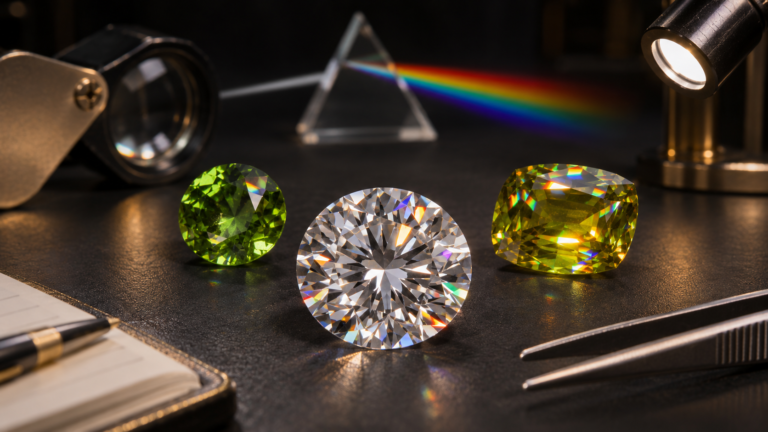
Gemstone Dispersion and Fire: Why Diamonds and Other Gemstones Flash Rainbow Colours

Gemstone Dispersion and Fire: Why Diamonds and Other Gemstones Flash Rainbow Colours

Why do diamonds, demantoid garnets and titanite display spectacular rainbow flashes? Explore the science of gemstone dispersion and fire, the role of refractive index, cutting proportions and illumination, and the essential differences between brightness, fire and scintillation. Episode 10 of the Natural Gems Belgium Gemmology Series explains the physics behind these remarkable optical effects.

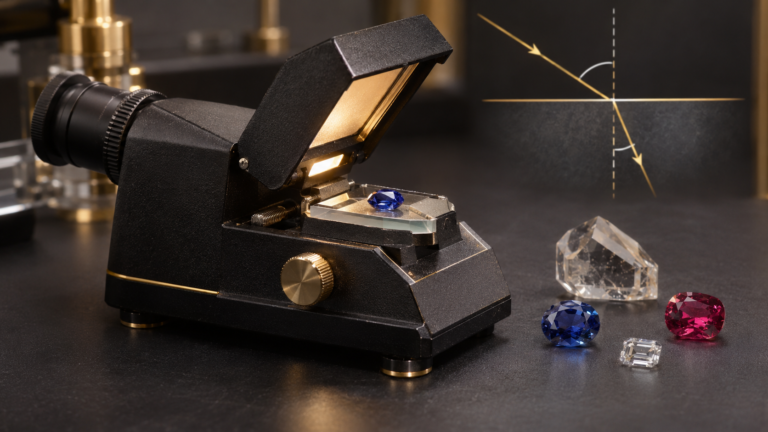
Gemstone Refractive Index: How Gemmologists Measure the Bending of Light

Gemstone Refractive Index: How Gemmologists Measure the Bending of Light

How can gemmologists distinguish gemstones that look almost identical? Discover the science of refractive index, Snell's law, critical angles and professional refractometer measurements. Episode 9 of the Natural Gems Belgium Gemmology Series explains how light helps identify gemstones - and why one measurement is never the complete answer.

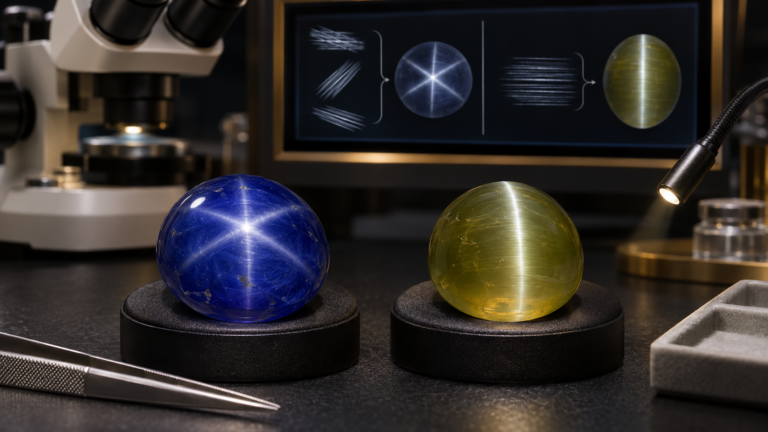
Asterism and Chatoyancy in Gemstones: The Science Behind Star Sapphires and Cat’s-Eye Gemstones

Asterism and Chatoyancy in Gemstones

Why do some gemstones display moving stars or brilliant cat's-eye bands? Explore the science of asterism and chatoyancy, from microscopic inclusions and crystal structure to cabochon cutting, optical examination and gemstone identification. Episode 8 of the Natural Gems Belgium Gemmology Series explains these remarkable natural optical phenomena.

Topaz: Formation, Gemmological Properties & Identification

topaz gemstone

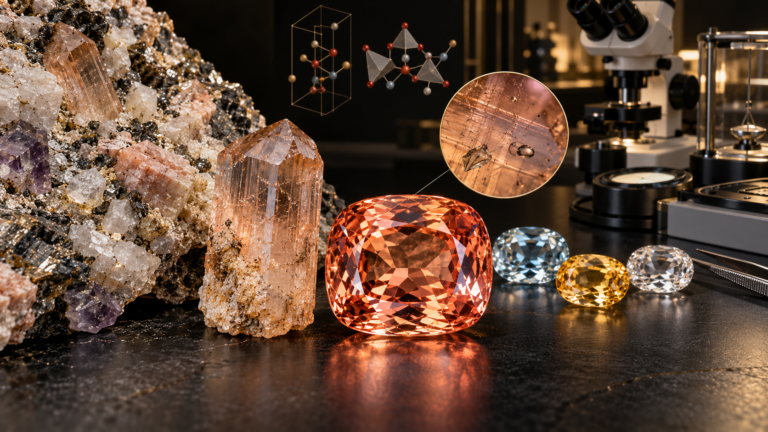
Discover the mineralogy and gemmology of topaz. Explore its orthorhombic crystal structure, fluorine–hydroxyl chemistry, optical properties, geological formation, chromium-related colours, irradiation treatments and microscopic identification. Learn why its perfect basal cleavage is one of its most important diagnostic and durability characteristics.