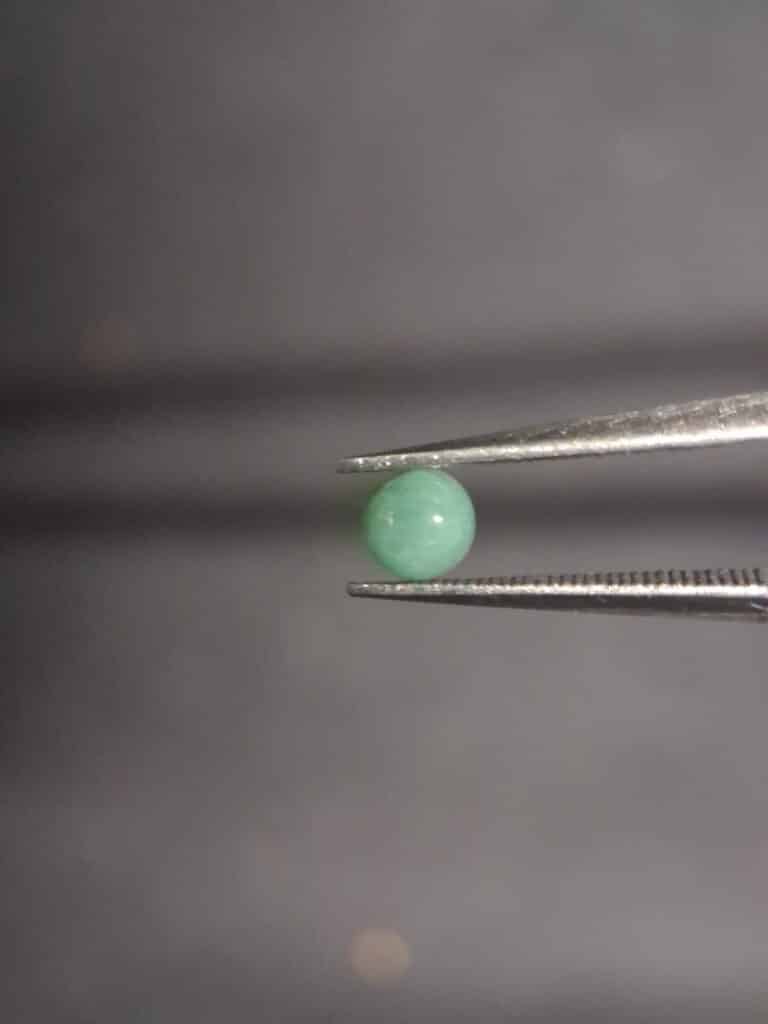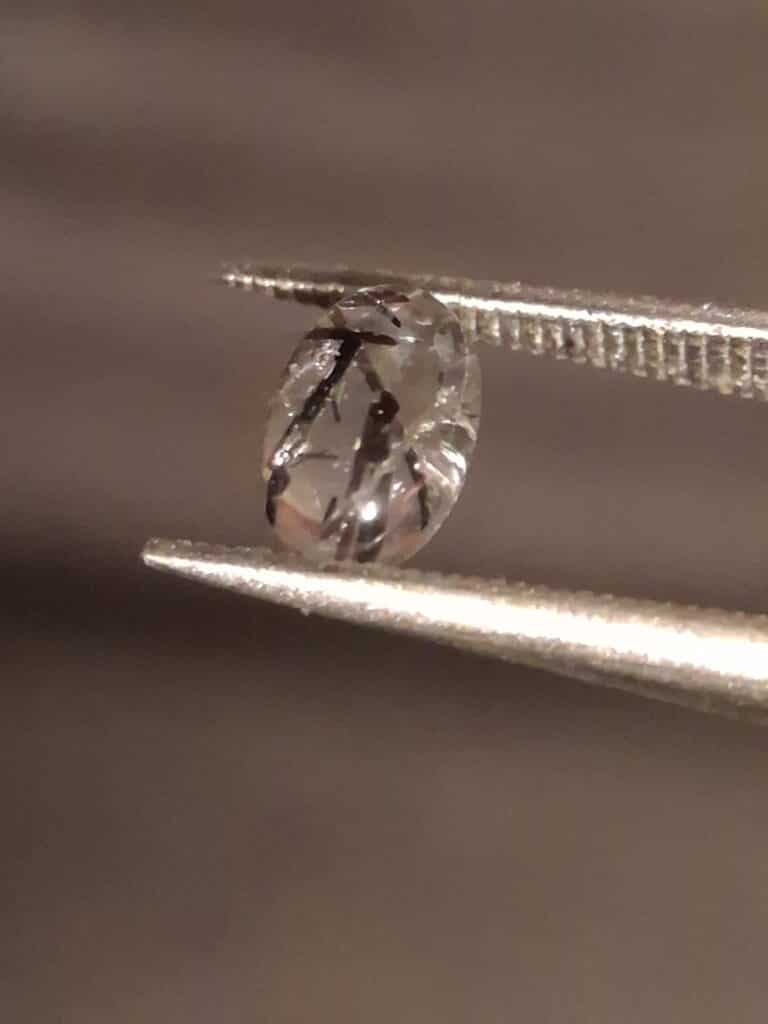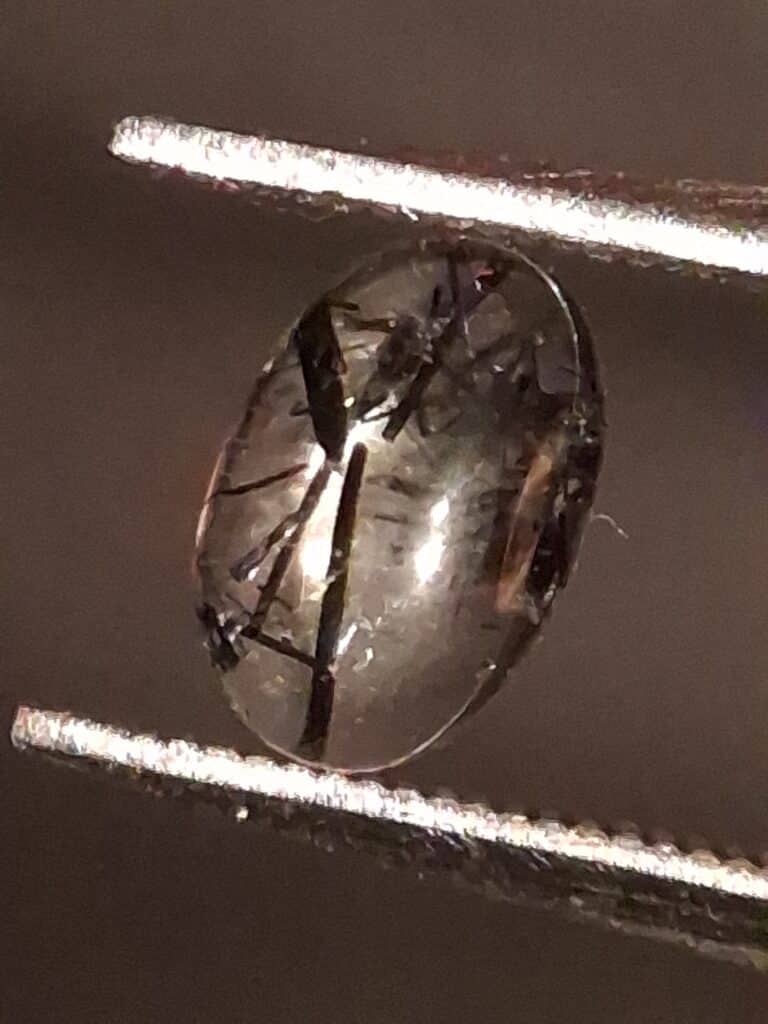
Some gemstones reveal their beauty through colour. Others impress through transparency, brilliance or dispersion. Yet a remarkable group of gemstones displays something different: concentrated bands of light that appear to move across the stone, sometimes intersecting to create a luminous star.
These optical phenomena are known as Asterism and Chatoyancy in gemstones.
They are among the most fascinating examples of how microscopic mineral structures influence the appearance of gemstones.
A star sapphire may display six brilliant rays crossing its curved surface. A fine cat’s-eye chrysoberyl may reveal a narrow band of light that moves as the gemstone is rotated. Both effects can appear almost mysterious, yet their underlying explanations belong firmly to optical physics, crystallography and mineralogy.
In Episode 8 of the Natural Gems Belgium Gemmology Series, we examine how these phenomena form, why certain gemstones display them, how professional cutters enhance their visibility and what gemmologists can — and cannot — conclude from their presence.
Watch the Natural Gems Belgium Gemmology Series – Episode 8
Asterism & Chatoyancy: The Science Behind Star and Cat’s-Eye Gemstones
Presented by Marnick Elskens, Founder of Natural Gems Belgium.
This educational episode examines the scientific mechanisms behind moving optical bands and star patterns, with examples from corundum, chrysoberyl and other gem materials.
Table of Contents
1. What Are Phenomenal Gemstones?
In gemmology, the term phenomenal gemstone refers to a material displaying a distinctive optical phenomenon beyond its ordinary body colour or transparency.
These phenomena result from specific interactions between light and the gemstone’s internal structure.
Examples include asterism, chatoyancy, adularescence, labradorescence, iridescence and the play-of-colour observed in precious opal.
Although these effects may appear visually similar in some circumstances, their physical mechanisms differ.
Asterism and Chatoyancy in gemstones are closely related because both involve organised internal structures that redirect light into concentrated, directional patterns.
Their appearance is influenced by three essential factors:
- The arrangement and optical properties of internal inclusions or textures.
- The orientation and shape of the finished gemstone.
- The position and characteristics of the light source and observer.
Understanding these factors is fundamental to the scientific examination of star and cat’s-eye gemstones.
2. What Is Chatoyancy?
Chatoyancy is the optical phenomenon responsible for the characteristic cat’s-eye appearance of certain gemstones.
The name derives from the French expression œil de chat, meaning cat’s eye.
A chatoyant gemstone displays a concentrated band of light that appears to move across its surface when the stone or illumination changes position.
The effect resembles the narrow pupil of a cat’s eye.
The Role of Parallel Inclusions
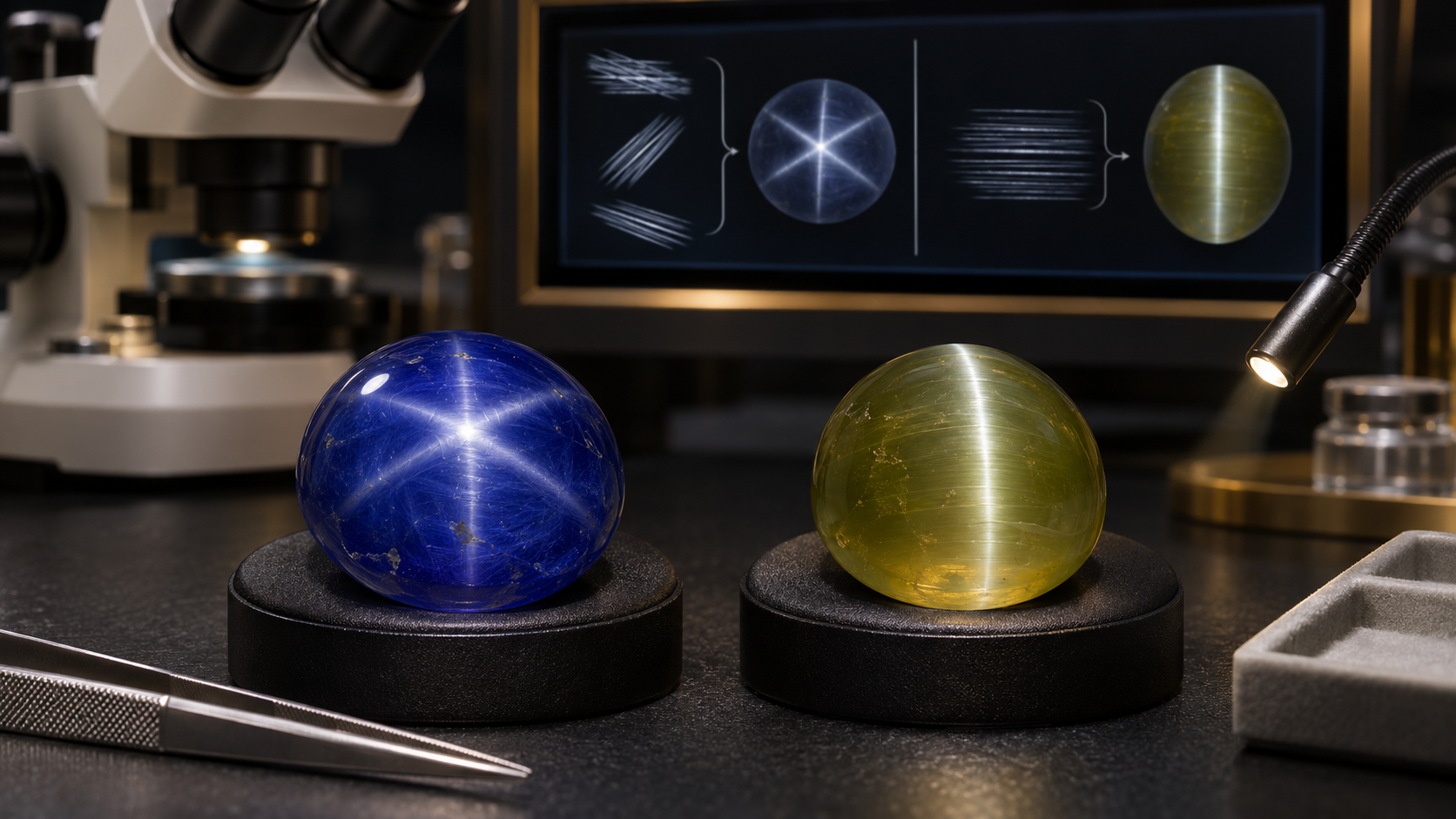
Chatoyancy commonly results from numerous elongated microscopic features arranged in approximately parallel directions.
These features may include solid mineral needles, fine fibres, hollow tubes or other suitable internal textures.
When light encounters these structures, it can be redirected through reflection, scattering and related wave-optical processes.
Because the structures are similarly oriented, the redirected light forms a coherent directional pattern rather than a completely random distribution.
The curved surface of a properly oriented cabochon helps concentrate this light into the characteristic bright band.
The observed band generally runs perpendicular to the dominant direction of the elongated inclusions.
Why Does the Cat’s Eye Move?
The cat’s-eye band is not a permanent coloured stripe inside the gemstone.
Its apparent position depends on the relationship between the light source, the internal structures, the gemstone’s curved surface and the observer.
As this geometry changes, the location of the concentrated light changes.
Consequently, the bright band appears to glide across the gemstone.
This movement is an important characteristic of genuine chatoyancy.
3. What Is Asterism?
Asterism is the optical phenomenon responsible for star-shaped patterns in certain gemstones.
Instead of producing one dominant light band, asterism involves multiple bands that intersect.
The resulting pattern may resemble a four-rayed, six-rayed or more complex star.
How Multiple Inclusion Directions Create a Star
Imagine a gemstone containing several groups of fine elongated inclusions.
Within each group, the inclusions are approximately parallel.
However, the different groups have different orientations.
Each group can contribute a concentrated band of light.
When these bands intersect, they form a star-like pattern.
A six-rayed star commonly results from three intersecting bands, while a four-rayed star commonly results from two.
More complex inclusion arrangements can produce additional rays.
The orientation of the inclusions is often related to the crystallographic symmetry of the host mineral.
This relationship helps explain why certain star patterns are particularly associated with specific gemstone species.
Why Does the Star Appear to Float?
The star is not an independent luminous structure suspended inside the gemstone.
It is an optical pattern produced by light interacting with organised internal features and the gemstone’s curved surface.
As the stone moves relative to the light source and observer, the apparent star can move.
In certain specimens, the pattern may appear to float above or within the gemstone.
This visual impression arises from the geometry of the optical effect rather than from a physically separate star-shaped object.
4. Star Sapphire: A Classic Example of Asterism
Star sapphire is among the best-known phenomenal gemstones.
Sapphire belongs to the mineral species corundum, with the chemical formula Al₂O₃.
In many star sapphires, fine oriented inclusions of rutile, a titanium dioxide mineral, contribute to the star effect.
These inclusions are often described as rutile silk.
Rutile Silk and Crystal Structure
Rutile needles may occur in several crystallographically related orientations within corundum.
When sufficiently numerous and appropriately distributed, these needles can redirect light into intersecting bands.
A six-rayed star is particularly characteristic of many star sapphires.
However, not every sapphire containing rutile inclusions displays a visible star.
The effect depends on the size, concentration, orientation and distribution of the inclusions, together with the gemstone’s cutting geometry.
What Makes a Good Star Sapphire?
The visual quality of a star sapphire is influenced by several characteristics.
Star definition: The rays should be clearly visible rather than excessively diffuse.
Symmetry: A balanced arrangement of rays generally produces a more attractive pattern.
Centring: A star positioned near the centre of the cabochon is often desirable.
Movement: The star should respond naturally to changes in lighting and gemstone orientation.
Body colour: The underlying sapphire colour remains an important part of its appearance.
Cutting quality: The cabochon should be proportioned and oriented to display the phenomenon effectively.
These characteristics must be considered together.
A very strong star does not automatically compensate for every weakness in body colour, cutting or overall condition.
5. Star Ruby: The Same Mineral, a Different Colour
Ruby is the red variety of corundum.
Like sapphire, ruby can display asterism when suitable internal structures are present.
In many star rubies, oriented rutile inclusions contribute to the formation of the star.
The principal distinction between star ruby and star sapphire is their gemstone variety and associated colour characteristics, not a fundamentally different star-forming mechanism.
The red body colour of ruby is primarily associated with chromium incorporated into the corundum crystal structure.
A fine star ruby combines this red colour with a clearly defined, appropriately centred star.
However, the star may be influenced by the gemstone’s transparency, inclusion density and lighting conditions.
Some star rubies are relatively translucent, while others display greater transparency.
Neither transparency nor the mere presence of a star is sufficient to determine natural origin.
6. Cat’s-Eye Chrysoberyl: A Remarkable Optical Gemstone
Chrysoberyl is a distinct mineral species with the chemical formula BeAl₂O₄.
It should not be confused with beryl, the mineral family that includes emerald and aquamarine.
Chrysoberyl is particularly celebrated for producing exceptionally sharp chatoyancy.
In fine cat’s-eye chrysoberyl, dense populations of oriented microscopic inclusions can produce a narrow and brilliant band of light.
The Milk-and-Honey Effect
Some cat’s-eye chrysoberyl specimens display a distinctive visual contrast known as the milk-and-honey effect.
Under suitable directional lighting, one side of the eye appears relatively bright or milky, while the opposite side appears darker or honey-coloured.
As the gemstone or illumination changes position, the visual contrast can change.
The effect is related to how light interacts with the internal structures and the gemstone’s body colour.
Not every cat’s-eye chrysoberyl displays a strong milk-and-honey effect.
Its visibility depends on the individual specimen and examination conditions.
Evaluating Cat’s-Eye Quality
A fine cat’s-eye chrysoberyl is generally assessed through the sharpness, brightness, continuity and centring of the eye.
Body colour, transparency, cutting proportions and overall visual appeal also matter.
A narrow, well-defined eye can be particularly attractive.
However, a gemstone with an exceptionally sharp eye is not automatically superior in every other quality category.
The complete specimen must be evaluated.
7. Other Gemstones That Display Chatoyancy
Although chrysoberyl is especially famous for its cat’s-eye effect, chatoyancy occurs in several other gemstone materials.
Cat’s-Eye Tourmaline
Tourmaline may contain elongated internal channels or other oriented inclusions capable of producing chatoyancy.
The resulting eye can be broad or relatively sharp, depending on the internal structures and the cut.
Green and other coloured tourmalines may display this phenomenon.
Cat’s-Eye Quartz
Certain quartz varieties contain aligned inclusions or textures that produce a visible light band.
The optical appearance depends on the orientation and distribution of those structures.
Tiger’s-Eye Quartz
Tiger’s-eye is recognised for its characteristic golden-brown, silky appearance.
Its chatoyancy is associated with a fine, oriented fibrous texture produced through its geological formation history.
The broad shimmering band differs visually from the narrow, sharply defined eye that may occur in fine chrysoberyl.
Cat’s-Eye Apatite
Certain apatite specimens also display chatoyancy.
These stones provide another example of how similar optical effects can occur in mineral species with very different chemical compositions and physical properties.
The important principle is that chatoyancy identifies an optical phenomenon, not a mineral species.
A cat’s-eye effect alone cannot establish whether the gemstone is chrysoberyl, quartz, tourmaline or another material.
8. Four-Rayed, Six-Rayed and Twelve-Rayed Stars
The number of rays observed in a star gemstone depends largely on the arrangement of the internal structures responsible for the phenomenon.
A four-rayed star commonly consists of two intersecting light bands.
A six-rayed star commonly consists of three intersecting bands.
More complex inclusion networks can produce twelve-rayed stars and other unusual patterns.
Star diopside is well known for four-rayed asterism.
Star sapphire commonly displays six rays.
Unusual specimens of corundum and other minerals may display more complex arrangements.
The host crystal’s symmetry often influences the possible orientations of the inclusions.
However, the observed pattern also depends on the actual microstructure of the individual gemstone.
The number of rays can therefore provide useful evidence, but it is not a definitive mineral identification.
9. Why Cabochon Cutting Is Essential
Star and cat’s-eye gemstones are usually fashioned as cabochons.
A cabochon has a smoothly curved upper surface rather than the multiple planar facets typical of a conventional faceted gemstone.
This shape is particularly suitable for displaying concentrated optical bands.
Orientation of the Rough
The cutter must consider the direction of the inclusions within the original rough gemstone.
For chatoyancy, the elongated structures must be oriented so that the resulting band appears effectively across the dome.
For asterism, the intersecting inclusion populations must be oriented so that the star becomes visible in the intended viewing direction.
Incorrect orientation may weaken, displace or obscure the effect.
Dome Height and Symmetry
The curvature and proportions of the cabochon influence the appearance of the light pattern.
An appropriately shaped dome can help produce a well-defined and visually balanced phenomenon.
Poor proportions may cause the band or star to appear weak, distorted or poorly centred.
Cutting therefore requires an understanding of both the gemstone’s internal structure and its optical behaviour.
The lapidary is not simply shaping the exterior of the stone.
The cutter is determining how its internal structures will interact with light.
10. Why Lighting Changes the Appearance
Lighting plays a central role in the observation of asterism and chatoyancy.
A small directional light source often reveals the phenomenon more clearly than broad diffuse illumination.
Under diffuse lighting, the light band or star may appear weak.
Under a concentrated source, the effect may become much sharper.
Single Versus Multiple Light Sources
A single point-like light source generally provides a clearer examination of the star or cat’s-eye.
Multiple light sources may produce several apparent patterns or overlapping reflections.
These can complicate visual assessment and photography.
The gemstone should therefore be examined under controlled lighting while its orientation is changed slowly.
The observer should evaluate the sharpness, continuity, symmetry and movement of the phenomenon.
A photograph taken under unsuitable lighting may not accurately represent the gemstone’s true optical performance.
11. Can Asterism Prove a Gemstone Is Natural?
No.
This is one of the most important limitations to understand.
Natural gemstones can display genuine asterism and chatoyancy.
However, laboratory-grown gemstones can also be produced with internal structures that generate genuine optical phenomena.
Certain synthetic corundum materials, for example, may display a star effect.
Consequently, the presence of a moving star does not automatically establish natural origin.
Natural, Laboratory-Grown and Imitation Materials
These categories must be distinguished carefully.
Natural gemstone: A gemstone formed through geological processes without laboratory crystal growth.
Laboratory-grown gemstone: A material produced through an artificial growth process that may have essentially the same mineral identity as its natural counterpart.
Imitation: A material designed to resemble another gemstone, potentially without sharing its mineral identity or optical mechanism.
Some imitations reproduce a star-like appearance through fixed patterns rather than genuine mobile asterism.
GIA has documented glass imitations of star sapphire in which the apparent star was structurally fixed rather than produced by the normal optical mechanism.
Professional identification therefore requires more than observing a star.
The examiner must establish the identity of the material and investigate the mechanism responsible for the effect.
12. How Gemmologists Examine Star and Cat’s-Eye Gemstones
A professional examination begins with careful visual observation under controlled illumination.
The gemmologist assesses the optical phenomenon while rotating the gemstone.
Microscopic examination can then provide information about the internal structures responsible.
Microscopy
A gemmological microscope may reveal oriented needles, fibres, channels or other relevant inclusions.
Different illumination techniques can help make these features visible.
The examiner may use transmitted, reflected or fibre-optic lighting according to the material and the question being investigated.
Optical and Physical Properties
Refractive index, specific gravity and other appropriate measurements may help identify the gemstone species.
Inclusion observations can provide further evidence.
When natural-versus-laboratory-grown identification is uncertain, advanced laboratory techniques may be necessary.
Scientific Interpretation
No single visual characteristic should be treated as universally diagnostic.
A strong star does not prove that a gemstone is natural.
A weak star does not prove that it is treated.
A particular number of rays does not establish geographic origin.
Reliable conclusions depend on converging evidence.
13. Are Star and Cat’s-Eye Gemstones Always More Valuable?
Not necessarily.
The presence of asterism or chatoyancy can substantially influence desirability, but its commercial significance depends on the material and the quality of the individual specimen.
A fine cat’s-eye chrysoberyl may be highly prized for its sharp, mobile eye.
A natural star sapphire may attract collectors because of its combination of body colour, star definition and overall appearance.
However, not every star gemstone is rare or commercially valuable.
The quality of the phenomenon, gemstone species, natural or laboratory-grown origin, treatments, size, condition and market demand all influence valuation.
Asterism and chatoyancy should therefore be considered as part of a complete gemmological and commercial assessment.
14. Asterism, Chatoyancy and Other Optical Phenomena
It is important not to confuse these effects with other gemstone optical phenomena.
Asterism: Intersecting concentrated light bands forming a star.
Chatoyancy: A concentrated band of light resembling a cat’s eye.
Adularescence: A floating, often bluish optical sheen characteristic of certain feldspars, particularly moonstone.
Labradorescence: A directional display of spectral colours in certain feldspars, associated with their internal structures.
Iridescence: Changes in apparent colour associated with interference or diffraction.
Fluorescence: Emission of light following excitation by suitable radiation, often ultraviolet light.
These phenomena may all produce striking appearances, but their physical origins are not interchangeable.
In particular, the star of a star sapphire is not fluorescence.
The gemstone is not generating visible light through the same process that causes a fluorescent ruby to glow under ultraviolet excitation.
The star is a directional optical pattern associated with the interaction of incident light and internal structures.
15. Why These Phenomena Matter in Gemmology
Asterism and chatoyancy demonstrate that gemstone appearance is closely connected to microscopic mineral structure.
Features that may seem insignificant under magnification can determine the entire visual identity of a finished gemstone.
These phenomena connect several branches of scientific gemmology:
- Mineralogy explains the identity and composition of the material.
- Crystallography explains structural orientation.
- Microscopy reveals relevant internal features.
- Optical physics explains how light interacts with those structures.
- Lapidary science determines how the effect is presented.
- Gemstone identification evaluates the evidence in its proper context.
A fine star sapphire or cat’s-eye chrysoberyl is therefore more than an attractive gemstone.
It is a visible demonstration of how microscopic structures can control macroscopic optical behaviour.
Conclusion: When Crystal Structure Becomes Visible
The remarkable stars and moving bands found in phenomenal gemstones are products of identifiable physical processes.
Chatoyancy occurs when suitably organised internal structures redirect light into a concentrated band.
Asterism occurs when multiple differently oriented inclusion populations produce intersecting bands.
The geometry of the gemstone, particularly its cabochon cut, helps reveal these effects.
The quality of the phenomenon depends on the material’s internal structure, cutting orientation and illumination.
Most importantly, the presence of a star or cat’s-eye effect must never be confused with proof of natural origin, geographic provenance or treatment status.
At Natural Gems Belgium, we believe that understanding the science behind gemstone beauty makes each specimen more interesting.
A gemstone’s appearance is only the beginning of its story.
The deeper explanation lies in its mineralogy, crystallography and interaction with light.
References & Further Reading
The following references are authoritative, non-commercial educational and scientific publications. They provide further information about gemstone optical phenomena, inclusion structures and professional identification.
1. Gemological Institute of America – Structures Behind the Spectacle: A Review of Optical Effects in Phenomenal Gemstones and Their Underlying Nanotextures
Gems & Gemology, Summer 2025.
A comprehensive scientific review examining the microscopic structures and optical mechanisms responsible for asterism, chatoyancy and other phenomenal gemstone effects.
https://www.gia.edu/gems-gemology/summer-2025-phenomenal-gemstones
2. Gemological Institute of America – Guide to Phenomenal Gems
An educational overview of the principal optical phenomena observed in gemstones, including their visual characteristics and underlying mechanisms.
https://www.gia.edu/gems-gemology-summary-guide-to-phenomenal-gems
3. Gemological Institute of America – Color-Zoned Cat’s-Eye Chrysoberyl
Gems & Gemology, Winter 2021.
A laboratory case study examining the relationship between microscopic fibrous inclusions, colour zoning and the appearance of chatoyancy in chrysoberyl.
https://www.gia.edu/gems-gemology/winter-2021-lab-notes-color-zoned-cats-eye-chrysoberyl
4. Gemological Institute of America – Four-Rayed Star Chrysoberyl
Gems & Gemology, Winter 2022.
An examination of intersecting inclusion populations responsible for unusual four-rayed asterism in chrysoberyl.
https://www.gia.edu/gems-gemology/winter-2022-lab-notes-four-rayed-star-chrysoberyl
5. Gemological Institute of America – Sapphire Inclusion with Rutile Silk in a Burmese Star Sapphire
Gems & Gemology, Spring 2019.
A detailed microscopic examination of oriented rutile silk in corundum and its relationship to the internal structures associated with star sapphire.
6. Gemological Institute of America – Cat’s-Eye Alexandrite with Unique Inclusion Pattern
Gems & Gemology, Winter 2017.
A professional laboratory report examining oriented inclusions, chatoyancy and the influence of gemstone orientation on the observed optical effect.
https://www.gia.edu/gems-gemology/winter-2017-labnotes-cats-eye-alexandrite-unique-inclusion-pattern
7. Gemological Institute of America – Glass Imitation of Star Sapphire
Gems & Gemology, Fall 2021.
A laboratory investigation illustrating the difference between genuine mobile asterism and a fixed star-like pattern produced in an imitation material.
https://www.gia.edu/gems-gemology/fall-2021-glass-imitation-star-sapphire
8. Gemological Institute of America – Three-Rayed Asterism in Quartz
Gems & Gemology, Summer 2022.
A scientific case study demonstrating that unusual star patterns can occur in quartz and that ray geometry depends on the internal structures of the individual specimen.
https://www.gia.edu/gems-gemology/summer-2022-gemnews-three-rayed-asterism-quartz
Natural Gems Belgium – Gemmology Series
Presented by Marnick Elskens, Founder of Natural Gems Belgium.
Natural Gemstones • Expertly Selected • Every Piece Unique