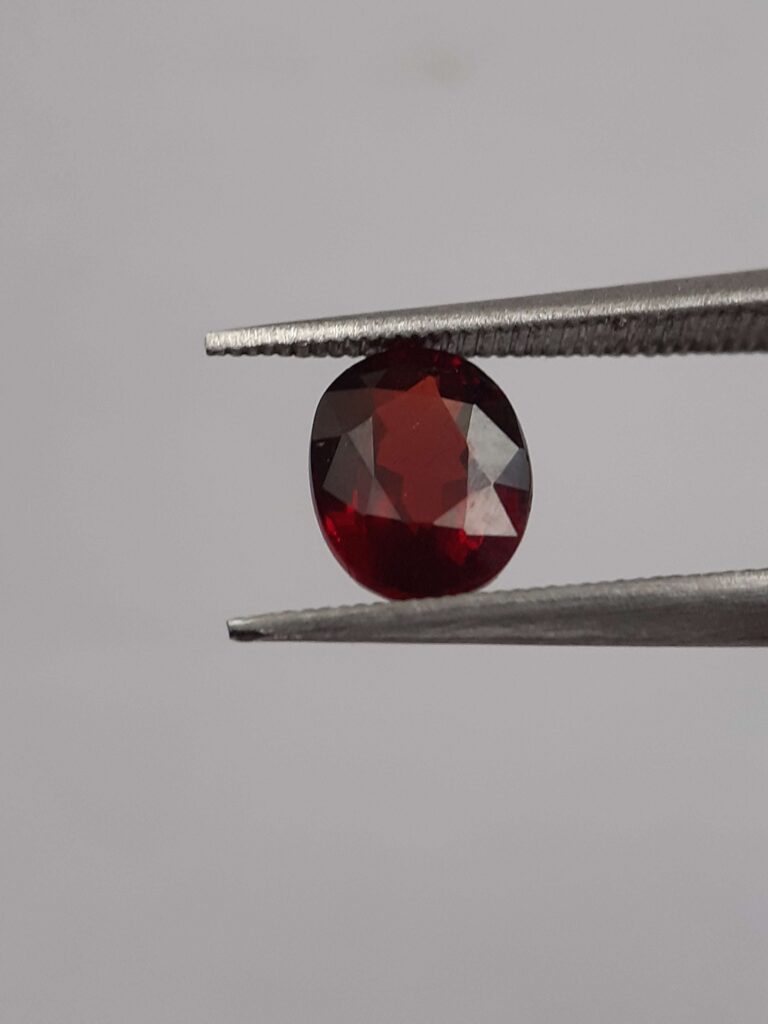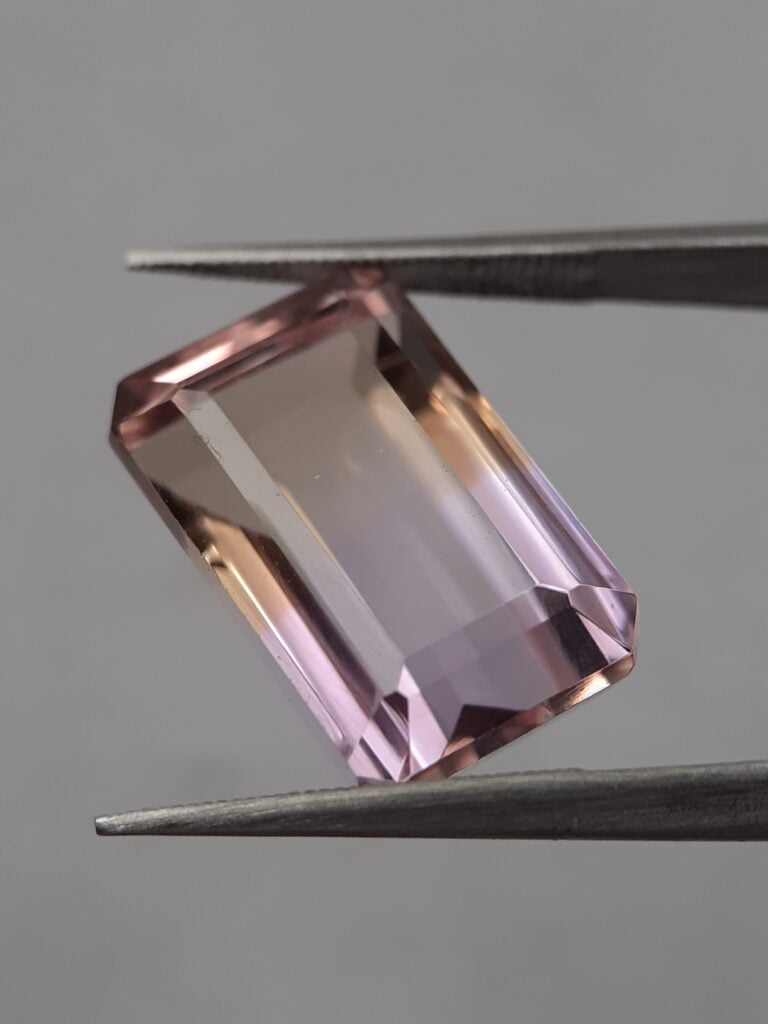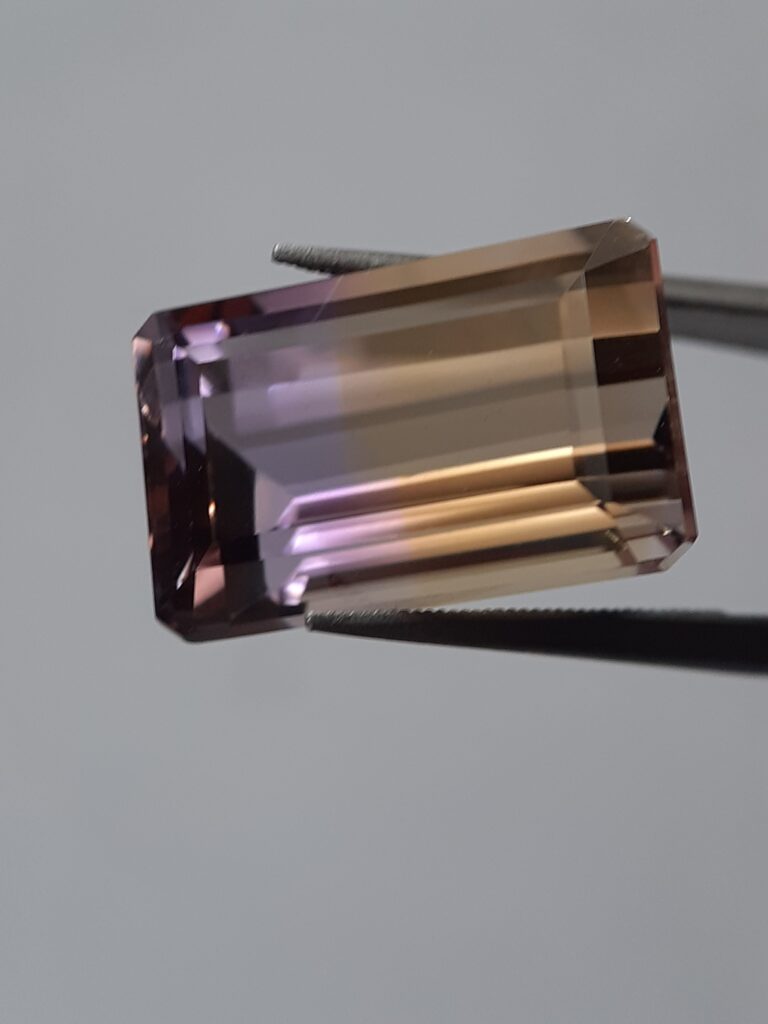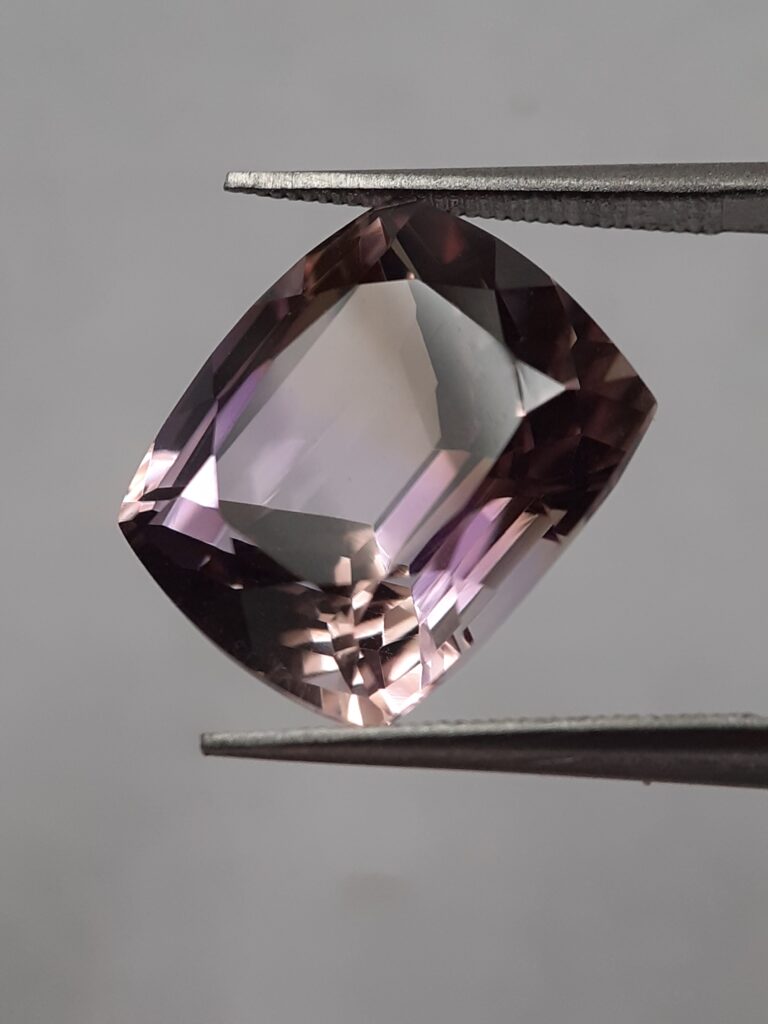
Tanzanite can be one of the most visually distinctive coloured gemstones in the market. This is the ultimate Tanzanite Buying Guide to help you in your purchase.
Its combination of blue, violet and purple gives it an appearance that can change noticeably with viewing direction and lighting. This visual complexity is part of its attraction, but it also means that buying tanzanite intelligently requires more than selecting the stone described as the deepest blue or carrying the highest commercial grade.
Two tanzanites of similar weight can look surprisingly different.
One may appear predominantly blue. Another may show much more violet. A third may be lighter but exceptionally lively. The way the gemstone was cut, the direction from which it is viewed and the lighting environment can all influence what the buyer sees.
In this comprehensive Tanzanite Buying Guide, Lena Hoffmann explains the practical questions worth asking before purchasing tanzanite.
Table of Contents
1. Never Judge Tanzanite Colour From One Photograph
Colour is one of the first things buyers notice in tanzanite.
It is also one of the easiest characteristics to misunderstand online.
A professionally illuminated tanzanite may appear intensely blue in one photograph and noticeably more violet in another.
This does not necessarily mean that one photograph is inaccurate.
Tanzanite itself can display different colours depending on viewing direction and lighting.
GIA explains that fashioned tanzanite commonly shows a mixture of blue and violet hues.
For the buyer, the practical consequence is important:
Do not judge an expensive tanzanite from a single photograph.
Look for several images of the actual stone.
Video is even more useful.
Ideally, the gemstone should be shown while moving slightly so you can see how its colour changes as the viewing angle changes.
This gives you a much more realistic impression of what the gemstone will look like in your hand or in jewellery.
2. Understand Why Tanzanite Changes Colour
One of tanzanite’s defining visual characteristics is pleochroism.
In simple consumer terms, this means the gemstone can display different colours when viewed in different directions through its crystal structure.
In a finished tanzanite, this is commonly experienced as changing proportions of blue and violet as the stone is moved.
This characteristic is not a defect.
It is part of tanzanite’s identity.
Some stones appear more blue face-up.
Others display a stronger violet or purple component.
Before buying, gently compare the gemstone from several viewing angles if possible.
Do not automatically interpret a visible violet component as lower quality.
Different buyers genuinely prefer different colour balances.
The objective is to understand the colour personality of the specific gemstone rather than purchase a colour description.
3. More Blue Can Command a Premium – But It Is Not Automatically Better for You
Predominantly blue tanzanite can be less common than more violet-dominant material.
The reason relates partly to the direction of colour within the original crystal and the decisions made during cutting.
GIA explains that the blue colour is usually associated with a crystal direction that can require the cutter to sacrifice more weight if the finished stone is oriented to show predominantly blue face-up.
The cutter may therefore face a choice:
produce a larger gemstone showing more violet,
or sacrifice more rough to produce a smaller but more predominantly blue stone.
This helps explain why strongly blue face-up tanzanite can command a premium.
But rarity and personal preference are not the same thing.
A richly violetish-blue tanzanite may appeal to you much more than a predominantly blue example.
Buy the appearance you enjoy rather than assuming that the bluest possible stone must always be the correct choice.
4. Look for Saturation, Not Simply Darkness
As with many coloured gemstones, stronger colour saturation generally has an important influence on tanzanite desirability.
Fine stones can show vivid and intense blue-violet colour.
Paler stones are more common and generally more affordable.
But deep colour should not be confused with excessive darkness.
A stone that appears very dark in photographs may lose much of its visual interest under ordinary indoor conditions.
Look for balance.
Does the gemstone have attractive colour while remaining alive?
Can you still see light moving through and returning from the stone?
Does it remain attractive away from intense photographic lighting?
A tanzanite should not need perfect studio illumination to look beautiful.
5. Compare Tanzanite Under Different Types of Light
Tanzanite can respond noticeably to different lighting environments.
GIA notes that cooler daylight-equivalent illumination can emphasise its blue component, while warmer incandescent-type lighting can make violet and purple more apparent.
For a buyer, this matters.
A stone selected under one carefully controlled showroom lamp may look somewhat different in normal daily life.
Whenever practical, examine tanzanite under more than one realistic lighting condition.
When purchasing online, look for sellers who provide images or video under neutral illumination rather than only highly stylised photography.
Colour change caused by normal lighting should not be considered a problem.
It is part of what makes tanzanite visually interesting.
The important thing is knowing what to expect.
6. Cut Matters More Than Shape
Oval, cushion, pear, round and more unusual tanzanite cuts can all be attractive.
Shape is largely a matter of personal preference.
Cut quality is different.
A well-cut tanzanite should present its colour attractively while returning light effectively across the gemstone.
Look at the stone face-up.
Are there large areas that remain persistently dark?
Does the centre appear lifeless?
Is there a large transparent-looking area through which you seem to look straight through the gemstone rather than receiving light back?
Does the colour appear attractively distributed?
With tanzanite, cut is especially important because orientation also influences which pleochroic colour dominates.
The cutter is therefore balancing several considerations at once: colour, weight retention, proportions and optical appearance.
A large tanzanite is not automatically a better tanzanite.
A smaller stone with superior colour presentation and cutting may be far more visually satisfying.
7. Expect Fine Tanzanite to Look Relatively Clean
Different gemstones require different expectations concerning inclusions.
Emerald buyers commonly accept visible internal features.
With faceted tanzanite, expectations are different.
Much of the tanzanite used in jewellery is relatively free from inclusions visible to the unaided eye.
GIA consequently notes that eye-visible inclusions can reduce tanzanite value, particularly in lighter stones where they are easier to see.
For the consumer, this does not mean that every microscopic characteristic matters.
Instead, examine the gemstone at normal viewing distance.
Are there inclusions that immediately catch your attention?
Do they reduce transparency?
Are there obvious fractures?
Fractures deserve particular attention because they may influence more than appearance.
They can also be relevant to durability.
The question is therefore not whether the stone is microscopically perfect.
It is whether its internal characteristics materially affect beauty or safe use.
8. Most Tanzanite Is Heat Treated – and That Is Normal
The subject of treatment requires a different mindset with tanzanite than with ruby or sapphire.
Most attractive blue and violet tanzanite available in the market has been heat treated.
Untreated material is typically more brownish, with additional colour components that heating can reduce.
Heat treatment allows the familiar blue and violet colours to become dominant.
GIA states that the majority of tanzanite on the market has been heated in some form and that this routine treatment generally has little effect on pricing.
The treatment is also considered stable.
This means that buyers should not automatically interpret the word heated as negative.
Nor should they assume that an unheated claim automatically creates the same commercial significance it might have with a fine ruby or sapphire.
The more important principle is disclosure.
You should understand what you are buying.
9. Do Not Assume Every Treatment Is the Same
Routine heat treatment is one thing.
Other possible treatments are different.
GIA has reported occasional coating of tanzanite to modify colour and notes that coatings are not necessarily permanent.
Fracture filling can also occur, although it is considered uncommon.
This is why a treatment statement should ideally be more precise than simply:
“Treated” or “untreated.”
If a tanzanite has only undergone the routine heat treatment normally associated with the material, that is useful information.
If coating, fracture filling or another treatment is present, that is a different purchasing consideration.
CIBJO’s gemstone disclosure standards likewise emphasise the importance of accurately communicating treatment information to consumers.
A treatment is not automatically a reason to reject a gemstone.
Undisclosed treatment is a reason to ask questions.
10. Be Careful With “AAA Tanzanite”
You will encounter expressions such as:
AAA Tanzanite,
AAA+,
AAAA,
AA,
A Grade,
Premium Grade,
Exceptional Grade,
or Investment Grade.
These expressions can sound authoritative.
But there is an important fact every consumer should know:
There is no universal independent AAA grading scale for tanzanite.
GIA explicitly states that individual companies may create their own quality descriptions such as AAA, AA and A, but that no standard quality-grading scale exists for tanzanite.
That does not mean every seller using an internal grade is behaving incorrectly.
A company can develop a consistent internal evaluation system.
Natural Gems Belgium, for example, can apply its own disclosed evaluation methodology to compare material consistently within its own catalogue.
But an internal commercial grade should never be confused with a universal laboratory standard.
An AAA stone from Seller A cannot automatically be assumed equivalent to an AAA stone from Seller B.
Ask what the grade actually measures.
Then evaluate the gemstone itself.
11. GIA Evaluates Tanzanite – It Does Not Give It an Overall Quality Grade
This distinction is closely related to the previous point.
GIA states that it evaluates tanzanite but does not assign an overall tanzanite quality grade.
A GIA Colored Stone Identification Report can describe characteristics of the gemstone, establish whether the submitted material is natural or laboratory-grown and report detectable treatments.
That is valuable information.
But the report does not issue a universal quality score declaring one tanzanite “AAA” and another “AA”.
This helps clarify the different roles involved in buying a coloured gemstone.
A laboratory establishes important facts about identification and treatment.
The seller describes and evaluates the individual product.
The buyer determines which combination of appearance, documentation and price is right for them.
These functions should support each other, not be confused with each other.
12. Bigger Does Not Automatically Mean Better
Tanzanite has an interesting relationship between size and colour.
GIA notes that deeper, strongly saturated colours are often seen in larger gemstones, while smaller stones more commonly show lighter colour.
This can make larger tanzanites especially attractive.
But carat weight should still not become the only buying criterion.
Imagine two stones.
One is larger but pale, poorly proportioned and visually lifeless.
The other is slightly smaller but has strong saturation, attractive cutting and an appealing balance of blue and violet.
The second stone may easily be the more desirable purchase.
Look at weight as one part of the gemstone rather than as the definition of its quality.
13. Think About Durability Before Choosing the Jewellery
Tanzanite is suitable for jewellery, but it deserves more care than some other popular coloured gemstones.
This is particularly important if you are choosing a ring.
GIA describes tanzanite as having fair to poor toughness and notes that the material has cleavage, meaning it can be vulnerable to breaking when struck in an unfortunate direction.
This does not mean that tanzanite cannot be worn in rings.
It means that lifestyle and setting should be considered.
If you work frequently with your hands, regularly exercise while wearing jewellery or want a ring that will experience constant daily wear, a protective setting becomes more important.
Tanzanite can be especially well suited to earrings, pendants and jewellery that receives less direct impact.
For a ring, consider a design that helps protect vulnerable edges and corners.
The gemstone should fit the way you intend to live with it.
14. Care Instructions Are Part of the Purchase
A responsible gemstone purchase should include understanding how the stone should be cared for.
For tanzanite, GIA recommends warm soapy water for cleaning.
Ultrasonic and steam cleaners are not recommended.
Sudden temperature changes and very high temperatures should also be avoided.
This becomes particularly important when jewellery is being repaired.
Tell the jeweller that the piece contains tanzanite before work involving heat is carried out.
If unusual treatments such as fracture filling or coating have been disclosed, retain that information with the gemstone’s documentation because it may affect future care.
Buying information should remain useful long after checkout.
15. Do Not Buy Tanzanite as an Investment Story
Tanzanite marketing has sometimes relied heavily on its geographically restricted source.
The gemstone is associated with a very limited mining region in Tanzania, near Mount Kilimanjaro.
That geological exclusivity is genuinely interesting.
But consumers should be cautious when scarcity is transformed into a prediction of guaranteed future prices.
Statements such as:
“the mines will soon be exhausted,”
“prices can only rise,”
“buy now before it disappears,”
or
“guaranteed investment gemstone”
should not replace normal gemstone evaluation.
Future supply and market prices are not guaranteed simply because a gemstone comes from a geographically restricted deposit.
Buy tanzanite because you understand and appreciate the gemstone.
Do not rely on speculative resale promises.
16. Ask Whether the Photographs Show the Actual Stone
This point is especially important with tanzanite because of its colour behaviour.
A generic photograph representing an entire product category cannot accurately show the precise colour balance of the individual gemstone you will receive.
For significant loose stones, ask whether the images and video show the actual tanzanite offered for sale.
If they do, look at:
the face-up colour,
the balance between blue and violet,
how the colour changes when the stone moves,
how dark it becomes at certain angles,
the apparent clarity,
and the overall light return.
For tanzanite, video can be particularly informative because a static image cannot fully communicate pleochroism.
17. Ask Why One Tanzanite Costs More Than Another
Two tanzanites can have the same weight and shape yet occupy very different price levels.
There may be perfectly legitimate reasons.
One may show much stronger saturation.
One may have a particularly desirable blue or violetish-blue face-up colour.
One may have better cutting.
One may be significantly cleaner.
One may contain a fracture that reduces desirability.
One may simply have a much stronger overall visual appeal.
The important point is that the price difference should be understandable.
Avoid relying exclusively on commercial grading terminology.
Ask what you are actually paying for.
A seller should be able to explain the gemstone in ordinary language.
18. Compare Stones Side by Side Whenever Possible
This may be the single most useful practical buying technique for tanzanite.
Compare several stones at the same time.
Suddenly, differences become much easier to see.
One may be significantly more saturated.
Another may appear more blue.
Another may show stronger violet.
One may be larger but duller.
Another may return light much more evenly.
And sometimes the stone you personally prefer will not be the one carrying the highest commercial grade.
That is entirely reasonable.
Gemstone buying contains both objective information and personal visual preference.
The objective information helps you understand what you are buying.
Your own eyes determine which gemstone you actually want to own.
The NGB Buying Principle
Tanzanite should not be reduced to a contest for the deepest blue colour, the largest carat weight or the biggest number of A’s in a seller’s grading label.
Its beauty is more complex.
Pleochroism means blue and violet interact as the stone moves.
Cutting determines how those colours are presented.
Routine heat treatment is normal and generally stable.
Clarity matters, particularly when visible inclusions or fractures are present.
Durability should influence how the gemstone is set and worn.
And commercial quality labels only become meaningful when the seller explains what they actually represent.
The strongest purchase is therefore not necessarily the darkest, bluest, largest or supposedly “AAA+” tanzanite.
It is the tanzanite whose appearance you love and whose identity, treatment, condition and description you understand.
Buy the stone you love — but understand the stone you buy.
References & Further Reading
Gemological Institute of America (GIA) – Tanzanite Buyer’s Guide
Consumer guidance covering tanzanite colour, pleochroism, clarity, cut, treatments, durability and commercial grading terminology.
https://www.gia.edu/tanzanite/buyers-guide
Gemological Institute of America (GIA) – Tanzanite Quality Factors
Detailed educational information about tanzanite colour, pleochroism, heat treatment, clarity, cutting direction and carat weight.
https://www.gia.edu/tanzanite-quality-factor
Gemological Institute of America (GIA) – Tanzanite Care and Cleaning Guide
Guidance concerning tanzanite durability, safe cleaning, routine heat treatment, fracture filling, coatings and appropriate jewellery care.
https://www.gia.edu/tanzanite-care-cleaning
Gemological Institute of America (GIA) – Does GIA Grade Tanzanite?
Explanation that GIA evaluates and identifies tanzanite but does not assign a universal overall quality grade, together with information on Colored Stone Identification Reports.
https://www.gia.edu/FAQ/gia-faq-grade-tanzanite
Gemological Institute of America (GIA) – Tanzanite Gem Encyclopedia
General authoritative information about tanzanite, its colour, pleochroism, geographic occurrence and quality factors.
https://www.gia.edu/tanzanite
Gem-A – Understanding Tanzanite
Educational information from the Gemmological Association of Great Britain concerning tanzanite colour, pleochroism, heat treatment and identification.
https://gem-a.com/gem-hub/tanzanite-gemstone-facts/
CIBJO – The World Jewellery Confederation – The Blue Books
International jewellery-industry standards covering coloured gemstone nomenclature, treatment disclosure and responsible communication throughout the jewellery supply chain.
https://cibjo.org/the-blue-books/