Category Gemstone History & Civilisations

Whitby Jet and Victorian Mourning: How a Black Gemstone Became a Symbol of Love, Death and Remembrance
Whitby jet Victorian mourning jewellery

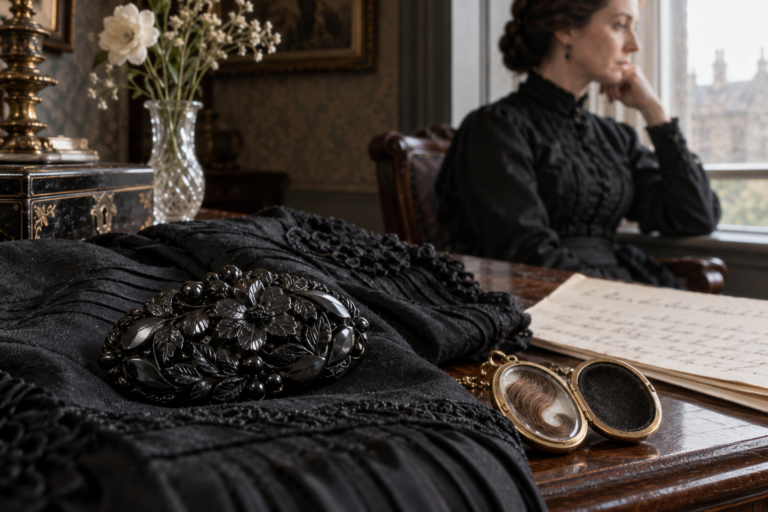
During the nineteenth century, a remarkable black gemstone from the Yorkshire coast became one of Britain's most powerful symbols of mourning. Whitby jet adorned necklaces, brooches, lockets and memorial jewellery, particularly after Queen Victoria's prolonged mourning for Prince Albert. Its significance, however, extended beyond fashion. Through religious symbolism, personal keepsakes and elaborate social rituals, jet became a material expression of grief, devotion and remembrance. Discover the documented history behind this extraordinary gemstone—and why its Victorian meaning differs fundamentally from modern crystal-healing beliefs.
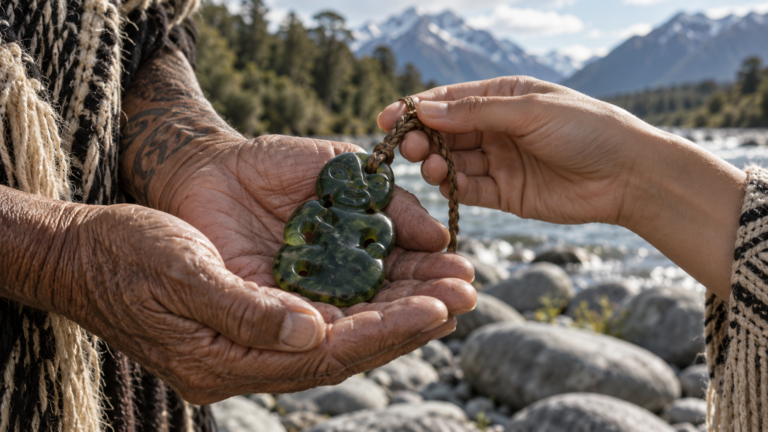
Pounamu in Māori Tradition: Hei Tiki, Mana, Ancestry and the Sacred Life of New Zealand Greenstone

pounamu Māori spiritual meaning

Pounamu is far more than New Zealand “greenstone.” For Māori, objects carved from pounamu can become taonga—treasured possessions carrying ancestry, status, memory and mana across generations. From hei tiki pendants to chiefly mere and hei matau, the stone reveals a living relationship between geology, craftsmanship, whakapapa and cultural identity that cannot accurately be reduced to modern ideas of “jade energy.”

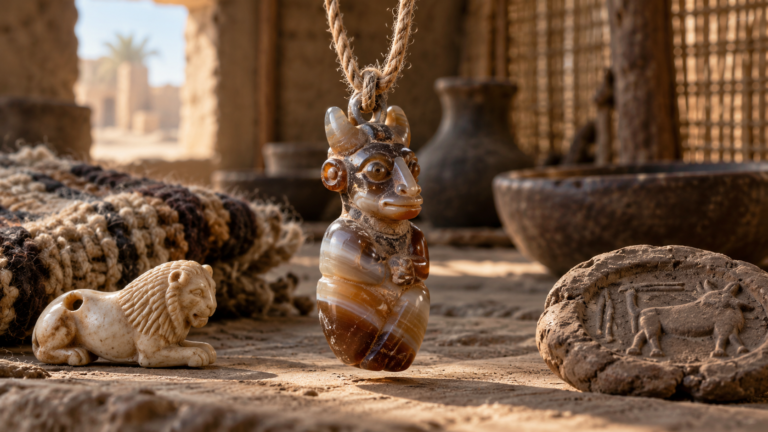
Agate Against Demons: Amulets, Protective Magic and Fear in Ancient Mesopotamia

agate amulets ancient mesopotamia

Nearly five thousand years ago, people in Mesopotamia carved agate, shell and other materials into small objects worn or carried as amulets. A remarkable Sumerian agate demon head shows that stones could participate in a sophisticated world of protection, supernatural danger and ritual practice. Yet ancient Mesopotamian magic was far more complex than the modern idea of a “protective crystal”: material, image, deity, inscription and ritual could all contribute to an object's meaning.

Emeralds in Mughal India: Sacred Inscriptions, Talismanic Belief and the Journey of Colombian Green

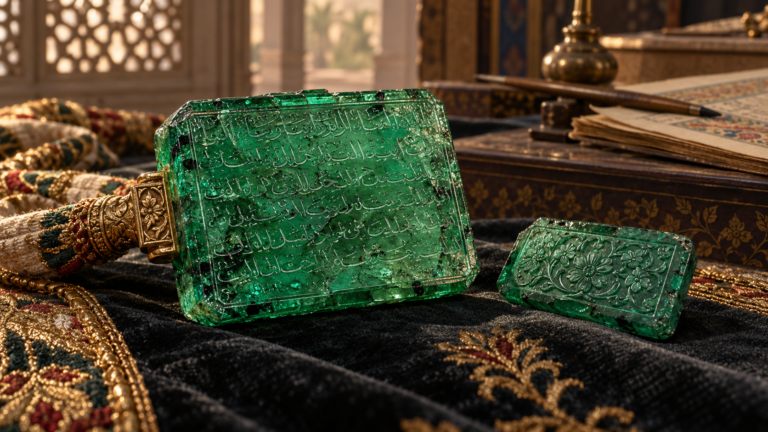
emeraldsinmughalindia; Colombian emerald tablet resting on a restrained dark textile in an elite Mughal court environment

Emeralds reached Mughal India through expanding global trade and became some of the court's most admired gemstones. Certain examples were carved with flowers, Qur'anic verses, prayers and pious formulas and could be worn as talismans. Their history reveals an extraordinary meeting of Colombian geology, Islamic devotion, Mughal craftsmanship and early modern global commerce—while showing why historical gemstone belief must be distinguished from modern crystal healing.

Red Coral Against the Evil Eye: Protection, Childhood and Belief in the Mediterranean World

coral protection mediterranean

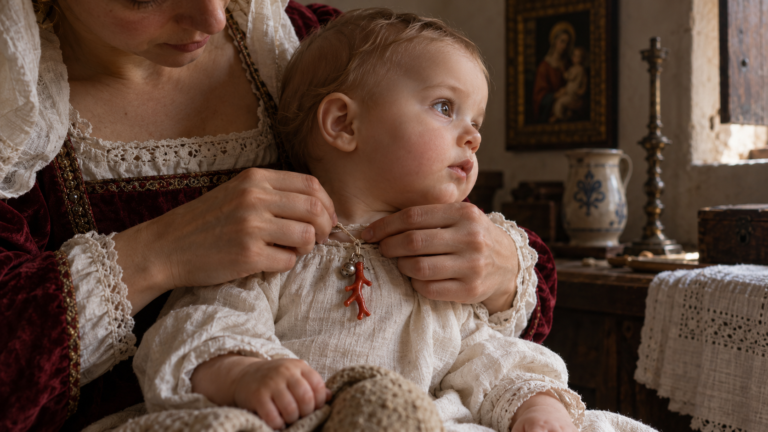
For centuries, Mediterranean communities transformed red coral from a marine organism into jewellery, amulets and protective objects. Particularly associated with children, danger and the evil eye, coral occupied an unusual boundary between nature, medicine, religion and magic. Its documented history reveals a sophisticated protective tradition—but not scientific evidence that coral itself can repel misfortune or disease.

Garnet at Sutton Hoo: Warrior Power, Burial Beliefs & a Gemstone from Distant Worlds

garnet at sutton hoo

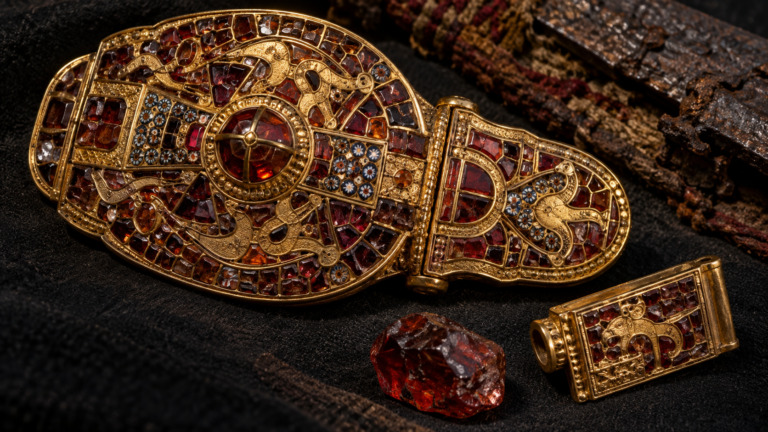
The extraordinary red garnets of Sutton Hoo were more than decorative stones. Set into gold weapons, shoulder clasps, a helmet and a royal purse, they helped communicate power, identity and status within one of Europe's most remarkable early medieval burials. Modern analysis has revealed an equally astonishing story: some of these gems travelled to England from India and Sri Lanka.

Amber in the Ancient Baltic & Roman World: Sunlight, Amulets and the Long Road South

amber spiritual meaning in ancient europe

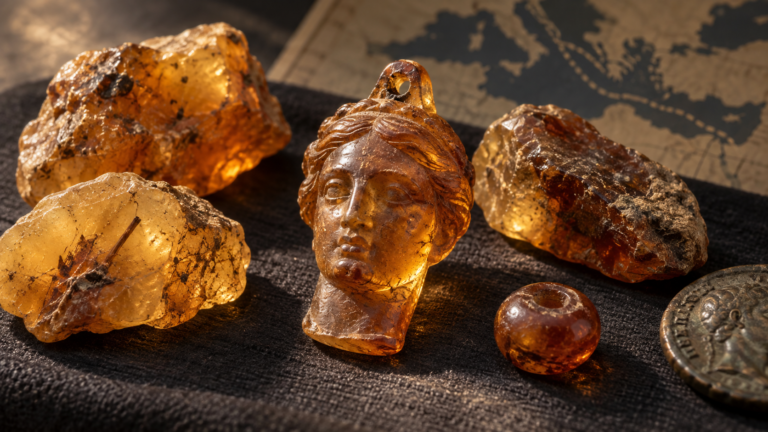
Amber connected the Baltic coast with the Roman world through one of antiquity's most remarkable exchange networks. Worn as jewellery, carved into amulets and surrounded by beliefs about protection and the sun, this fossil resin occupied a fascinating space between natural material, medicine, magic and luxury.

Carnelian in the Indus Civilization: Sacred Colour, Beads & Ancient Beliefs

carnelian in the indus civilization

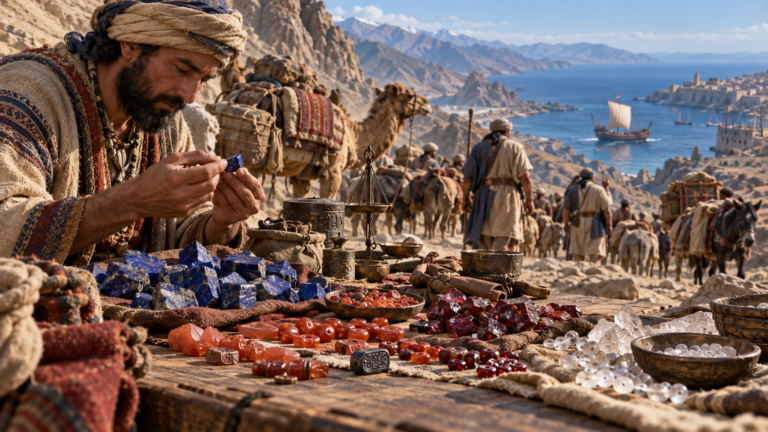
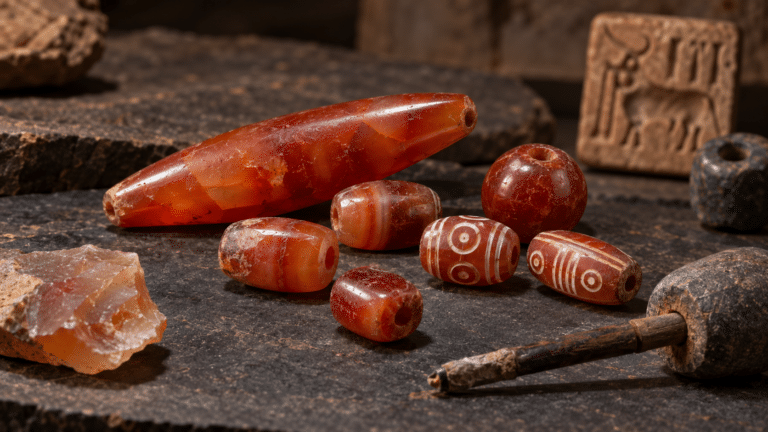
More than 4,000 years ago, Indus craftspeople transformed carnelian into some of the ancient world's most technically sophisticated beads. Found from Harappa and Dholavira to Mesopotamia, these objects reveal remarkable craftsmanship, status and exchange—but their spiritual meaning requires more caution than modern crystal lore often suggests.