Category Gemology & Identification

Gemstone Provenance Explained: What Can Really Be Proven About a Stone’s Origin?
gemstone provenance

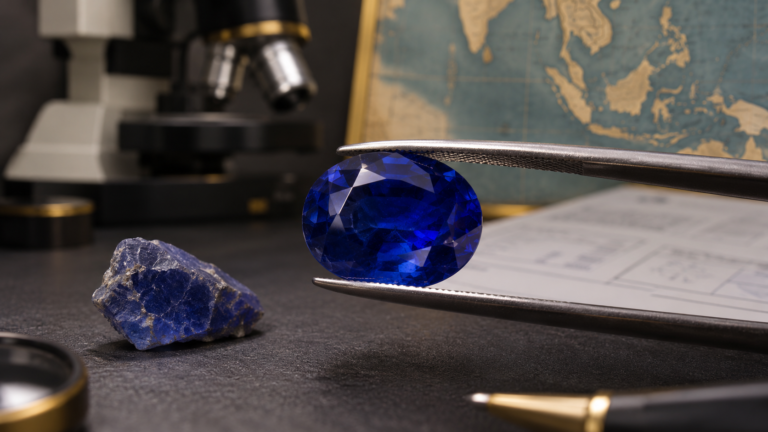
Where did your gemstone really come from- and how can anyone know? Discover how gemmologists investigate gemstone provenance using inclusions, spectroscopy, trace-element chemistry and reference collections. Learn the differences between mining origin, trading location, laboratory origin opinions and documented traceability, with practical guidance for interpreting gemstone reports and buying with confidence.
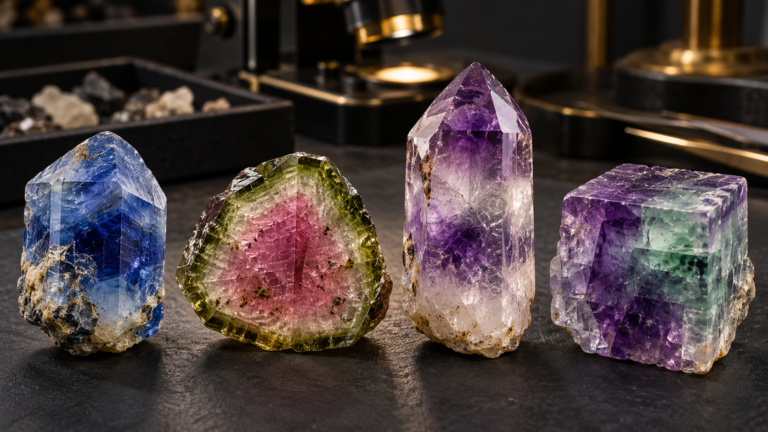
Gemstone Colour Zoning: Why Natural Crystals Develop Uneven Colours

Gemstone Colour Zoning: Why Natural Crystals Develop Uneven Colours

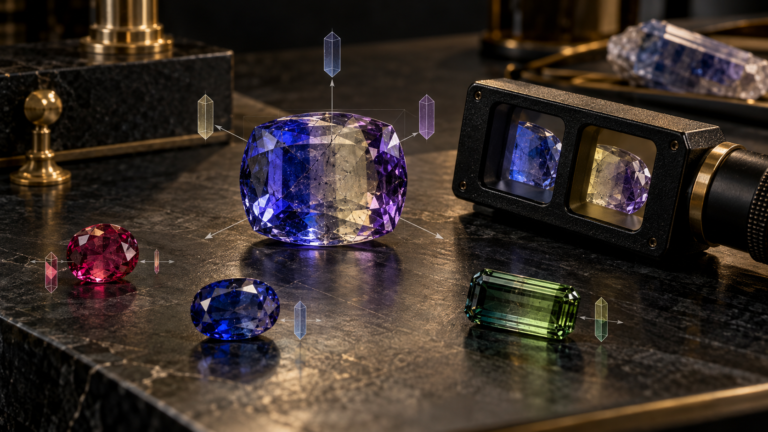
Why do some natural gemstones contain bands, patches or sharply defined areas of different colours? Explore the science of gemstone colour zoning, from trace-element variations and crystal growth to sapphire, tourmaline, amethyst and fluorite. Learn how gemmologists interpret these patterns, how cutters work with uneven colour distribution, and why colour zoning can sometimes reduce value while making other gemstones exceptionally desirable.

Gemstone Heat Treatments Explained: How Temperature Changes Colour, Clarity and Value

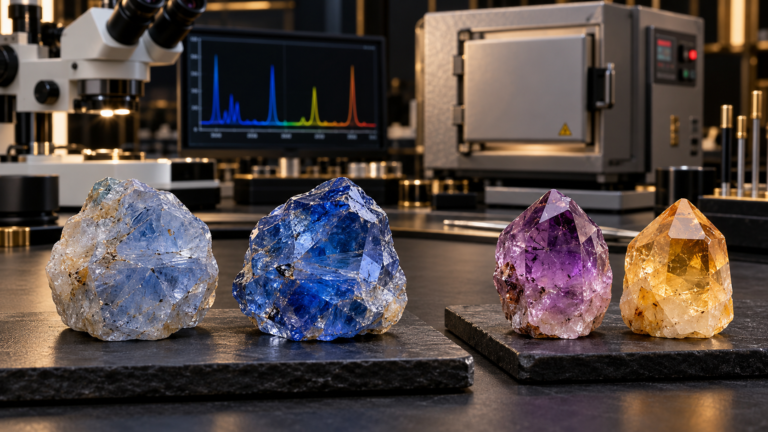
gemstone heat treatment explained, Scientific comparison of natural sapphire and quartz gemstones illustrating colour changes associated with professional heat treatment.

Heat treatment can transform the colour and clarity of natural gemstones without necessarily changing their mineral identity. Explore the science behind heated sapphires, rubies, aquamarines, citrines and other gemstones. Learn how temperature, atmosphere, trace elements and inclusions influence treatment results, how professional laboratories investigate heating and why accurate disclosure is essential when buying natural gemstones.

Gemstone Durability Beyond Mohs Hardness: Understanding Toughness, Cleavage, Stability and Everyday Wear

gemstone durability

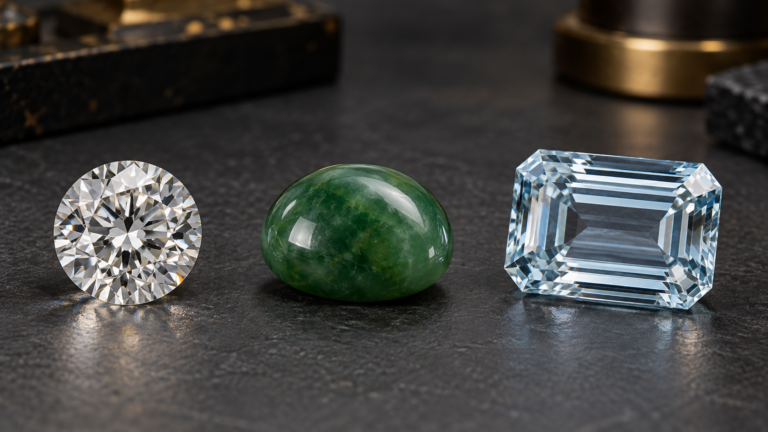
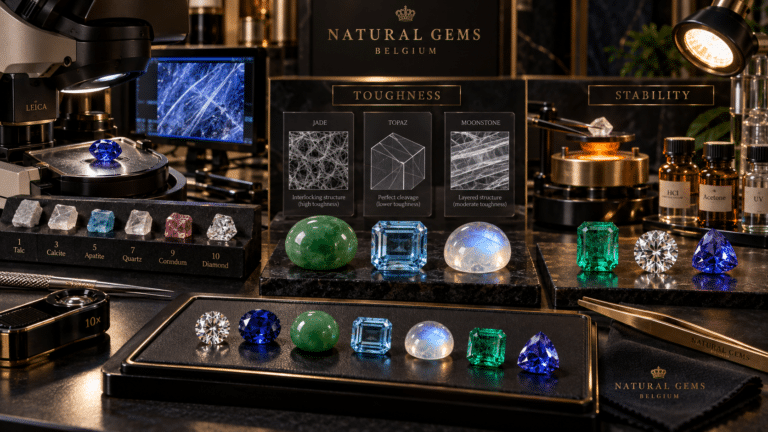
Is a harder gemstone always more durable? Not necessarily. Discover the scientific differences between hardness, toughness, cleavage and stability, and learn why diamond can chip, topaz can split and jade can resist powerful impacts. An essential guide to understanding gemstone durability and choosing natural gemstones for jewellery and collecting.

Why Some Gemstones Change Colour: The Science of Alexandrite, Sapphire and Garnet

Why Gemstones Change Colour

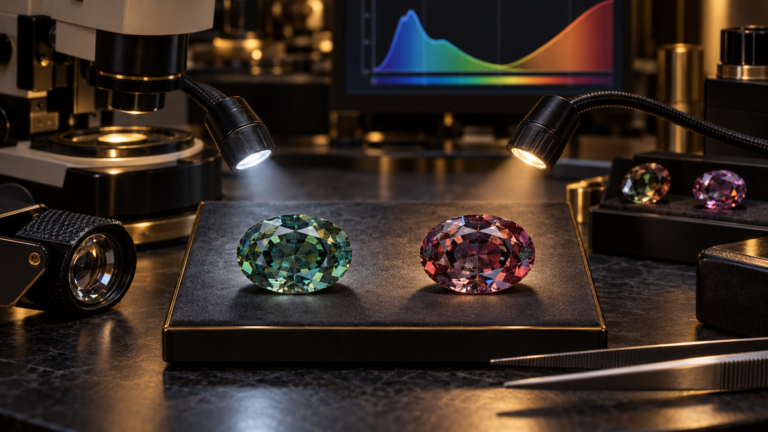
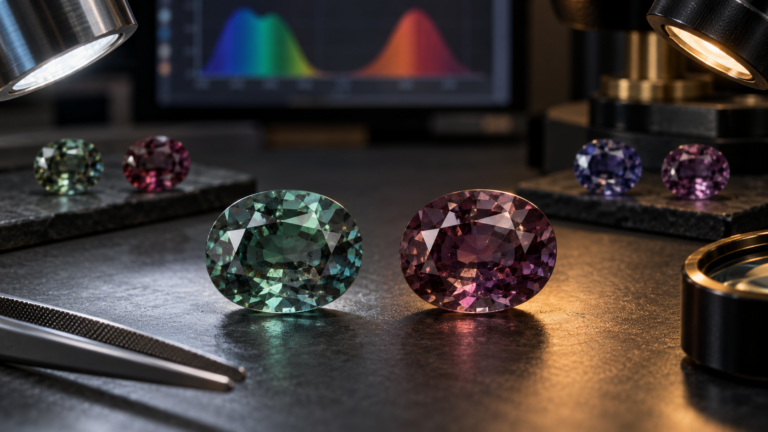
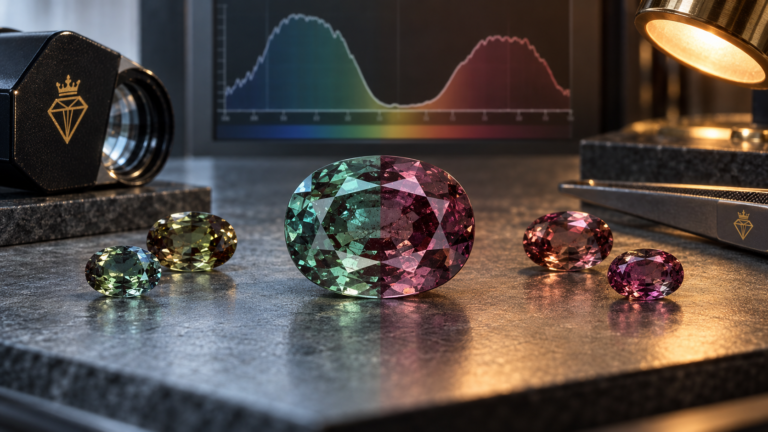
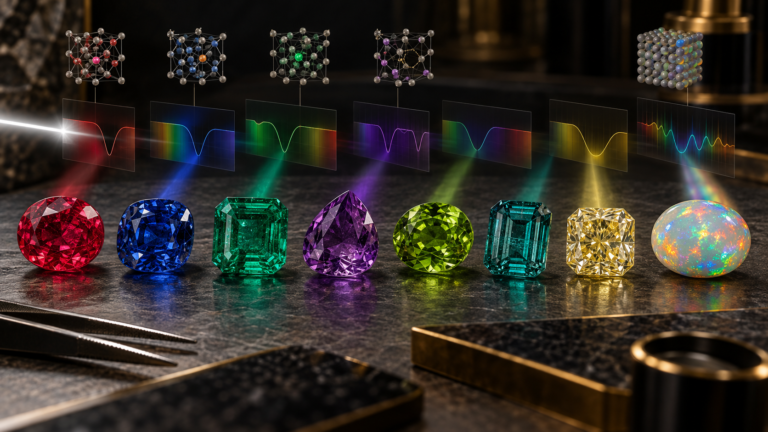
Some gemstones appear green in daylight but red or purple under incandescent lighting. This fascinating phenomenon is not caused by magic or a change in chemical composition. Discover how selective light absorption, trace elements and illumination interact to create the extraordinary colour changes observed in alexandrite, sapphire and garnet.