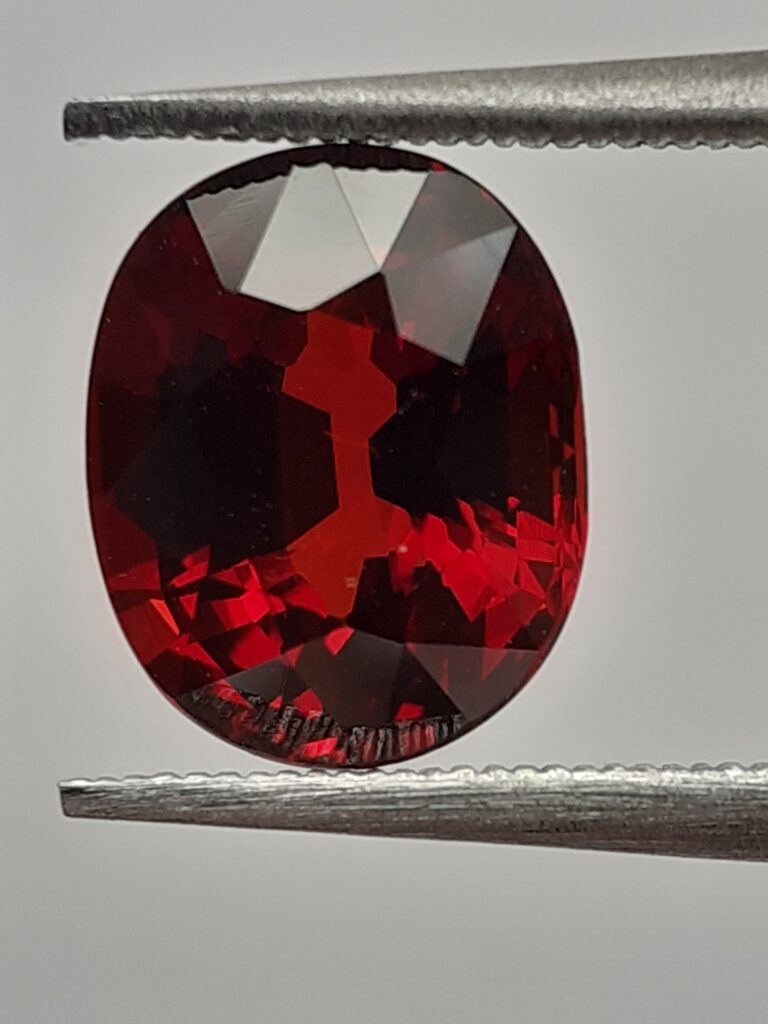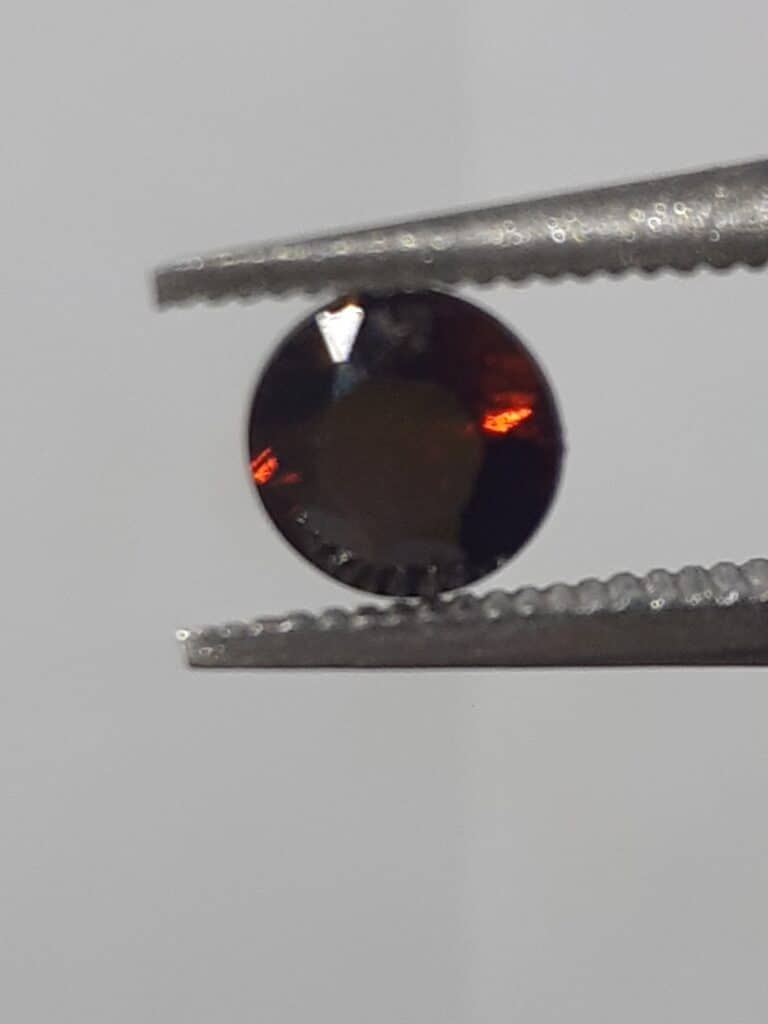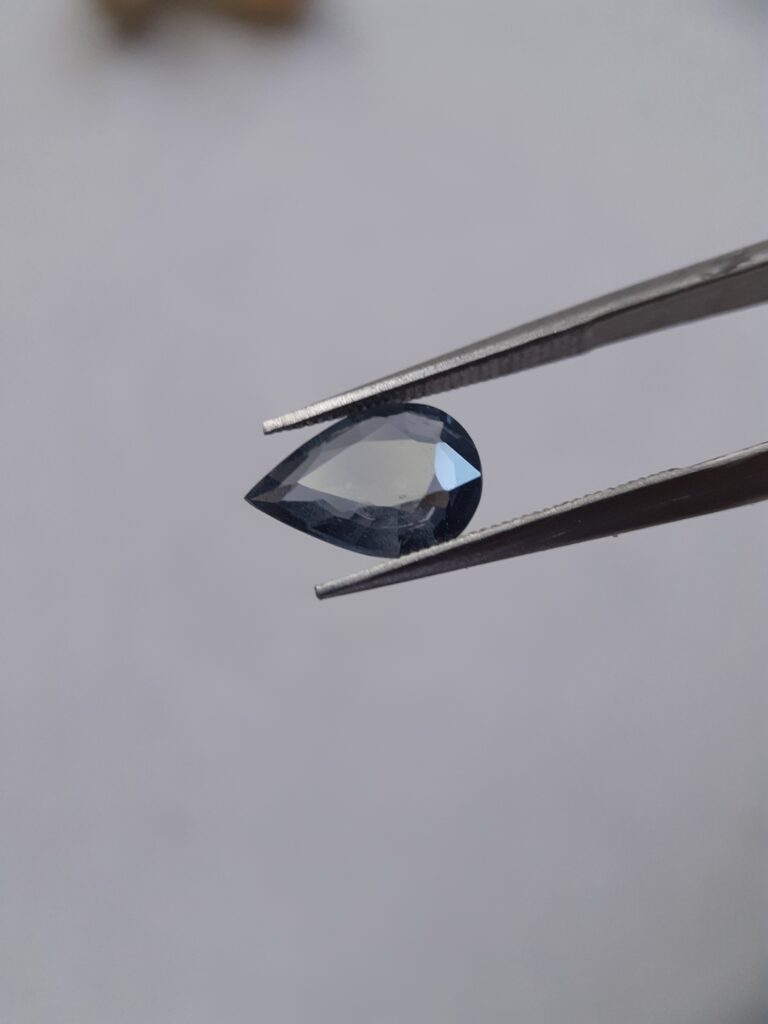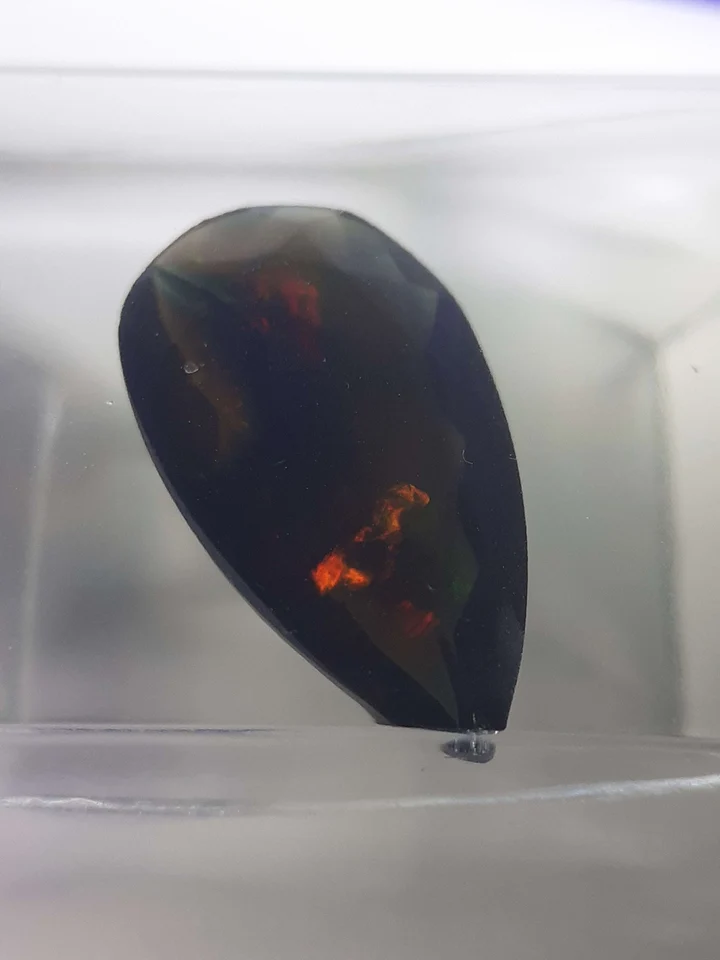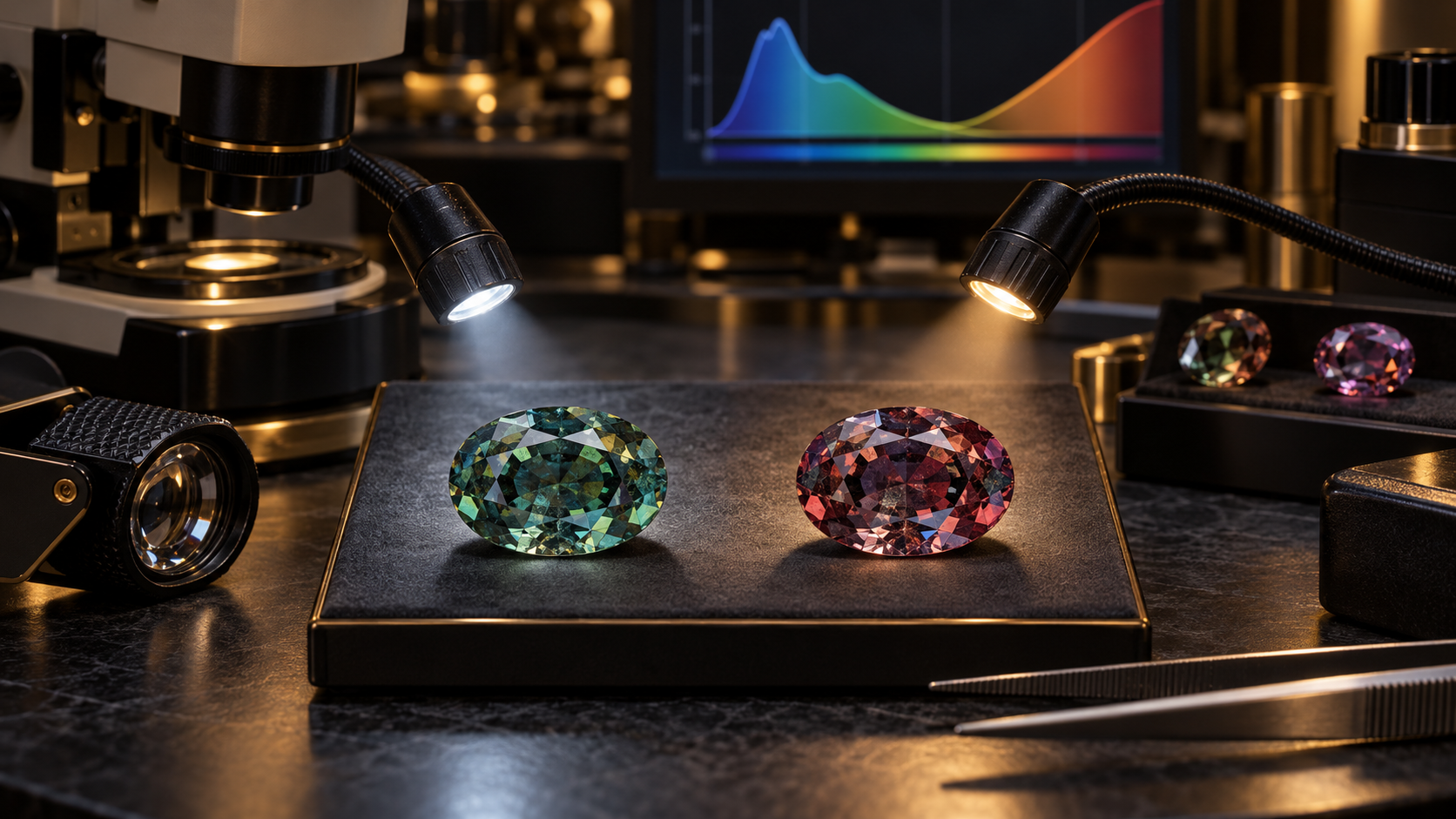
A gemstone appears green in daylight.
Move it beneath a warm incandescent lamp, and the same gemstone appears reddish-purple.
Its chemical composition has not changed. Its crystal structure has not changed. No treatment has been applied between observations.
Yet the colour perceived by the observer can be dramatically different.
This phenomenon, known as gemstone colour change, is one of the most fascinating demonstrations of how mineral chemistry, optical physics, illumination and human vision interact.
Alexandrite is its most celebrated example, but certain garnets, sapphires and other gem materials can also exhibit significant colour changes under different light sources.
Understanding the phenomenon requires more than simply comparing two photographs. It requires understanding what colour actually is.
Watch Episode 6 — Gemstone Colour Change: Why Some Gems Transform Under Different Light
In Episode 6 of the Natural Gems Belgium Gemmology Series, Marnick Elskens, Founder of Natural Gems Belgium, explores the scientific principles behind gemstone colour change.
The episode examines alexandrite, colour-change garnet and sapphire, explains selective absorption and illumination spectra, and demonstrates why colour change must not be confused with pleochroism.
The video provides the visual introduction. Below, we examine the optical science and gemmological implications in greater depth.
Table of Contents
What Is Gemstone Colour Change?
Gemstone colour change is a significant alteration in perceived body colour when a gemstone is observed under light sources with different spectral compositions.
A classic example is the transition from green or bluish-green under daylight-equivalent illumination to red or purplish-red under incandescent illumination.
The phenomenon is especially associated with alexandrite, a chromium-bearing variety of chrysoberyl.
However, it is not exclusive to alexandrite.
The underlying principle is that the spectrum transmitted by the gemstone interacts differently with different illumination spectra.
Importantly, the gemstone’s absorption characteristics do not need to change between observations.
The perceived colour changes because the spectral composition of the light entering the gemstone changes.
What Determines the Colour of a Gemstone?
The colour of a transparent gemstone depends on several interacting factors.
These include:
- the spectral composition of the illumination;
- the gemstone’s wavelength-dependent absorption;
- the optical path length through the material;
- the gemstone’s crystal structure and orientation;
- internal reflection and cutting geometry;
- and the spectral sensitivity of the human visual system.
The colour we perceive is therefore not simply an intrinsic label attached to a mineral.
It is the result of an interaction between a material, a light source and an observer.
This distinction is fundamental to colour science.
White Light Is Not Always Spectrally Identical
Two light sources can appear approximately white while containing very different distributions of visible wavelengths.
The distribution of radiant energy across wavelengths is called the spectral power distribution, or SPD.
Daylight has a broad visible spectrum, although its composition varies with atmospheric conditions, time of day and other environmental factors.
Traditional incandescent lighting also produces a broad spectrum, but it is weighted more strongly toward longer visible wavelengths.
This is why incandescent illumination often appears warm.
Modern LED lighting introduces additional complexity.
Two LED lamps with similar correlated colour temperatures can have substantially different spectral power distributions.
Therefore, a colour-change gemstone may not behave identically under every lamp marketed as daylight or warm white.
The precise illumination spectrum matters.
Selective Absorption: The Foundation of Gemstone Colour
When light passes through a transparent coloured gemstone, some wavelengths are absorbed more strongly than others.
This process is called selective absorption.
The wavelengths that survive transmission contribute to the colour reaching the observer.
Consider a gemstone that transmits relatively strongly in parts of the blue-green and red regions of the visible spectrum while absorbing strongly in an intermediate region.
Under one light source, the shorter-wavelength transmission region may contribute more strongly to the perceived colour.
Under another source, longer-wavelength contributions may dominate.
The gemstone can consequently appear to change hue.
The important scientific point is that the gemstone’s transmission spectrum can remain essentially unchanged.
What changes is the spectrum of the incident illumination.
The Alexandrite Effect
The term alexandrite effect describes a characteristic illumination-dependent colour-change phenomenon, classically involving a greenish appearance under daylight and a reddish appearance under incandescent light.
It was first recognised in chromium-bearing chrysoberyl from Russia’s Ural Mountains during the nineteenth century.
Subsequent gemmological research demonstrated that similar effects occur in other mineral species.
The classical alexandrite effect is associated with transmission in separated regions of the visible spectrum and strong absorption between them.
Gübelin and Schmetzer’s influential 1982 study examined this phenomenon across multiple gem materials and explained its relationship to their absorption characteristics.
This research remains an important foundation for understanding colour-change gemstones.
Alexandrite: Chromium-Bearing Chrysoberyl
Alexandrite belongs to the mineral species chrysoberyl, with the chemical formula BeAl₂O₄.
Its distinctive colour-change behaviour is principally associated with chromium substituting into the crystal structure.
Chromium-related electronic transitions produce selective absorption in the visible spectrum.
In fine alexandrite, this can produce a green to bluish-green appearance under daylight-equivalent illumination and a red to purplish-red appearance under incandescent illumination.
However, not every alexandrite exhibits the same strength or quality of colour change.
Some specimens show less saturated colours.
Others exhibit brownish or greyish modifiers.
The precise colour depends on trace-element chemistry, absorption characteristics, optical path length and viewing conditions.
Why Chromium Matters
Chromium is an important chromophore in several gemstone materials.
A chromophore is an element or structural feature responsible for absorption that contributes to visible colour.
In alexandrite, chromium-related absorption features help establish the characteristic spectral transmission pattern.
The colour change does not occur because chromium becomes a different element under different lamps.
Instead, the same absorption features interact with different illumination spectra.
The balance of transmitted wavelengths reaching the observer changes.
This produces the characteristic alexandrite effect.
Other trace elements, including vanadium and iron, may also influence the colour characteristics of individual alexandrite specimens.
Human Colour Vision Is Part of the Explanation
Gemstone colour change cannot be understood fully without considering human vision.
The human retina contains three classes of cone photoreceptors with overlapping spectral sensitivities.
These are conventionally described as short-, medium- and long-wavelength-sensitive cones.
Their responses overlap considerably.
They do not function as three isolated detectors for blue, green and red wavelengths.
The brain interprets the combined signals to produce our experience of colour.
Consequently, the same gemstone can produce different combinations of cone responses under different light sources.
The resulting perceived hue may change significantly.
This is why the alexandrite effect belongs simultaneously to gemmology, spectroscopy and colour science.
Metamerism and Colour Change
The term metamerism is often encountered in discussions of colour science.
Strictly speaking, metamerism describes situations in which different spectral distributions produce matching colour perceptions under specified viewing conditions.
A related phenomenon, metameric failure, occurs when that match breaks down under changed conditions.
Gemstone colour change is frequently discussed alongside these concepts because illumination-dependent spectral interactions are central to the effect.
However, the terms should not automatically be treated as interchangeable.
For gemmological purposes, the colour-change phenomenon is best described directly through the gemstone’s absorption spectrum, illumination spectrum and resulting perceived colour.
Colour-Change Garnet
Garnet is a mineral group rather than a single chemical composition.
Its members form complex solid-solution relationships.
Certain garnets exhibit pronounced colour-change effects.
These can include pyrope-spessartine-rich materials and other compositions containing colour-causing trace elements.
Depending on composition, examples may display combinations of greenish, bluish, purplish, reddish, orange or pink appearances under different light sources.
The exact colour pairing varies.
Some colour-change garnets have been documented displaying a greenish appearance under daylight-equivalent illumination and a reddish appearance under incandescent illumination.
Other examples show purple-to-pink or different shifts under selected lighting environments.
This variation illustrates why colour-change garnets should not be described using one universal colour formula.
Their optical behaviour must be investigated individually.
Colour-Change Sapphire
Certain sapphires also exhibit illumination-dependent colour change.
Sapphire belongs to the mineral species corundum, Al₂O₃.
Its colour can be influenced by trace elements and associated absorption processes.
Some colour-change sapphires appear blue or violet under daylight-equivalent illumination and purplish-pink or pinkish-purple under incandescent illumination.
GIA has documented examples of strongly colour-changing sapphire, including material with unusual trace-element chemistry.
As with alexandrite and garnet, the quality and strength of the change vary between specimens.
A sapphire should not be described as colour-changing merely because two photographs show different colours.
The lighting and observation conditions must be understood.
Colour Change Is Not Pleochroism
Pleochroism was the subject of Episode 5 of the Natural Gems Belgium Gemmology Series.
The distinction is essential.
Pleochroism occurs when a coloured anisotropic gemstone displays different absorption behaviour along different vibration directions.
The perceived colour may change as the crystal is viewed from different crystallographic directions.
The light source can remain unchanged.
Colour change, by contrast, refers to a change in perceived colour caused by a change in the spectral composition of illumination.
The gemstone can remain in the same orientation.
A gemstone may exhibit both effects.
Alexandrite itself is biaxial and pleochroic.
This makes the optical situation particularly interesting.
Scientific studies have demonstrated that pleochroism, cutting orientation, trace-element concentration and internal light paths can all influence the face-up appearance of faceted alexandrite.
But the presence of pleochroism should not be confused with the colour-change phenomenon itself.
Colour Change Is Not Colour Zoning
Colour zoning describes spatial variation in colour within a crystal.
Different regions may contain different concentrations of chromophores or reflect changes in growth conditions.
A gemstone can therefore display visibly different colours in different physical regions.
That is not automatically colour change.
In colour-change gemstones, the principal comparison concerns the same material under different illumination spectra.
Colour zoning and colour change may coexist, but they are separate phenomena.
Colour Change Is Not Photochromism
Another important distinction concerns photochromism.
Photochromism occurs when exposure to light causes a reversible change in the material’s absorption properties.
In that case, the material itself undergoes a light-induced change in optical state.
This is fundamentally different from the classical alexandrite effect, in which the gemstone’s absorption spectrum can remain stable while the illumination spectrum changes.
Certain gemstones can exhibit photochromic behaviour, but this should not be confused with ordinary illumination-dependent colour change.
How Gemmologists Examine Colour Change
A reliable colour-change examination requires controlled observation.
A practical procedure begins by examining the gemstone under a suitable daylight-equivalent source.
The stone is then examined under a warm incandescent source or another properly characterised illumination environment.
Where possible, the examiner maintains:
- consistent gemstone orientation;
- consistent viewing geometry;
- a neutral background;
- similar illumination intensity;
- and stable observation conditions.
The observer should record both the apparent colours and the strength of the difference.
A subtle shift in tone or saturation is not necessarily equivalent to a pronounced change in hue.
Professional evaluation should describe what is actually observed rather than force the result into a simplified colour-change category.
Why Modern LED Lighting Complicates Observation
Traditional descriptions of alexandrite often compare daylight with incandescent light.
Today, however, many homes and businesses use LED lighting.
LED lamps can differ considerably in spectral power distribution even when their colour temperatures appear similar.
A warm-white LED is not necessarily spectrally equivalent to an incandescent lamp.
Likewise, a daylight-labelled LED is not necessarily identical to natural daylight.
This matters because colour-change gemstones respond to the detailed spectral composition of illumination.
For consistent evaluation, the light sources should be known and documented.
Why Colour-Change Photography Is Difficult
Photographing colour-change gemstones is technically demanding.
Digital cameras record colour through sensor filters and image-processing systems.
Automatic white balance attempts to compensate for the colour of the illumination.
This can unintentionally reduce, exaggerate or otherwise alter the appearance of a colour-change effect.
Exposure, saturation processing, camera profiles and display calibration can also influence the final image.
Two photographs may therefore fail to reproduce what the human observer actually sees.
For scientific and commercial transparency, colour-change photographs should identify the lighting conditions whenever possible.
Artificially exaggerating the effect through digital colour manipulation is not an acceptable substitute for authentic documentation.
How Is Colour-Change Strength Evaluated?
Colour-change strength is commonly considered in relation to the magnitude and visual distinctness of the observed difference.
A gemstone that shifts dramatically between two clearly different hues may be considered to show a stronger change than one displaying only a minor variation in tone.
However, strength alone is not sufficient to describe overall quality.
The desirability of the colours under both illumination conditions matters.
A strong transformation between two unattractive, overly dark or weakly saturated appearances is not automatically superior to a somewhat less dramatic change between two attractive colours.
In fine alexandrite, the quality of the greenish daylight appearance and the reddish incandescent appearance is particularly important.
Colour Change and Gemstone Value
Colour change can contribute substantially to rarity and desirability.
In alexandrite, strong colour change combined with attractive colours, good transparency, high clarity and favourable size can be exceptionally valuable.
However, gemstone value is multidimensional.
Important factors include:
- the identity of the gem material;
- natural or synthetic origin;
- the quality of both observed colours;
- strength of colour change;
- clarity;
- transparency;
- cut quality;
- carat weight;
- treatment status;
- and market rarity.
The most dramatic colour change does not automatically identify the highest-quality gemstone.
A complete evaluation remains essential.
Does Colour Change Prove a Gemstone Is Natural?
No.
Laboratory-grown alexandrite and other synthetic materials can also display genuine colour-change behaviour.
The optical phenomenon is not restricted to geological origin.
Therefore, observing a convincing green-to-red transformation does not prove that a gemstone is natural alexandrite.
Professional identification must establish the mineral species and, where relevant, natural versus synthetic origin using appropriate gemmological and laboratory evidence.
This is another example of a fundamental principle:
An optical phenomenon can support identification without independently proving origin.
The Scientific Importance of Colour Change
Colour-change gemstones demonstrate that perceived gemstone colour is not an isolated material property.
It emerges from an interaction between illumination, selective absorption, crystal optics and human vision.
The same gemstone can produce dramatically different visual impressions without any alteration to its chemical composition.
This makes colour change a powerful educational subject.
It connects mineral chemistry with spectroscopy.
It connects crystal optics with colour science.
And it demonstrates why professional gemmology must consider the conditions under which observations are made.
A gemstone does not need to transform physically to appear transformed visually.
Sometimes, changing the light is enough.
References & Further Reading
Gemological Institute of America — Alexandrite Quality Factors
Explains the colour-change characteristics, clarity, cut and value factors of fine alexandrite.
https://www.gia.edu/alexandrite-quality-factor
Gübelin, E. J. & Schmetzer, K. — Gemstones with Alexandrite Effect
Gems & Gemology, Winter 1982. Foundational research on the absorption characteristics and illumination-dependent colour change of several gem materials.
https://www.gia.edu/gems-gemology/winter-1982-alexandrite-effect-gubelin
Schmetzer, K. — Pleochroism and Color Change in Faceted Alexandrite: Influence of Cut and Sample Orientation
Gems & Gemology, Spring 2019. Advanced analysis of the relationship between pleochroism, crystal orientation, cutting and face-up colour change.
https://www.gia.edu/gems-gemology/spring-2019-pleochroism-color-change-in-faceted-alexandrite-influence-cut-orientation
GIA — Low-Fe, High-V Color-Change Burmese Sapphire
Gems & Gemology, Spring 2019. Laboratory case study examining strong colour change in sapphire and its chemical characteristics.
https://www.gia.edu/gems-gemology/spring-2019-labnotes-low-fe-high-v-color-change-burmese-sapphire
GIA — Pyrope-Spessartine Color-Change Garnet with a High Grossular Component
Gems & Gemology, Spring 2017. Research on colour-change garnet chemistry and measured colour under different illuminants.
https://www.gia.edu/gems-gemology/spring-2017-gemnews-pyrope-high-grossular-component0
GIA — Geographic Origin Determination of Alexandrite
Gems & Gemology, Winter 2019. Scientific research on alexandrite chemistry, colour-change characteristics and origin determination.
https://www.gia.edu/gems-gemology/winter-2019-alexandrite-geographic-origin-determination
GIA — Color-Change Garnets from Tanzania
Gems & Gemology, Spring 2015. Documented examples of colour-changing garnets and their behaviour under different light sources.
https://www.gia.edu/gems-gemology/spring-2015-gemnews-color-change-garnets-tanzania