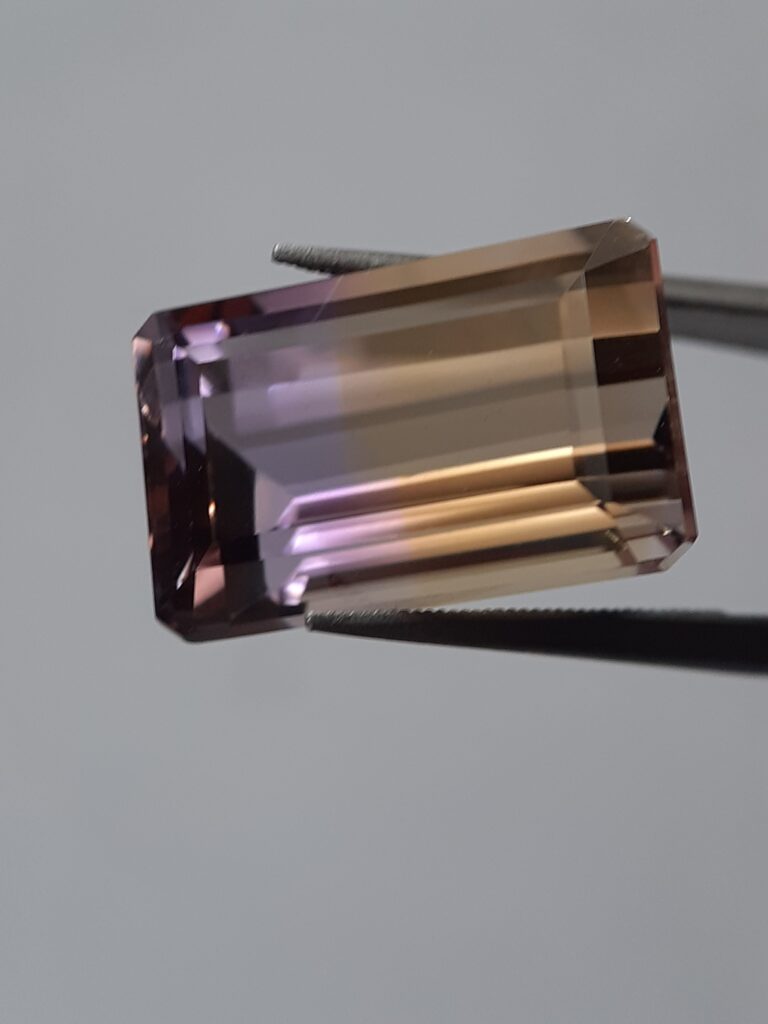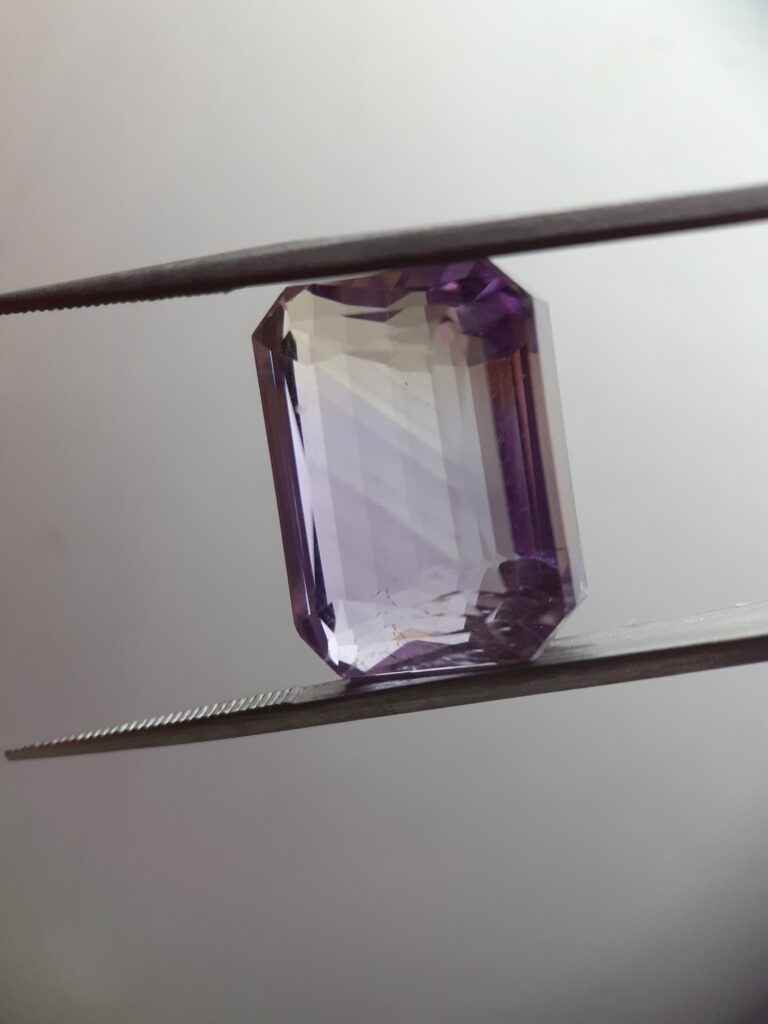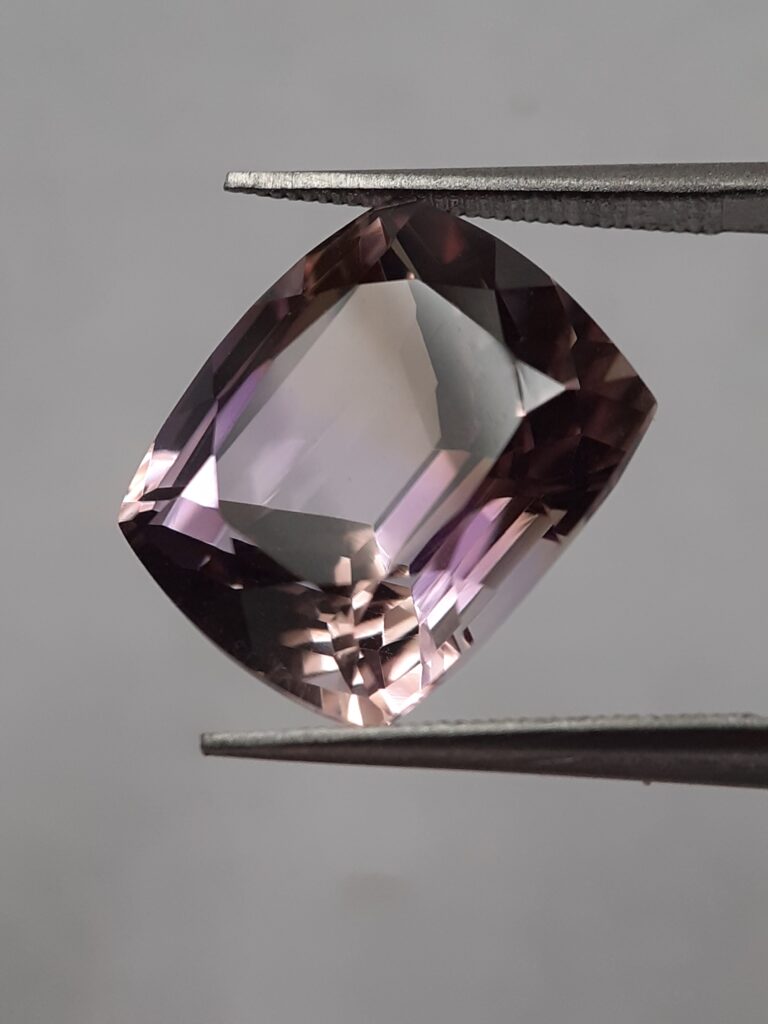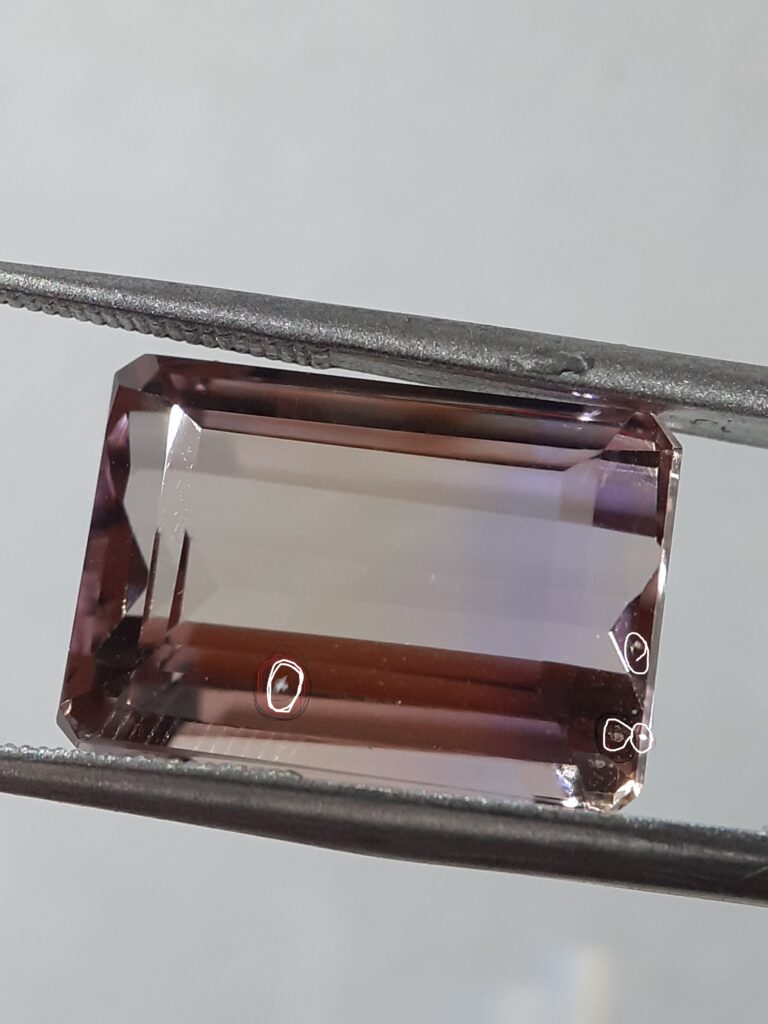
Few gemstones attract attention as quickly as a fine red ruby.
That attraction can also make ruby one of the more complicated coloured gemstones for consumers to purchase confidently. Two stones that both carry the name “ruby” can differ enormously in appearance, treatment history, rarity, documentation and ultimately value.
The solution is not to become a gemmologist before making a purchase.
It is to know which questions matter.
In this Ruby Buying Guide, Lena Hoffmann explains the practical points worth considering before purchasing a natural ruby.
Table of Contents
1. Look at the Ruby Before You Read the Description
Start with the gemstone itself.
Before becoming influenced by words such as “Burmese”, “unheated”, “pigeon’s blood” or “investment quality”, ask yourself a simpler question:
Do I actually find this ruby beautiful?
Colour is one of the most important factors influencing the appearance of ruby. Highly regarded rubies typically combine attractive red colour with strong saturation while remaining sufficiently bright and lively.
That last point matters.
Dark does not automatically mean better.
A ruby may have a very strong red colour but become so dark that much of its brightness and visual life disappear.
Whenever possible, compare several rubies side by side.
A comparison often reveals differences in brightness, colour and overall appeal far more easily than examining one gemstone in isolation.
2. Look at the Ruby in Realistic Lighting
Professional gemstone photography can be beautiful, but lighting has a major influence on how red gemstones appear.
Strong directional lighting can make a ruby seem more vivid than it will under ordinary indoor conditions. Different backgrounds and camera settings can also change how we perceive colour.
When buying online, one photograph should therefore not be your only source of visual information.
Look for photographs from several angles and, ideally, video of the actual gemstone.
If possible, see how the ruby looks under normal daylight as well as ordinary interior lighting.
You are not looking for a stone whose colour remains absolutely identical under every condition.
You are trying to understand what it really looks like outside the perfect studio photograph.
3. Do Not Ignore the Cut
A ruby can possess attractive colour and still appear disappointing if its cut does not present that colour effectively.
Move the stone gently while looking across its face.
Does it return light attractively?
Does the entire gemstone participate visually, or are there large dark areas that remain almost lifeless?
Cut is one of the factors that has an important influence on a ruby’s overall appearance.
This is also why buying purely according to carat weight can be misleading.
A larger ruby is not necessarily the more attractive stone.
A slightly smaller gemstone with better proportions, more attractive colour presentation and stronger brightness can be far more appealing.
Compare stones visually, not merely numerically.
4. Expect Natural Rubies to Have Inclusions
Natural ruby commonly contains internal characteristics.
Completely inclusion-free natural rubies are uncommon, and the importance of inclusions depends largely on their visibility and on whether they influence transparency, brightness or durability.
Consequently, do not automatically reject a ruby because you can see an inclusion.
Instead ask:
Does it distract from the gemstone when viewed normally?
Does it significantly reduce its transparency?
Does it negatively affect the overall appearance?
Could its position potentially influence durability?
There is a substantial difference between a small natural feature that tells part of a gemstone’s geological story and a large fracture that dominates the appearance of the stone.
Likewise, a ruby that appears exceptionally clean should not automatically be assumed to be of exceptional natural quality.
Its identity and treatment history still matter.
5. Ask About Treatment — Specifically
This may be the single most important buying question for ruby.
Do not simply ask:
“Is this a natural ruby?”
A natural ruby can still have been treated.
Instead ask:
“What treatments, if any, have been detected or declared?”
Heat treatment is common in the ruby market and is generally accepted when properly disclosed.
However, other treatments also exist, including treatments that modify colour or improve the apparent clarity of heavily fractured material.
These treatments should not all be placed in the same category from a buying perspective.
A conventionally heated natural ruby and a heavily fracture-filled ruby are fundamentally different purchasing propositions.
The treatment description therefore matters.
If treatment status has an important influence on the price, ask for that information in writing.
Clear and accurate disclosure is one of the foundations of responsible gemstone selling.
6. Understand Why Glass-Filled Ruby Requires Special Attention
Glass filling deserves its own section because it can significantly transform the apparent appearance of heavily fractured ruby material.
In this treatment, fractures and cavities can be filled with glass so that they become much less visible. Material that originally had poor transparency can consequently look significantly clearer after treatment.
Research by GIA has demonstrated how effectively lead-glass filling can reduce the visibility of fractures.
The filling material may also react differently from ruby itself during certain cleaning, repair or chemical exposure situations.
This does not mean that a consumer can never purchase glass-filled ruby.
It means that the consumer needs to know exactly what is being purchased.
The price should reflect the nature of the material, the treatment should be clearly disclosed, and the owner should understand any special care requirements.
The most important point is therefore transparency.
A stone containing substantial glass filling should never be presented in a manner that causes a consumer to believe it is equivalent to an untreated or conventionally heated fine ruby.
For the buyer, this illustrates why the simple word “ruby” may not always tell the complete story.
7. Natural and Synthetic Ruby Are Different Product Categories
Synthetic ruby is not a modern invention.
Ruby was one of the earliest gemstones successfully produced in the laboratory, and synthetic ruby has been commercially available for more than a century.
Modern laboratory-created ruby can sometimes look extremely convincing.
Synthetic gemstone material can possess essentially the same principal chemical, optical and physical characteristics as its natural counterpart, while having been produced artificially rather than through natural geological processes.
That means appearance alone should not be used to decide whether a ruby is natural.
There is nothing inherently wrong with selling synthetic ruby.
The essential issue is disclosure.
A consumer purchasing a natural gemstone must be clearly informed if the material is laboratory-produced instead.
When the natural origin of an important ruby materially affects its price, independent identification becomes particularly valuable.
8. Be Careful With the Words “Pigeon’s Blood”
Few ruby descriptions attract as much attention as pigeon’s blood.
Historically, the expression has been associated with particularly desirable vivid red ruby colours.
However, simply placing those words in an advertisement does not establish the quality, origin or value of a gemstone.
Commercial colour terminology can be useful, but it can also become misleading when used without clearly defined criteria.
Professional gemmological laboratories may apply their own carefully defined requirements before using a trade-colour designation.
That is very different from a seller simply using the expression as promotional language.
So if a considerable premium is being requested because a ruby is described as pigeon’s blood, ask:
Who made that determination?
Is the description simply the seller’s opinion?
Or is it supported by a respected independent gemmological laboratory?
Never pay a major premium for terminology alone.
9. Do Not Confuse Geographic Origin With Quality
Certain ruby-producing locations have acquired legendary reputations.
Myanmar is perhaps the most famous historical example, while Mozambique has become one of the world’s significant modern sources of ruby. Other deposits also produce attractive material.
Origin can influence desirability and market value, particularly for exceptional stones.
But it does not automatically determine quality.
Even respected deposits produce gemstones across a broad range of qualities.
A mediocre ruby does not become exceptional simply because it came from a famous mine or country.
Evaluate the stone first.
Origin comes afterwards.
And when an important financial premium is based on geographical origin, ask for independent laboratory support for that claim.
10. Understand What a Laboratory Report Does
For a significant ruby purchase, an independent gemmological laboratory report can remove some of the most important uncertainties.
A professional coloured-stone identification report can establish whether a ruby is natural or laboratory-grown, report detectable treatments and, when requested and scientifically possible, provide an opinion concerning geographic origin.
But there is an important distinction.
An identification report is not automatically a complete quality grade.
A laboratory report therefore does not tell you whether you personally should find a ruby beautiful.
It answers different questions.
What is it?
Is it natural or laboratory-grown?
Is there evidence of treatment?
Can a scientifically supportable opinion on geographic origin be established?
These are questions for the laboratory.
Whether the colour, brightness and overall appearance appeal to you remains a purchasing decision.
11. Ask Why One Ruby Costs More Than Another
If two apparently similar rubies have very different prices, try to establish why.
The difference might reflect:
a more attractive colour,
better overall appearance,
greater transparency,
superior cutting,
larger size,
less significant treatment,
no evidence of heat treatment,
independent laboratory documentation,
or a substantiated geographic origin.
Several factors can legitimately affect the market position of a ruby.
What matters is whether the seller can explain them.
Be more cautious when a premium depends primarily on dramatic expressions such as:
“investment ruby”,
“museum grade”,
“collector quality”,
“AAA”,
“super premium”,
or similar proprietary marketing classifications.
Such terms do not substitute for disclosure.
A premium price deserves an understandable reason.
12. Look for a Seller Who Welcomes Questions
A knowledgeable gemstone seller should not make buying more mysterious than it needs to be.
Before purchasing an important ruby, you should be able to establish:
whether the stone is natural or laboratory-grown,
whether treatment has been detected or declared,
what type of treatment is involved,
whether the photographs and videos show the actual gemstone,
whether independent documentation accompanies it,
and which claims are supported by that documentation.
Transparency and accurate disclosure are central principles of responsible coloured-gemstone selling.
A seller who provides meaningful information allows you to make your own informed decision.
That is much more valuable than simply being told that a gemstone is exceptional.
The NGB Buying Principle
A fine ruby should be desirable because of what it is — not because important information has been omitted.
A heated natural ruby can be a beautiful and legitimate purchase when the treatment is clearly disclosed.
An included ruby can be an excellent choice if its colour and character appeal to you.
A ruby from a less prestigious geographic source can be considerably more attractive than a mediocre stone from a famous location.
And a laboratory report should support important claims rather than replace your appreciation of the gemstone itself.
The objective is not necessarily to buy the rarest ruby.
It is to understand the ruby you are buying.
Buy the stone you love — but understand the stone you buy.
References & Further Reading
Gemological Institute of America (GIA) — Ruby Buyer’s Guide
A practical consumer guide covering ruby colour, clarity, cut, treatments, origin and the value of independent laboratory reporting.
https://www.gia.edu/ruby/buyers-guide
Gemological Institute of America (GIA) — An Introduction to Synthetic Gem Materials
Background information explaining synthetic gemstone materials, including the history and production of synthetic ruby and synthetic corundum.
https://www.gia.edu/gia-website/gem-synthetic
GIA Gems & Gemology — Identification and Durability of Lead Glass–Filled Rubies
Scientific research by Shane F. McClure, Christopher P. Smith, Wuyi Wang and Matthew Hall examining the identification, appearance and durability implications of lead-glass-filled ruby.
https://www.gia.edu/gems-gemology/spring-2006-identification-lead-glass-filled-rubies-mcclure
CIBJO – The World Jewellery Confederation — Do’s & Don’ts Guide
Consumer-oriented guidance concerning transparency, disclosure and responsible terminology for coloured gemstones and artificial products.
https://cibjo.org/dos-donts-guide/
CIBJO – The World Jewellery Confederation — The Blue Books
International jewellery-industry standards covering gemstone nomenclature, disclosure, treatments and related terminology.
https://cibjo.org/the-blue-books/
CIBJO – Coloured Stone Commission
Information and resources from CIBJO’s Coloured Stone Commission, including gemstone standards and material-specific guidance.
https://cibjo.org/sectors-commissions-committees/