

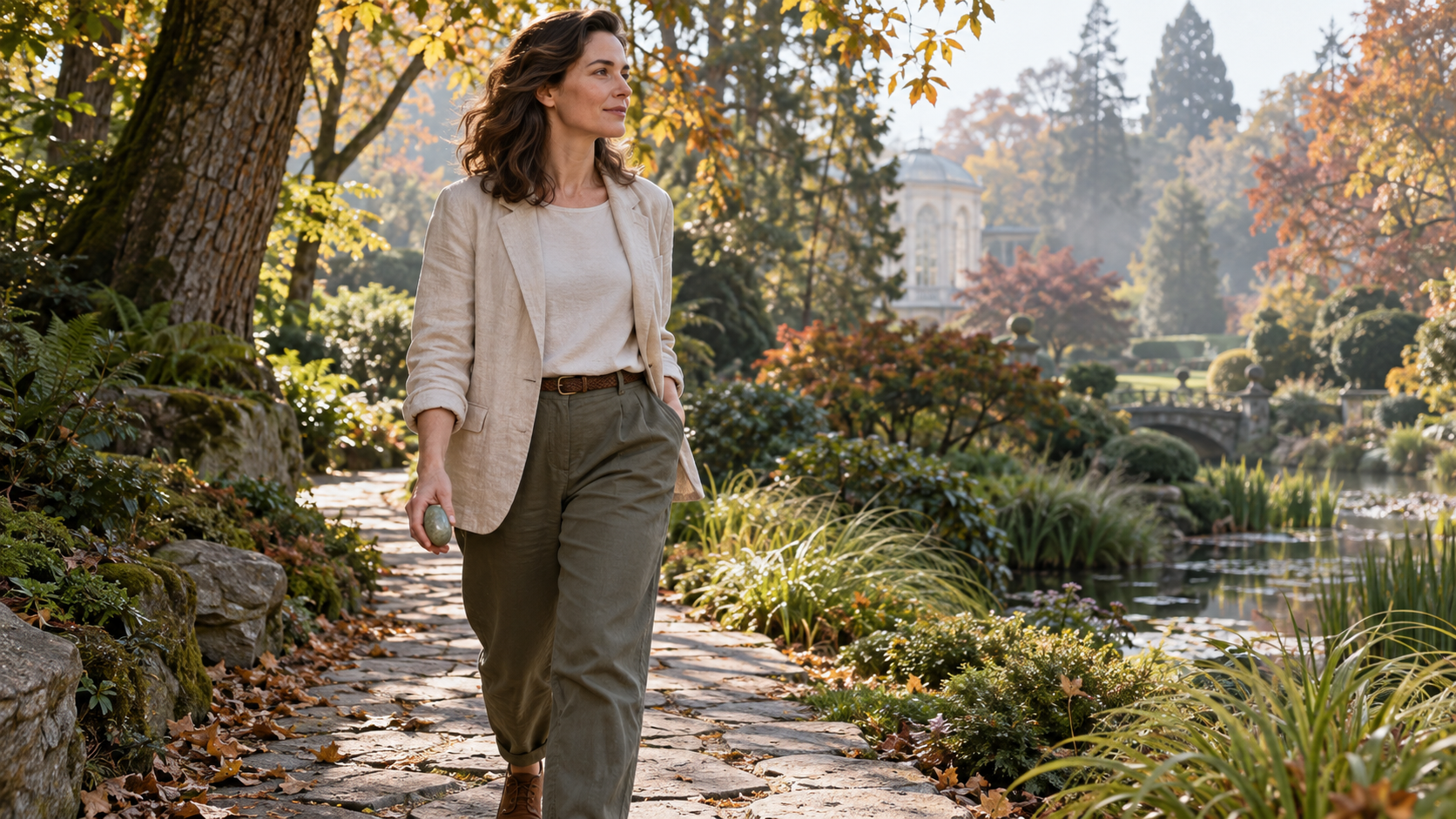
Not every meditation begins by sitting down.
Sometimes, the most meaningful way to become present is simply to walk.
One step.
Then another.
Without rushing toward a destination.
Without trying to accomplish something.
Just moving deliberately through the world.
Within contemporary crystal practice, stones are often used as objects of intention, contemplation and personal symbolism. A pocket stone may accompany its owner throughout the day, while a pendant can become a familiar reminder of a particular spiritual commitment.
Few materials offer a more fascinating historical connection between personal conduct, symbolism and objects worn close to the body than Jade.
For thousands of years, jade has occupied an exceptional position in Chinese cultural and religious history.
It was associated with ritual, authority, ancestral traditions, moral character and, in some historical contexts, spiritual protection and immortality.
Over time, jade also became closely connected with the qualities expected of a virtuous person.
This association offers an interesting starting point for a modern contemplative practice.
Rather than using a stone to seek supernatural experiences, we can use jade as a symbolic reminder of how we wish to move through everyday life.
Literally.
Through a simple walking meditation.
This practice of Jade walking meditation allows us to embody the virtues associated with jade as we walk mindfully.
Table of Contents
Jade: More Than a Beautiful Stone
In many contemporary spiritual traditions, gemstones are assigned meanings such as protection, love, prosperity or emotional balance.
Jade has a particularly rich history because its symbolism extends far beyond modern crystal spirituality.
The Smithsonian’s National Museum of Asian Art documents the importance of jade within Chinese civilisation from its earliest periods.
Archaeological discoveries from the Neolithic Liangzhu culture, which flourished approximately between 3300 and 2250 BCE, include elaborate jade objects associated with burials, ceremonial activities and social status.
Among the most recognisable forms are circular bi discs and tubular cong objects.
These were not ordinary decorative stones.
Their archaeological contexts demonstrate that jade could carry profound cultural and ritual significance.
The precise meanings of some early objects remain uncertain, and interpretations developed over time.
Nevertheless, jade’s extraordinary importance within Chinese cultural history is firmly established.
It became a material through which people expressed ideas about status, authority, the sacred and the relationship between human life and the wider cosmos.
From Sacred Material to Moral Symbol
One of the most interesting developments in jade’s history was its association with moral character.
The National Palace Museum in Taipei explains that early beliefs concerning jade’s spiritual nature gradually became connected with ethical ideas under the influence of Chinese humanistic and Confucian thought.
By the Eastern Zhou period, jade was increasingly associated with the qualities of the junzi.
The term originally referred to a person of elevated social position but developed into an ethical ideal: a person distinguished by cultivated character and virtuous conduct.
The museum identifies five particularly important virtues associated with jade:
Benevolence
Rectitude
Wisdom
Courage
Integrity
These ideas are especially interesting because they shift attention away from what a stone might supposedly do for its owner.
Instead, the stone becomes associated with the qualities a person should develop within themselves.
That is a very different understanding of gemstone symbolism.
Jade does not merely represent something desirable.
It can symbolise a standard of conduct.
Jade as a Reminder of Character
Historical Chinese writings sometimes compared the physical appearance and qualities of jade with desirable human characteristics.
The Penn Museum’s scholarly publication Chinese Jades, written by Elizabeth Lyons, discusses these traditional associations in detail.
The publication explains how jade became connected with ideas such as benevolence, rectitude, wisdom, courage and moral integrity.
These relationships were expressed through comparisons between the stone and the qualities of an honourable person.
The symbolism was not simply about possessing an attractive object.
It was about remembering an ideal.
A particularly fascinating historical detail concerns jade ornaments worn by members of the Chinese elite.
According to traditional accounts discussed by the Penn Museum, suspended jade ornaments could produce gentle sounds as the wearer moved.
Those sounds were understood as reminders of proper conduct and virtue.
The connection between jade, movement and personal awareness is therefore historically meaningful.
It does not establish that ancient Chinese people practised the modern jade walking meditation described in this article.
But it does demonstrate that jade ornaments could serve as reminders of ethical behaviour during ordinary movement.
That historical idea provides the inspiration for our contemporary exercise.
Why Combine Jade With Walking Meditation?
Walking meditation is an established contemplative practice.
It appears in Buddhist traditions and has also been incorporated into modern secular mindfulness programmes.
Unlike seated meditation, walking meditation directs attention toward movement.
The lifting of a foot.
The shifting of weight.
The contact between the body and the ground.
The changing environment.
The Greater Good Science Center at the University of California, Berkeley, provides an educational walking-meditation exercise that emphasises observing the physical experience of walking.
The practice can be performed indoors or outdoors.
It does not require a long journey.
In fact, a short path may be sufficient.
The intention is not to reach a destination.
It is to become more aware of the movement itself.
For our contemporary jade practice, we add one symbolic element.
A small jade stone represents a personal commitment to deliberate, thoughtful conduct.
The walking provides the meditation.
The jade provides the symbolism.
Choosing a Jade Stone for the Practice
The stone does not need to be large or elaborate.
A small polished jade pocket stone works particularly well.
So does a jade pendant or smooth cabochon.
You might choose:
- a small polished jade palm stone
- an oval jade pocket stone
- a jade pendant worn on a cord
- a simple jade bead bracelet
- a small jade carving with personal significance
There is no historical or spiritual requirement to use a particular shape for this modern exercise.
Choose something comfortable and practical.
A pendant may be especially suitable because it can remain close to the body without occupying your hands.
A pocket stone can be held briefly before the walk and returned to a secure pocket while moving.
The object should never interfere with safe movement.
Its role is symbolic rather than physically necessary.
Preparing for the Walk
Choose a quiet location.
A garden path is ideal.
A peaceful park can also work.
You might even use a short corridor or a clear area inside your home.
The University of California, Berkeley’s walking-meditation guidance suggests that a relatively short path is sufficient for formal practice.
You do not need a forest, mountain or sacred location.
Ordinary surroundings are enough.
Before beginning, stand comfortably.
Hold your jade stone for a moment.
Look at it.
Notice its shape and appearance.
Then choose a simple intention:
Today I will move with awareness and act with integrity.
Place the stone safely in your pocket or wear it as a pendant.
Now begin walking.
The Five Virtues Walking Meditation
This contemporary exercise uses the five jade-associated virtues discussed by the National Palace Museum as a framework for mindful movement.
It is important to distinguish inspiration from historical reconstruction.
The following meditation is a modern practice created around documented cultural symbolism.
It is not presented as an ancient Chinese ceremony or an established Confucian ritual.
The exercise can take approximately fifteen minutes.
Each virtue becomes the focus of one stage of the walk.
First Stage — Benevolence
Theme: How do I treat others?
Begin walking slowly.
Notice the physical movement of each step.
Feel the contact between your feet and the ground.
Allow your breathing to continue naturally.
Now bring your attention toward the idea of benevolence.
Within the historical jade symbolism described by the National Palace Museum, benevolence represents one of the important virtues associated with an honourable person.
For this contemporary exercise, consider benevolence as the willingness to act with kindness and concern for others.
Ask yourself:
Where could I show greater kindness today?
Do not immediately search for a dramatic answer.
Perhaps the opportunity is small.
Listening more carefully.
Being patient with someone.
Offering assistance.
Acknowledging another person’s effort.
Continue walking.
Allow the question to accompany several steps.
Then release it.
Second Stage — Rectitude
Theme: Am I acting according to my principles?
Continue along the path.
Notice the position of your body.
Observe how your weight shifts naturally as you move.
Now consider rectitude.
Within the historical ethical framework, rectitude concerns moral correctness and appropriate conduct.
For a contemporary reflection, this can become a question about consistency between personal values and actions.
Ask:
Am I behaving in a way that reflects what I believe is right?
Perhaps there is a decision you have postponed.
Perhaps you recently acted against your own better judgement.
Perhaps you are already making a difficult but principled choice.
The purpose is not self-criticism.
It is awareness.
Continue walking without forcing an answer.
Sometimes recognising a question is enough.
Third Stage — Wisdom
Theme: What deserves thoughtful attention?
As you walk, begin noticing the environment more carefully.
Look at the shapes of leaves.
The texture of a path.
The movement of branches.
The changing light.
Then consider wisdom.
Within jade’s traditional moral symbolism, wisdom represents the capacity for understanding and sound judgement.
For this meditation, wisdom can be approached through a simple distinction:
Reacting is not the same as understanding.
Ask yourself:
Where might I benefit from listening or observing before making a decision?
Perhaps you need more information.
Perhaps another person’s perspective deserves consideration.
Perhaps you are trying to resolve something too quickly.
Continue walking.
Notice how the world contains more detail when you stop rushing through it.
The observation itself becomes part of the practice.
Fourth Stage — Courage
Theme: What meaningful action am I avoiding?
Return your attention to the physical sensation of walking.
One foot moves.
Then the other.
Each step requires a small movement away from the previous position.
Now consider courage.
In the traditional moral symbolism associated with jade, courage is one of the qualities expected of a virtuous person.
Within this modern practice, courage does not need to mean fearlessness.
It can mean acting thoughtfully despite uncertainty.
Ask:
What small but important action have I been avoiding?
Perhaps you need to begin a conversation.
Express an opinion.
Acknowledge a mistake.
Attempt something unfamiliar.
Or make a decision that has remained unresolved.
Do not imagine the entire outcome.
Identify one realistic action.
Then continue walking.
The physical movement becomes a simple metaphor.
Progress does not always require a dramatic leap.
Sometimes it begins with one step.
Fifth Stage — Integrity
Theme: How do I remain consistent with my values?
For the final stage, allow your pace to become comfortable and natural.
There is no need to walk unusually slowly.
Notice the rhythm of movement.
The surrounding sounds.
The position of your body.
Now consider integrity.
The National Palace Museum includes integrity among the principal virtues historically associated with jade.
For this meditation, integrity can be understood as the relationship between what we believe, what we say and what we do.
Ask:
What would it mean to act with integrity today?
Perhaps the answer concerns honesty.
Keeping a promise.
Admitting uncertainty.
Respecting a boundary.
Or simply following through on something important.
Choose one thought that feels relevant.
Allow it to remain with you for the final steps.
Then stop.
Completing the Walk
When you reach the end of your chosen path, pause.
Stand comfortably.
Notice your surroundings.
Take one natural breath.
If it is safe to do so, remove the jade stone from your pocket.
Hold it briefly.
Remember the five virtues:
Benevolence.
Rectitude.
Wisdom.
Courage.
Integrity.
Now ask one final question:
Which of these qualities deserves more attention in my life today?
Choose only one.
You do not need to make a promise or create an elaborate plan.
Simply recognise the quality you wish to cultivate.
Then return the stone to your pocket or pouch.
The walking meditation is complete.
Why Movement Changes the Experience
Many crystal rituals involve sitting still.
A stone is held during meditation.
Placed on a table.
Arranged within a grid.
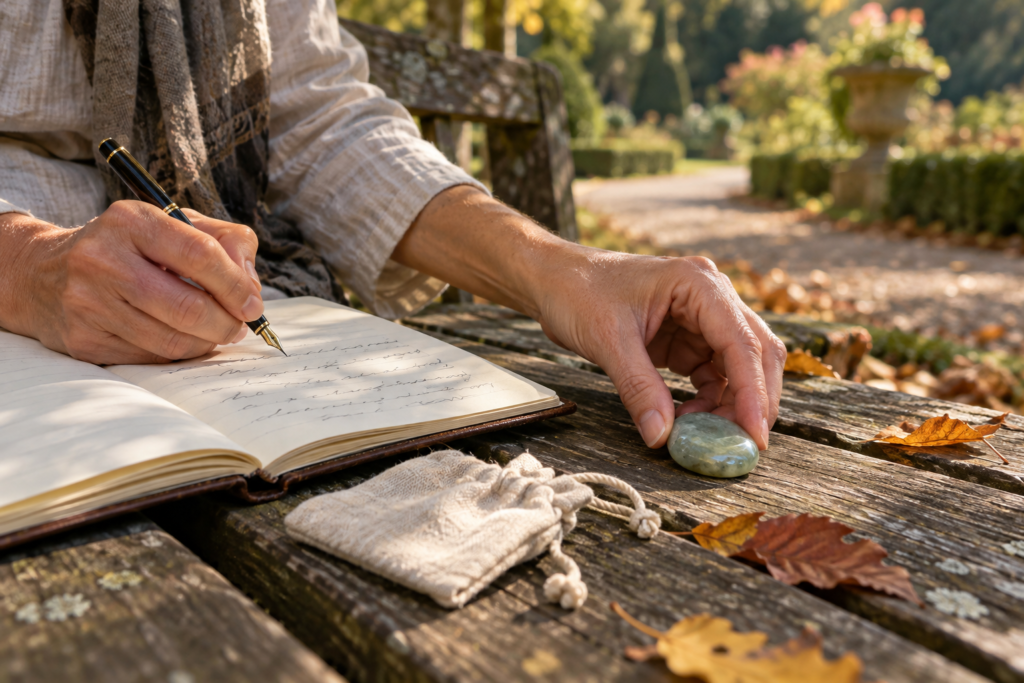
Or positioned beside a journal.
Walking meditation introduces a different relationship between the practitioner and the object.
The stone accompanies movement rather than remaining the centre of a stationary arrangement.
This creates an interesting symbolic connection.
Personal values are not meaningful only when we think about them.
They become meaningful through conduct.
Kindness must eventually become an action.
Wisdom must influence decisions.
Integrity must appear in behaviour.
The jade becomes a reminder that spiritual reflection can continue beyond a meditation space.
It can accompany everyday life.
Jade Pendants and the Tradition of Wearing Meaning
The history of jade ornaments offers another important perspective.
The Smithsonian’s National Museum of Asian Art documents the extensive use of jade in ancient Chinese jewellery, ceremonial objects and personal ornaments.
The Penn Museum also discusses the historical association between jade pendants and moral conduct.
In some traditional accounts, the sound produced by suspended jade ornaments during movement was understood as a reminder of virtue.
This provides an especially meaningful historical parallel for a modern jade pendant.
A contemporary wearer might choose a jade pendant as a personal reminder of patience, kindness or integrity.
That does not mean the pendant possesses a scientifically established power to influence behaviour.
The significance comes from the meaning assigned to the object and the way the wearer consciously interacts with it.
The stone becomes a reminder.
The person remains responsible for the action.
Jade and the Symbolism of Harmony
Modern spiritual descriptions often associate jade with harmony, balance and peaceful relationships.
These interpretations should be distinguished from the documented historical meanings of jade within specific Chinese cultural traditions.
Nevertheless, the idea of harmony provides a useful subject for contemporary contemplation.
Harmony does not necessarily mean avoiding disagreement.
It does not require suppressing personal needs.
And it does not mean that every situation must remain peaceful.
A more thoughtful interpretation concerns the relationship between different parts of life.
Personal values.
Actions.
Relationships.
Responsibilities.
A harmonious life may be one in which these elements are not constantly working against one another.
During a jade walking meditation, this can become a simple question:
Where is greater consistency needed between what I value and how I live?
The question is personal.
The jade provides the symbolic focus.
Walking Without a Destination
One of the most interesting aspects of walking meditation is that it challenges our usual relationship with movement.
Most walking has a purpose.
We walk to reach a shop.
A meeting.
A vehicle.
A destination.
The movement is often treated as something to finish as quickly as possible.
Walking meditation changes that relationship.
The walking itself becomes the activity.
The Greater Good Science Center emphasises paying attention to the individual components of each step and gently returning attention when the mind wanders.
This is an important distinction.
The practice is not about achieving a particular emotional state.
It is about noticing the experience of movement.
Adding jade does not change that fundamental principle.
The stone is a personal symbol.
The awareness comes from the practice.
Can the Ritual Be Practised Indoors?
Yes.
A garden or park can make the experience visually pleasant, but neither is essential.
Choose a clear indoor path.
Walk slowly between two points.
Pause.
Turn.
Walk back.
Repeat.
If you use a mobility aid or wheelchair, the practice can be adapted by attending to the sensations and movements involved in travelling along the chosen route.
The University of California, Berkeley’s guidance explicitly recognises that walking meditation can be adapted for wheelchair users.
The central principle remains the same:
conscious attention to movement.
The jade may remain in a pocket, pouch or secure position throughout.
What if Your Attention Wanders?
It will.
You may begin thinking about work.
A conversation.
A future appointment.
Something you forgot to do.
That is normal.
The purpose of mindfulness is not to prevent thoughts from appearing.
When you notice that your attention has wandered, simply return to the physical experience of movement.
Feel the next step.
Notice the surrounding light.
Listen to a nearby sound.
Then continue.
There is no need to restart the meditation.
And there is no need to interpret distraction as failure.
The return of attention is part of the practice itself.
Bringing One Virtue Into Everyday Life
After completing the walk, consider choosing one virtue for the remainder of the day.
For example:
Benevolence: Offer someone your full attention during a conversation.
Rectitude: Make a decision consistent with your principles.
Wisdom: Ask one additional question before forming a conclusion.
Courage: Take one realistic step toward something important.
Integrity: Follow through on a commitment.
These are contemporary practical suggestions inspired by the historical symbolism of jade.
They are not presented as ancient ritual instructions.
The exercise becomes especially meaningful when the chosen virtue influences a real action.
Otherwise, the symbolism remains abstract.
A Small Jade Stone as a Daily Reminder
After the meditation, you may decide to carry the jade.
Place it in a protective pouch.
Or wear it as a pendant.
You do not need to touch it constantly.
Allow it to remain an ordinary part of the day.
Occasionally, when you notice the stone, remember the virtue you selected.
Ask:
Am I practising this quality in my actions?
Perhaps the answer is yes.
Perhaps not.
Either response can become an opportunity to reconsider your next action.
The jade does not need to create an energetic influence.
It serves as a physical reminder of a personal commitment.
Respecting the Cultural History of Jade
There is an important responsibility when using historical symbolism within contemporary spiritual practice.
Jade’s significance in Chinese civilisation cannot be reduced to a modern claim that green stones attract good luck or positive energy.
Its history includes complex religious traditions, social hierarchies, philosophical developments, funerary practices and artistic achievements.
Different objects carried different meanings in different periods.
The National Palace Museum and Smithsonian collections demonstrate the extraordinary range of these traditions.
The modern walking meditation described here is therefore not presented as an ancient Chinese practice.
It is a contemporary contemplative exercise inspired by documented historical associations between jade and moral virtue.
Recognising that distinction allows us to appreciate the historical culture without claiming ownership of its ceremonies or presenting newly invented practices as ancient traditions.
Does Jade Have Scientifically Proven Energetic Effects?
Contemporary crystal spirituality sometimes describes jade as a stone that attracts harmony, supports emotional balance or influences personal energy.
These are metaphysical interpretations and spiritual beliefs.
They are not scientifically established properties of jade.
The research discussed by the University of California, Berkeley concerns walking meditation and mindfulness.
It does not demonstrate that carrying jade enhances the psychological effects of meditation.
Likewise, the historical association between jade and moral virtue does not establish that wearing jade automatically improves character.
A person can practise mindful walking without any crystal.
The jade adds personal and cultural symbolism.
It does not replace attention, intention or action.
This distinction allows the practice to remain spiritually meaningful without presenting unsupported medical or psychological claims.
When the Walk Becomes a Personal Tradition
A ritual does not need to be ancient to become meaningful.
It needs to be deliberate.
Repeated.
And connected with something the practitioner genuinely values.
Perhaps you begin by walking for ten minutes once a week.
After several weeks, the jade stone becomes familiar.
You associate it with the garden path.
The changing seasons.
The sound of footsteps.
The questions you have considered.
And the decisions you have made.
Over time, the stone may become connected with your own history of practising the virtues you selected.
Not because it stores a scientifically measurable form of spiritual energy.
But because it has become part of a meaningful personal tradition.
The Meaning of Moving With Intention
Jade’s long cultural history offers a remarkable perspective on the relationship between beautiful objects and human values.
In ancient China, jade could represent authority, sacred relationships and moral ideals.
Later philosophical interpretations connected it with the qualities of an honourable person.
Some traditional jade ornaments were even understood as reminders of virtue during movement.
Today, a small jade stone can inspire a different, contemporary practice.
A quiet walk.
Five virtues.
A few deliberate questions.
And one personal commitment.
There is no need to ask the stone to change the world.
Instead, the practice asks something of us.
Can we move through the world with greater kindness?
Can we make decisions with wisdom?
Can we act with courage and integrity?
Those questions do not require supernatural answers.
They require attention.
And eventually, action.
A jade walking meditation begins with one small stone.
But its deeper purpose is to remind us that our values become meaningful through the way we live.
One decision.
One interaction.
One step at a time.
References & Further Reading
1. National Palace Museum, Taipei — The Virtue of Jade
An authoritative museum resource examining the historical transformation of jade symbolism in China, particularly the development of associations between jade and moral virtues under Confucian influence.
The museum specifically discusses benevolence, rectitude, wisdom, courage and integrity as qualities associated with the ideal virtuous person.
https://www.npm.edu.tw/exh99/chinese_jades/en3.html
2. Penn Museum — Chinese Jades: The Role of Jade in Ancient China
Elizabeth Lyons, Expedition Magazine, University of Pennsylvania Museum of Archaeology and Anthropology, 1978.
A substantial scholarly overview of jade’s religious, cultural and ethical importance in Chinese civilisation.
Particularly relevant is its discussion of traditional jade pendants and the historical idea that their movement and sound could remind wearers of virtue.
3. Smithsonian National Museum of Asian Art — Ancient Chinese Jades
An educational museum resource exploring ancient Chinese jade objects, their archaeological history and their cultural significance.
Provides background on the development of jade traditions and the importance of early Chinese jade collections.
https://asia-archive.si.edu/learn/ancient-chinese-jades/
4. Smithsonian National Museum of Asian Art — Jades for Life and Death
An informative museum article discussing ancient Chinese jade objects from the Liangzhu culture and their use as ornaments, ceremonial objects and items associated with burial traditions.
Useful for understanding the historical depth of jade symbolism beyond contemporary crystal spirituality.
https://asia-archive.si.edu/jades-for-life-and-death/
5. University of California, Berkeley — Walking Meditation
Greater Good in Action, Greater Good Science Center.
A research-informed educational guide explaining how to practise walking meditation, including attention to physical movement, awareness of surroundings and the return of attention when the mind wanders.
The resource also discusses scientific research into mindful walking and provides adaptations for people using wheelchairs.
https://ggia.berkeley.edu/practice/walking_meditation
6. The Metropolitan Museum of Art — Boulder with Daoist Paradise
An educational museum collection record describing an eighteenth-century Chinese jade sculpture representing a Daoist paradise.
The museum discusses jade’s historical association with moral virtue and immortality, providing additional context for the material’s symbolic importance in Chinese religious and philosophical traditions.
https://www.metmuseum.org/art/collection/search/42059
The historical and cultural associations discussed in this article are based on museum scholarship and documented traditions. The five-virtues walking meditation is a contemporary practice inspired by those associations; it is not presented as an authentic ancient Chinese ritual.
Claims about jade’s energetic, protective or healing properties belong to traditional and contemporary spiritual belief systems and are not established scientific effects.
Research concerning mindfulness and walking meditation does not demonstrate that jade itself produces psychological or medical benefits. Crystal practices should not replace appropriate professional healthcare or evidence-based treatment.
Related Products
-
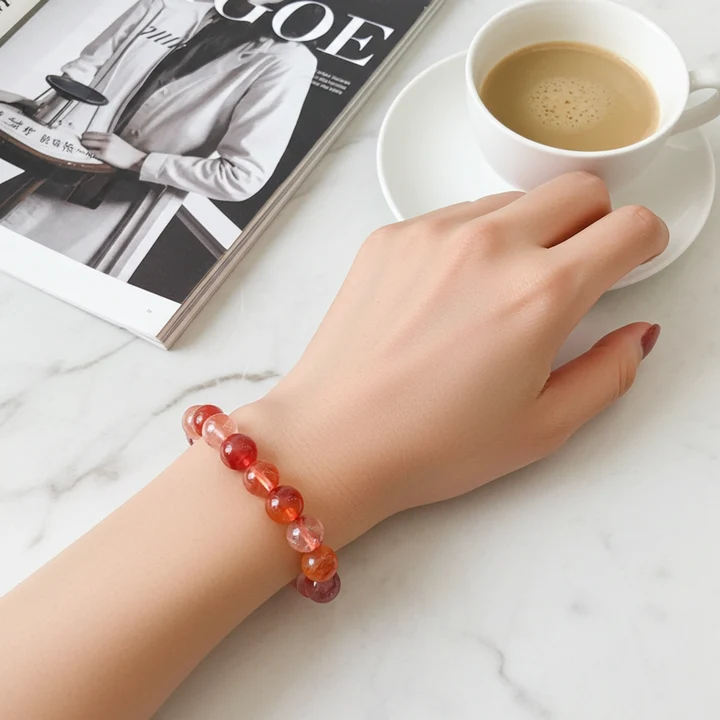
Red Fire Quartz Bead Bracelet 10 mm · Natural Hematoid Quartz Gemstone Bracelet
$34.96 -
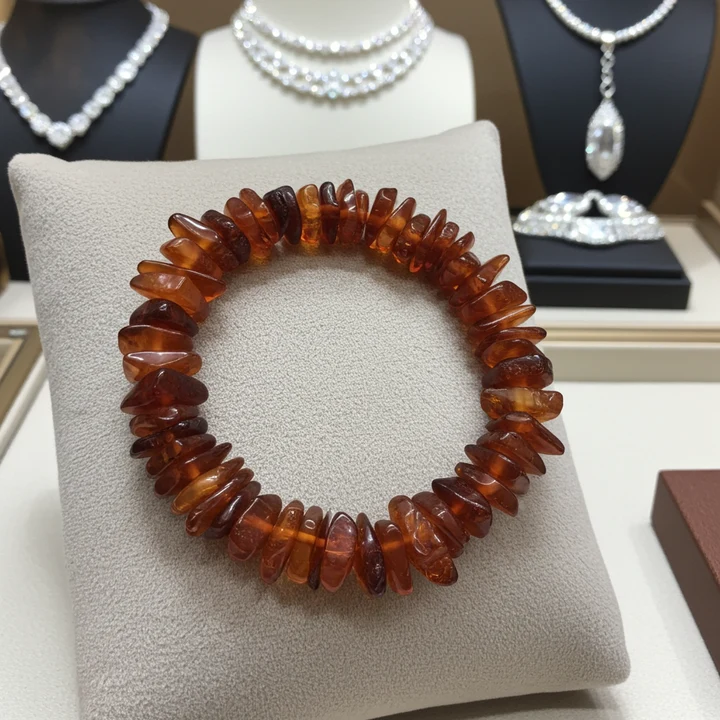
Baltic Amber Chip Bracelet 10 mm · Natural Dark Honey Amber Bead Bracelet
$32.67 -
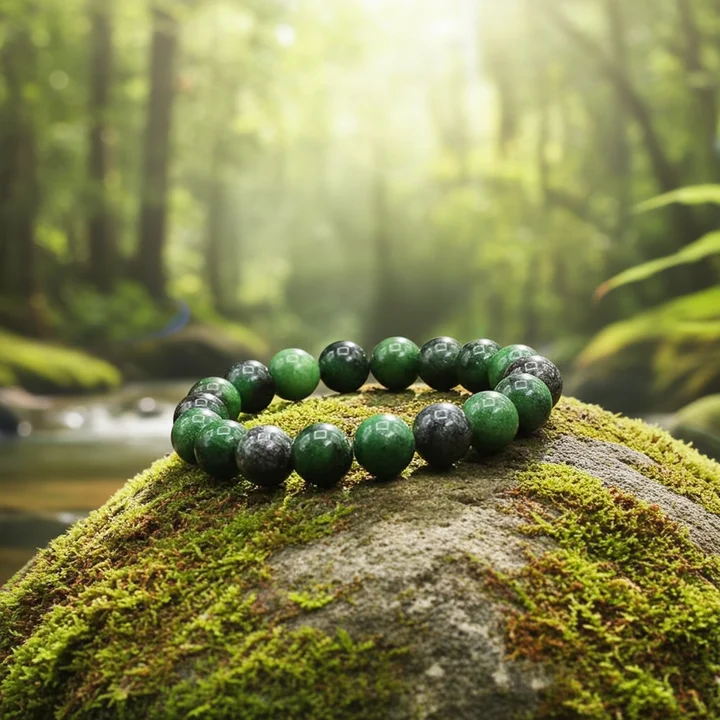
Ruby Zoisite Bead Bracelet 6 mm · Natural Ruby in Zoisite Gemstone Bracelet
$33.51 -
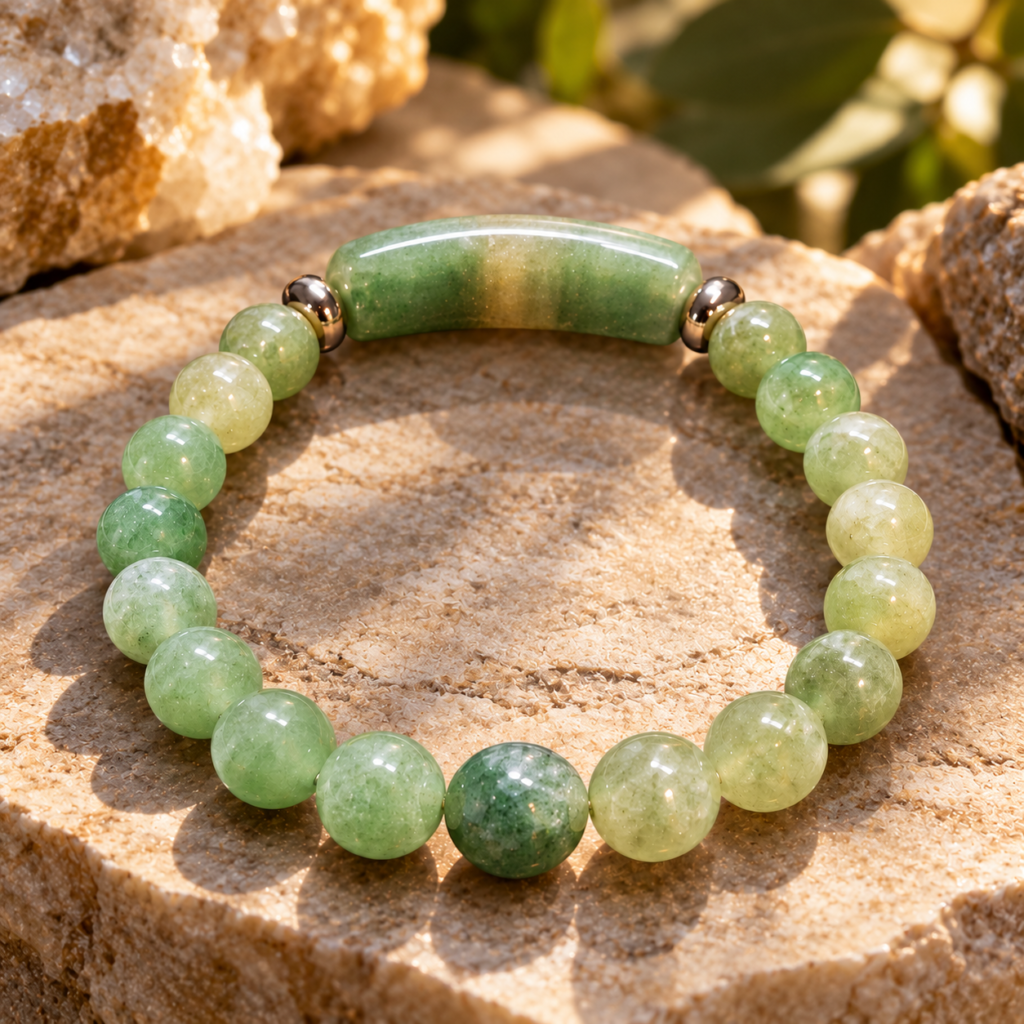
Aventurine Bead Bracelet with Bridge · 8 mm · 19 cm · Unisex · Untreated · Good Polish
$39.10