
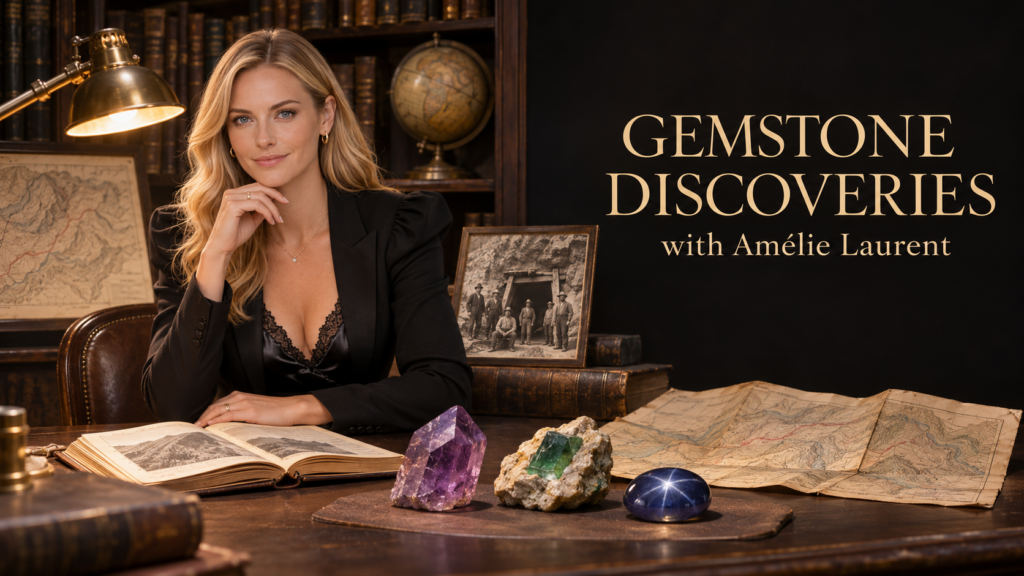
Trace the discovery of natural gemstones in Gemstone Discoveries with Amélie Laurent. Each episode follows one gemstone from its earliest documented finds and first known mines to later discoveries that shaped what we know about it today. Amélie introduces the people who found, described or named the stone and, where relevant, explores when distinctive optical effects such as asterism and colour change were first recorded.
Latest Episodes
About Gemstone Discoveries with Amélie Laurent
The history of Gemstone Discoveries with Amélie Laurent is a Natural Gems Belgium video series about the discovery history of natural gemstones. Each episode follows one gemstone through its earliest documented finds, the people who brought it to wider attention, the first known mines and the deposits discovered in the years that followed. The series asks when and where each discovery took place, who was involved and what the surviving evidence tells us about how that gemstone became known.
When was a gemstone first discovered?
A gemstone’s discovery can involve several dates. A specimen may have been collected years before a mineralogist published a description. A mineral may have been known from small or opaque specimens before a later find produced crystals suitable for cutting. A gemstone variety may also have acquired its familiar name long after specimens first reached collections.
Amélie follows those events in order, using historical accounts, specimen records and scientific descriptions where available. For materials known since antiquity, the timeline may begin with evidence of early mining or a surviving specimen with a documented provenance. Where the date or identity of the original discoverer remains uncertain, the episode explains what the earliest sources establish and where the record becomes incomplete.
Who were the people behind the discovery?
The series looks at the people involved at each stage of a discovery. Who collected the specimen? Who recognised its significance? How did it reach the person who described or named it? Where the sources give enough detail, Amélie introduces the miners, prospectors, collectors and mineralogists involved, explaining who they were, what brought them to the gemstone and what they contributed to its discovery.
A single specimen can pass through several hands before it appears in a scientific publication or a museum collection. Following that journey helps explain how a local find became known to researchers and the gem trade. It can also show how an early identification was revised as more specimens became available for study.
From the first gemstone mines to later discoveries
Each episode traces the best-documented early mining localities and the mines or deposits that followed. Amélie explores where the material was found, when extraction began where a date can be established, and which later discoveries yielded gem-quality crystals or brought more material into circulation. Historic locality names are placed in their geographical context so viewers can follow the sequence of discoveries across regions and periods.
Later finds can add a chapter of their own. A new deposit may yield larger crystals, a colour rarely seen in earlier material or specimens that display an optical effect particularly well. The series follows these developments through to present-day knowledge, showing how successive discoveries broadened what collectors and gemmologists knew about the stone.
The first records of stars, cat’s-eyes and colour change
When a gemstone is known for an optical effect, Amélie looks at when specimens showing that effect first entered the historical or scientific record. Topics include asterism, the star-like pattern seen in certain gemstones, chatoyancy, the narrow band of light that creates a cat’s-eye effect, and colour change under different types of lighting.
The timeline may include an early description of the effect, the locality associated with a documented specimen and the later studies that explained how the effect forms. When the evidence allows, the episode also identifies who recorded the observation and what they were examining. This connects the appearance of a finished stone with the specimen, locality and people behind its documented history.
Each episode is accompanied by a Learning Center article where you can revisit the discovery timeline, explore the localities in more detail and consult the references behind the story.