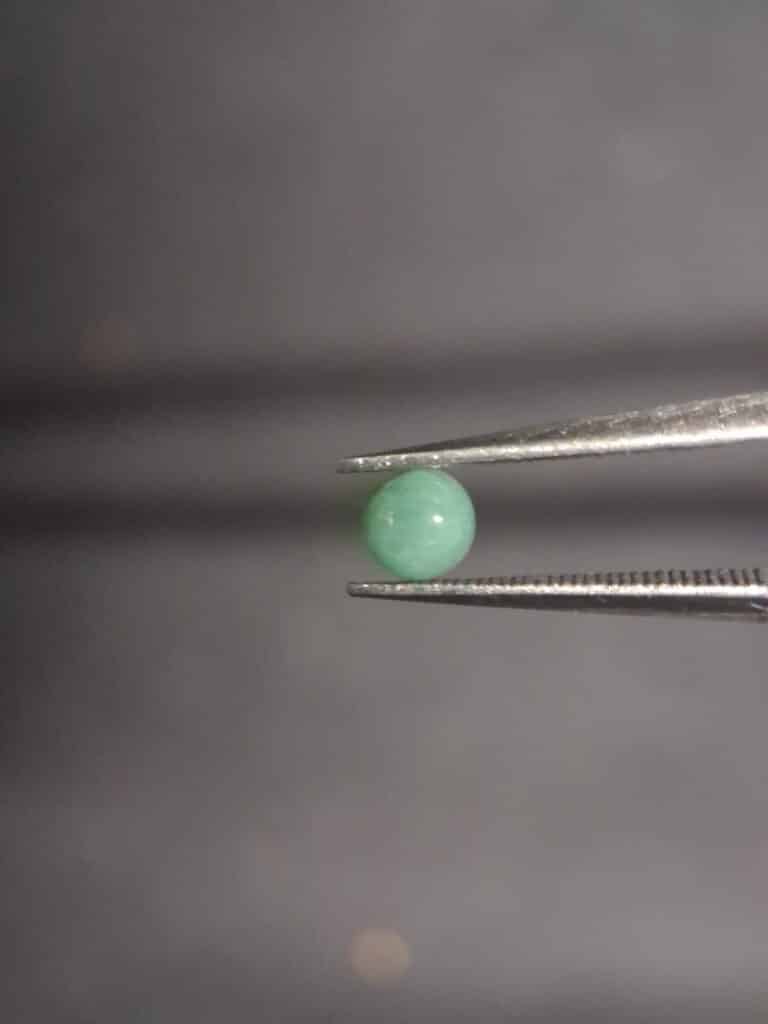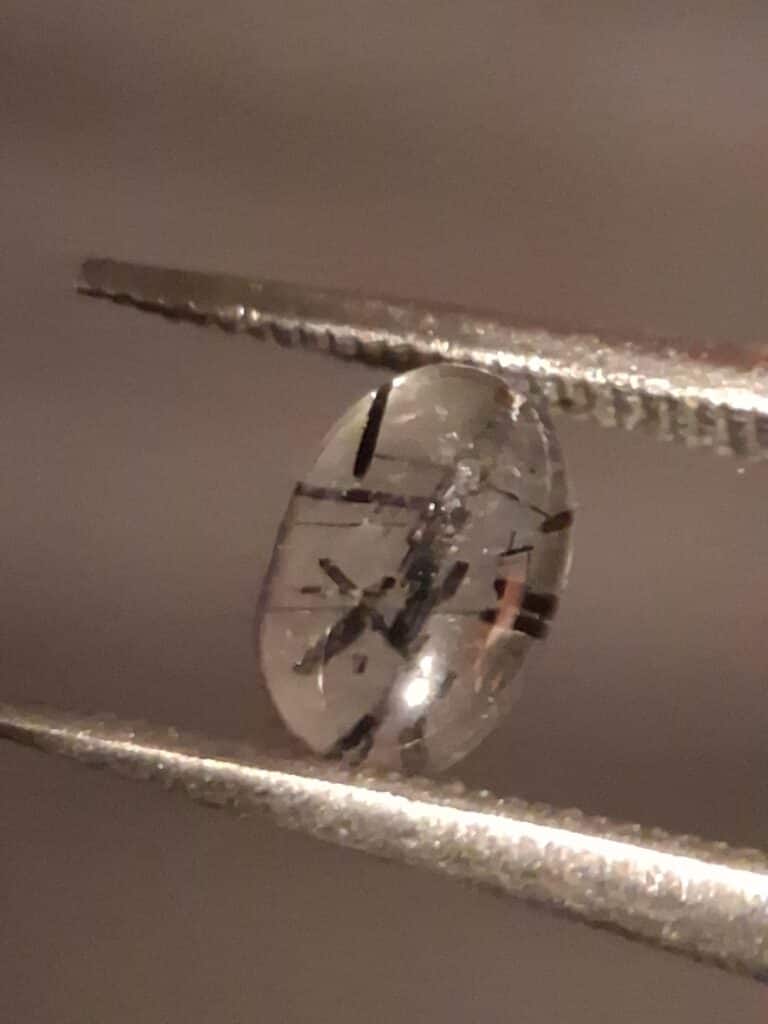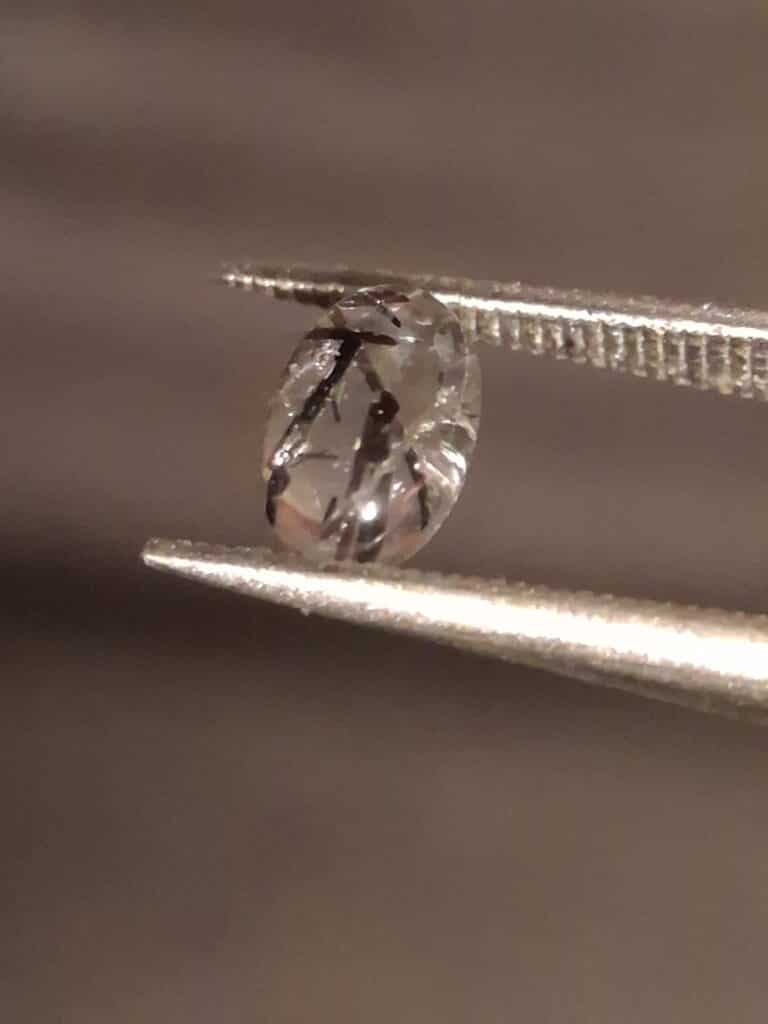
Not every chapter of life ends with a clear conclusion.
Sometimes a relationship changes without a final conversation.
A professional direction becomes uncertain.
A familiar routine disappears.
Or a new opportunity arrives before we have fully understood what came before it.
These experiences can leave us between two stages of life.
Something has changed, but the next direction is not yet clear.
Within contemporary crystal spirituality, Moonstone is frequently associated with intuition, emotional transitions, new beginnings and the symbolic rhythms of the Moon.
Some practitioners believe that it supports personal transformation or helps people move through changing circumstances.
Others carry Moonstone during periods of uncertainty, use it during meditation or incorporate it into lunar intention rituals.
These interpretations belong to contemporary spiritual belief systems.
There is no reliable scientific evidence that Moonstone transmits healing energy, balances emotions through supernatural mechanisms or influences life events through the phases of the Moon.
Nevertheless, a gemstone can become a meaningful personal symbol.
Its appearance may evoke an association with moonlight.
Its presence may remind someone of an intention.
And its use within a deliberate reflective practice may provide a familiar starting point for considering change.
This article introduces an original contemporary exercise: the Moonstone Unfinished Chapter Ritual, a powerful moonstone lunar reflection ritual.
The Moonstone Unfinished Chapter Ritual.
Engaging in a moonstone lunar reflection ritual can enhance your understanding of these transitions.
Rather than promising transformation, the ritual explores three questions:
What has changed?
What remains uncertain?
And what small action, if any, is appropriate now?
The practice does not require belief in supernatural energy.
It does not promise emotional healing.
And it does not demand that every difficult experience be transformed into a positive lesson.
Its central idea is simple:
A new beginning does not always require a perfectly completed ending.
Table of Contents
Moonstone in Contemporary Crystal Spirituality
Moonstone occupies a distinctive place in modern gemstone spirituality.
It is frequently associated with the Moon, intuition, inner awareness, emotional cycles and personal renewal.
Some contemporary practitioners describe it as a stone of new beginnings.
Others connect it with receptive energy, dreams, feminine symbolism or the ability to navigate uncertainty.
These associations can carry personal spiritual meaning.
However, their historical origins should not be overstated.
The fact that gemstones have been used in jewellery, religious objects and symbolic traditions for centuries does not establish that every modern Moonstone interpretation originated in an ancient spiritual system.
Contemporary claims that Moonstone balances emotions, awakens intuition or influences personal destiny require a clear distinction between belief and evidence.
There is no reliable scientific evidence that Moonstone produces these effects through supernatural energy.
For the Unfinished Chapter Ritual, Moonstone serves as a symbolic object representing change.
The reflective process depends on the participant’s own observations and decisions.
Why the Moon Became a Symbol of Change
The Moon is an especially visible example of recurring change in the natural world.
Its appearance shifts throughout the month.
At certain times, it appears as a narrow crescent.
At others, it is nearly fully illuminated.
And during the new Moon, its illuminated side faces largely away from Earth, making it difficult to see.
These changes are known as lunar phases.
According to NASA, the complete cycle from one new Moon to the next takes approximately 29.5 days.
The phases result from the changing geometry of the Sun, Earth and Moon.
They do not occur because the Moon itself repeatedly grows, shrinks or regenerates.
Nevertheless, the visible sequence offers a powerful metaphor.
Something can appear different without ceasing to exist.
A familiar pattern can change and later return.
And a period of reduced visibility does not necessarily represent an ending.
These are symbolic interpretations of an astronomical phenomenon.
They should not be confused with scientific claims about human psychology.
The Difference Between Lunar Symbolism and Lunar Influence
Contemporary spiritual practices sometimes assign particular meanings to different Moon phases.
The new Moon may be associated with intentions.
The waxing Moon with development.
The full Moon with culmination.
And the waning Moon with release.
These interpretations are common in modern lunar spirituality.
However, they are not universal, and they should not automatically be described as a single ancient tradition.
Different cultures and religious systems have developed their own lunar calendars, ceremonies and symbolic interpretations.
The Unfinished Chapter Ritual does not claim to reproduce any particular historical lunar ceremony.
It uses the observable lunar cycle as an optional time marker for personal reflection.
The Moon’s changing appearance can remind someone to review a situation.
That does not mean the lunar phase causes the situation to change.
A meaningful symbol is not the same as a scientifically demonstrated influence.
Moonstone as a Personal Symbol
People frequently attach meaning to objects.
A photograph may represent a relationship.
A letter may recall an important decision.
A piece of jewellery may commemorate an event.
A familiar stone may become associated with a personal intention.
These meanings do not require the object to possess supernatural powers.
Moonstone can serve a similar symbolic function.
Someone might associate it with a period of transition.
A decision that requires reflection.
Or a commitment to approach uncertainty without demanding immediate answers.
The gemstone does not make the decision.
It does not reveal the future.
And it does not determine whether a new beginning will be successful.
Its role is to represent the participant’s intention to reflect.
Moonstone in Historical Jewellery
Moonstone also has a documented history as an ornamental material.
Museum collections provide evidence of its use in jewellery across different periods.
The Metropolitan Museum of Art, for example, holds a European Moonstone necklace dated to the nineteenth or twentieth century.
The Smithsonian Institution’s Cooper Hewitt collection includes a German Moonstone necklace dating to approximately 1930.
These objects demonstrate that Moonstone has been appreciated and incorporated into decorative arts.
They do not establish that the owners or makers practised modern lunar manifestation rituals.
Nor do they prove that Moonstone was believed to regulate emotions or influence destiny.
This distinction is important.
Historical evidence of gemstone use should not be transformed into unsupported claims about ancient spiritual continuity.
Contemporary Moonstone practices can be meaningful without inventing historical origins.
Life Transitions and the Problem of Uncertainty
A transition is not always a single event.
Sometimes it is a period.
A person may know that something has changed without knowing what comes next.
For example, leaving a familiar job may involve relief and uncertainty at the same time.
Moving to a new home may create excitement alongside a sense of loss.
A personal relationship may evolve without a clear definition of its future.
These experiences do not necessarily produce one identifiable emotion.
They may involve several conflicting responses.
The Unfinished Chapter Ritual does not attempt to eliminate this complexity.
Instead, it creates space to acknowledge it.
The participant is not required to feel optimistic.
Nor must they identify a positive outcome.
The exercise simply allows uncertainty to be recognised.
Why We Sometimes Want Immediate Closure
Uncertainty can be uncomfortable.
People may prefer a clear explanation, a final decision or a definite prediction.
Yet not every situation offers one.
A relationship may remain unresolved.
A professional opportunity may depend on circumstances outside our control.
A personal goal may require more information.
Trying to force a conclusion can sometimes create additional pressure.
The Moonstone ritual introduces a different possibility.
Rather than asking how to eliminate uncertainty immediately, it asks what can be understood about the present situation.
This does not mean avoiding practical decisions.
Some circumstances require timely action.
But other situations may benefit from allowing a distinction between what is known and what remains unknown.

The Psychology of Reflective Writing
Writing about experiences has been investigated within psychological research.
One approach, often called expressive writing, involves describing personally meaningful experiences, thoughts or emotions.
A 2023 meta-analytic review published in the British Journal of Clinical Psychology examined 31 experimental studies involving 4,012 participants.
The researchers identified a small overall effect on symptoms of depression, anxiety and stress in the studied healthy and subclinical populations, with some effects emerging over time.
The estimated overall effect size was small.
These findings should not be interpreted as evidence that every writing exercise produces psychological benefits.
Different writing approaches may have different outcomes.
Some individuals may find writing uncomfortable or emotionally demanding.
And the Moonstone Unfinished Chapter Ritual has not itself been scientifically evaluated.
The research provides context for reflective writing.
It does not validate supernatural gemstone properties.
What Research Cannot Promise
Reflective writing is sometimes presented as a simple way to process difficult experiences.
However, the scientific evidence is more complicated.
A systematic review of positive expressive writing interventions published in 2025 examined 51 studies involving non-clinical populations.
The researchers found considerable variation between writing methods, study designs and measured outcomes.
Some approaches showed promising results for aspects of wellbeing.
Other findings were mixed.
This is important for the Moonstone ritual.
Writing down an experience does not guarantee emotional clarity.
It does not necessarily resolve a difficult decision.
And it cannot replace professional support when that support is needed.
The exercise should remain an optional form of personal reflection.
Introducing the Moonstone Unfinished Chapter Ritual
The following practice is an original contemporary symbolic exercise.
It is not an ancient lunar ceremony.
It is not a clinically validated therapeutic intervention.
And it does not require belief in gemstone healing.
The exercise can be completed in approximately fifteen to twenty minutes.
You will need:
- One Moonstone palm stone, tumbled stone or cabochon.
- One notebook or three small sheets of paper.
- A pen.
- A comfortable, quiet location.
The practice may be performed during any lunar phase.
There is no requirement to wait for a full Moon or new Moon.
No moonlight is necessary.
The stone does not need to be placed outdoors.
Choose a subject that feels manageable to reflect upon.
Avoid beginning with a highly distressing experience if writing about it may intensify emotional discomfort.
Stage One – Establishing the Space
Place the Moonstone beside the notebook.
Choose a stable surface.
A wooden desk, small table or quiet reading area is suitable.
The gemstone should remain within comfortable reach.
Take a moment to observe the arrangement.
The notebook represents the opportunity to write.
The Moonstone represents the theme of change.
Neither object has to be activated or energetically cleansed.
There is no required ceremonial sequence.
The purpose is simply to create a setting for reflection.
Stage Two – The First Question: What Has Changed?
Open the notebook.
Write the following question:
What has changed?
Consider a situation in your life that is different from how it was before.
It may be something significant.
Or it may be an ordinary change in routine.
Describe the change as accurately as possible.
Try to distinguish what actually happened from what you believe it means.
For example:
A project has ended.
A colleague has moved away.
A familiar activity is no longer part of the week.
Or a new responsibility has appeared.
There is no requirement to interpret the event positively.
The first stage concerns recognition.
Something has changed.
That observation is sufficient.
Stage Three – The Second Question: What Remains Uncertain?
On a new page, write:
What remains uncertain?
Consider which aspects of the situation are not yet clear.
Perhaps you do not know what another person will decide.
Perhaps the outcome of an application remains unknown.
Or perhaps you are unsure what direction you want to pursue.
You may identify several uncertainties.
You may also discover that you do not have enough information to answer.
That is acceptable.
The purpose is not to eliminate uncertainty through writing.
It is to distinguish uncertainty from established facts.
A person may know what has happened while remaining unsure about what it means for the future.
These are different questions.
Stage Four – The Third Question: What Is the Next Appropriate Step?
Turn to another page.
Write:
What small action, if any, is appropriate now?
This question introduces practical agency.
Perhaps there is someone you need to contact.
Information you should obtain.
A task that requires attention.
Or a decision that can reasonably be postponed.
Choose an action only if one is appropriate.
The exercise does not require every reflection to produce a task.
Sometimes the next step is to wait for information.
Sometimes it is to seek professional advice.
And sometimes no immediate action is necessary.
The Moonstone does not determine the answer.
The decision belongs to the participant.
Why the Third Question Matters
Contemporary manifestation practices sometimes emphasise intention without clearly distinguishing it from action.
A practitioner may be encouraged to visualise a desired outcome.
Or to believe that a gemstone will attract circumstances consistent with that intention.
These claims are not scientifically established.
The Unfinished Chapter Ritual takes a different approach.
An intention may help someone identify a priority.
But practical outcomes depend on actions, opportunities, resources and external circumstances.
Writing down a possible next step does not guarantee success.
It simply creates an opportunity to consider what is realistically within one’s control.
This distinction is especially important during uncertain periods.
Not everything can be influenced through personal effort.
Stage Five – The Moonstone Reflection
After completing the three questions, place the notebook aside.
Hold the Moonstone briefly if you wish.
Consider the relationship between your answers.
What has changed?
What remains unknown?
And what is possible now?
You do not need to reach a conclusion.
You may simply notice that some aspects of the situation are clearer than others.
The stone does not reveal hidden knowledge.
It does not transmit intuition through a measurable energetic mechanism.
Its purpose is symbolic.
It represents the possibility of moving through change without requiring complete certainty.
Stage Six – Leaving the Chapter Open
The final stage is deliberately simple.
Close the notebook.
Place the Moonstone beside it.
You may return to the writing another day.
There is no requirement to destroy the pages, burn them or expose them to moonlight.
You do not need to announce that the situation has been resolved.
Some chapters remain unfinished.
And some questions require more time.
The ritual ends without demanding closure.
This is part of its central meaning.
An unfinished situation does not always represent personal failure.
The New Moon as a Symbolic Beginning
Within contemporary lunar spirituality, the new Moon is frequently associated with fresh intentions.
Practitioners may use it to begin projects, reconsider priorities or establish personal goals.
Astronomically, the new Moon occurs when the Moon’s illuminated side faces largely away from Earth.
It is not the moment when the Moon is physically renewed.
The Moon remains present throughout the cycle.
For the Unfinished Chapter Ritual, the new Moon may serve as an optional calendar reminder.
Someone might choose to review a personal intention around that time.
However, there is no reliable evidence that intentions established during a new Moon become more effective because of the lunar phase.
The timing is symbolic.
The practical outcome depends on ordinary circumstances and actions.
The Full Moon and the Myth of Emotional Certainty
Full Moon rituals are also common within contemporary spirituality.
Some practitioners believe that the full Moon amplifies emotions or brings hidden truths into awareness.
Others use it as a symbolic moment for completion or release.
These interpretations are spiritual beliefs.
Scientific research has not established that the full Moon reliably produces emotional clarity or personal transformation.
Research into possible lunar influences on human sleep has produced conflicting findings.
In 2014, researchers at the Max Planck Institute of Psychiatry reported no correlation between lunar phases and sleep in their analysis.
A large 2024 conference abstract analysing sleep data from two consumer-device datasets also reported no clear lunar effect on total sleep time.
The latter finding was published as a conference abstract and should not be treated as equivalent to a fully reported research article.
These studies concern sleep, not gemstone spirituality.
They illustrate why broad claims about lunar control over human wellbeing require caution.
Moonstone and the Third Eye Chakra
Within contemporary seven-chakra spirituality, Moonstone is sometimes associated with the third eye chakra.
Modern practitioners often connect this chakra with intuition, insight and inner awareness.
Some also associate Moonstone with the crown chakra or with sacral-chakra symbolism.
These correspondences vary between practitioners and systems.
They should not automatically be presented as ancient, universal teachings.
Historical South Asian chakra traditions differ in their number of chakras, religious contexts and symbolic interpretations.
Modern gemstone-to-chakra correspondences are not identical to those historical systems.
There is no reliable biomedical evidence that Moonstone balances an anatomical third-eye energy centre or enhances intuition through supernatural energy.
For the Unfinished Chapter Ritual, chakra symbolism is optional.
Readers may appreciate the association with reflection and inner awareness without accepting a literal energetic explanation.
Moonstone and Feminine Energy
Moonstone is frequently associated with feminine energy in contemporary crystal spirituality.
Some practitioners connect it with receptivity, emotional cycles or particular ideas about femininity.
These interpretations may be meaningful within an individual’s spiritual worldview.
However, they should not be treated as biological facts.
A gemstone does not possess a scientifically established gendered healing energy.
Nor does Moonstone have demonstrated effects on reproductive health, hormones or fertility.
The Unfinished Chapter Ritual is not limited by gender.
Reflection, uncertainty and life transitions are human experiences.
The practice is available to anyone who finds its symbolism meaningful.
A Moonstone Pocket Stone for Transitional Moments
The full writing exercise may not always be practical.
A small Moonstone pocket stone can serve as a private symbolic reminder.
For example, someone may carry it during the first week of a new job.
While adjusting to a different routine.
Or during a period of personal uncertainty.
When noticing the stone, they might briefly consider:
What do I know at this moment?
This question does not require a positive answer.
It does not demand confidence.
And it does not guarantee that uncertainty will disappear.
The gemstone simply represents the intention to distinguish the present from imagined future outcomes.
A Moonstone Palm Stone for Quiet Reflection
Some readers prefer holding a smooth palm stone during a reflective practice.
Choose a comfortable location.
Hold the Moonstone naturally.
Notice its shape and surface.
Then consider a question:
What am I expecting myself to resolve before I have enough information?
There is no requirement to meditate for a particular duration.
No special breathing pattern is necessary.
And the exercise does not require a specific lunar phase.
If the reflection becomes uncomfortable, it can be discontinued.
The gemstone does not provide psychological treatment.
Its significance remains personal and symbolic.
Raw Moonstone, Cabochons and Symbolic Choice
Contemporary crystal practitioners sometimes assign different spiritual meanings to gemstone forms.
Raw stones may be associated with naturalness or unaltered energy.
Palm stones may be associated with comfort or grounding.
Cabochons may be preferred for their smooth appearance and tactile qualities.
These are subjective interpretations.
There is no reliable evidence that one form possesses stronger intuition-enhancing or transition-related energy.
For the Unfinished Chapter Ritual, choose a form that is practical and comfortable.
A small polished stone may be convenient for a pocket.
A palm stone may be comfortable to hold.
A cabochon may serve as a discreet symbolic object beside a notebook.
The ritual does not depend on size, rarity or monetary value.
A Moonstone Centre Stone Without a Crystal Grid
Some contemporary practitioners arrange Moonstone within crystal grids.
The gemstone may be placed at the centre of a geometric pattern intended to represent intuition, renewal or lunar energy.
Other stones may be positioned around it according to personal spiritual beliefs.
There is no reliable scientific evidence that such arrangements amplify supernatural energy or influence life events.
For this exercise, a single Moonstone is sufficient.
Place it beside the three written questions.
The stone represents change.
The pages represent reflection.
No geometric activation is necessary.
The arrangement can remain simple and personally meaningful.
Why Rituals Can Feel Meaningful
Psychologists have investigated why structured rituals may hold significance for individuals and communities.
A review published in Personality and Social Psychology Review in 2018 examined psychological research into ritual.
The authors discussed possible roles involving emotion regulation, goal-related behaviour and social connection.
They also considered how repeated actions and symbolic meaning may influence the experience of a ritual.
However, findings about particular rituals cannot automatically be generalised to every symbolic practice.
The Moonstone Unfinished Chapter Ritual has not been experimentally tested.
Its use of a gemstone does not establish additional psychological benefits.
The research simply helps explain why structured symbolic activities may be meaningful to some people.
When Reflection Becomes Unhelpful
Not every reflective practice is beneficial for every person.
Some people may find writing useful.
Others may become increasingly preoccupied with difficult experiences.
Repeatedly revisiting an unresolved situation can sometimes intensify worry rather than create clarity.
The Unfinished Chapter Ritual should not encourage endless analysis.
If the exercise becomes distressing, stop.
There is no requirement to complete all three questions.
Nor should someone continue because they believe the gemstone requires them to finish.
People experiencing significant psychological distress should seek appropriate professional support.
A symbolic ritual is not a substitute for evidence-based care.
Change Without Forced Positivity
Contemporary spiritual culture sometimes presents change as inherently beneficial.
An ending may be described as an opportunity.
A loss as a lesson.
Or uncertainty as a sign that something better is approaching.
Such interpretations may comfort some people.
But they are not universally appropriate.
A difficult experience does not have to be transformed into a positive narrative.
Someone may feel disappointed.
Angry.
Relieved.
Confused.
Or uncertain.
These responses do not indicate spiritual failure.
The Moonstone ritual does not require gratitude for unwanted circumstances.
It allows the participant to acknowledge what has changed without insisting that the change must be welcomed.
When a Chapter Cannot Be Closed
Some situations remain unresolved for a long time.
A person may never receive an explanation for another person’s behaviour.
A professional opportunity may disappear without a clear reason.
Or a major life change may involve several conflicting emotions.
The Unfinished Chapter Ritual does not promise to remove this uncertainty.
Instead, it allows the possibility that understanding may remain incomplete.
The participant may still make practical decisions.
Establish boundaries.
Seek information.
Or pursue new opportunities.
Closure is not always a prerequisite for action.
And moving forward does not necessarily mean forgetting what came before.
A Monthly Moonstone Reflection
Readers who appreciate lunar symbolism may choose to repeat the exercise approximately once per lunar cycle.
NASA describes the interval between successive new Moons as approximately 29.5 days.
This provides a naturally recurring astronomical reference.
However, the ritual does not need to coincide precisely with any lunar phase.
A monthly calendar reminder would serve the same practical purpose.
The participant may review previous writing and consider whether anything has changed.
Perhaps an uncertainty has been resolved.
Perhaps a decision has become clearer.
Or perhaps the situation remains unchanged.
All are acceptable outcomes.
Repetition does not increase the gemstone’s supernatural power.
A Seven-Day Unfinished Chapter Practice
Readers who prefer shorter reflections may use a seven-day variation.
This is an original personal exercise rather than a clinically validated intervention.
Day One — Recognition
Identify one change that has occurred.
Day Two — Facts
Distinguish what is known from what is assumed.
Day Three — Uncertainty
Identify something that remains unanswered.
Day Four — Expectations
Consider whether you are demanding an immediate conclusion.
Day Five — Agency
Identify one practical action within your control, if appropriate.
Day Six — Permission
Allow yourself not to resolve every question.
Day Seven — Review
Decide whether further reflection would be useful or whether the subject can rest for now.
There is no obligation to complete all seven days.
The exercise may be discontinued whenever desired.
The Limits of Spiritual Symbolism
Moonstone’s contemporary associations with intuition, renewal and lunar cycles may hold personal meaning.
However, these associations should not be confused with established medical or psychological effects.
Moonstone cannot predict future events.
It cannot guarantee successful transitions.
It cannot regulate emotions through scientifically demonstrated gemstone energy.
And it cannot replace practical decisions.
The lunar cycle is a real astronomical phenomenon.
The symbolism assigned to that cycle belongs to human culture and interpretation.
Reflective writing is a subject of psychological research.
But adding Moonstone to a writing exercise has not been demonstrated to improve its effectiveness.
These distinctions allow spiritual meaning and scientific understanding to be discussed respectfully without treating them as equivalent forms of evidence.
Final Reflection: Not Every Ending Needs a Final Answer
Moonstone cannot make uncertainty disappear.
It cannot determine the future.
And it cannot transform an unfinished chapter into a completed one through supernatural energy.
Yet within contemporary crystal spirituality, its association with cycles and new beginnings offers an interesting symbolic perspective.
The Moon changes in appearance throughout its cycle.
Its phases do not represent destruction and rebirth.
They reflect changing positions and illumination.
As a metaphor, this can invite a different way of thinking about transitions.
A situation may change without becoming fully understood.
An old routine may end before a new one feels familiar.
And a person may begin moving forward while some questions remain unanswered.
The Unfinished Chapter Ritual asks for neither perfect certainty nor forced optimism.
It asks only for a moment of reflection.
What has changed?
What remains uncertain?
And what is possible now?
The Moonstone remains a symbol.
The writing provides a structure.
The decisions remain human.
A new beginning does not require every previous chapter to end with a perfect conclusion.
Sometimes, moving forward begins with accepting that a few pages remain unwritten.
References & Further Reading
The following sources provide astronomical, historical, psychological and scientific context for lunar symbolism, Moonstone’s documented use in decorative arts, ritual psychology, reflective writing and wellbeing.
They are drawn from NASA, major museums, peer-reviewed academic publications and the US National Institutes of Health.
None establishes supernatural healing, intuition-enhancing, chakra-balancing or life-transforming properties of Moonstone.
1. NASA – Moon Phases
Institution: National Aeronautics and Space Administration
Type: Government astronomical education
NASA explains the eight lunar phases, their astronomical causes and the approximately 29.5-day cycle between successive new Moons.
This source provides the scientific foundation for distinguishing actual lunar phenomena from the spiritual symbolism assigned to them.
Direct source:
https://science.nasa.gov/moon/moon-phases
2. The Metropolitan Museum of Art – European Moonstone Necklace
Institution: The Metropolitan Museum of Art, New York
Collection: European Sculpture and Decorative Arts
Date: Nineteenth–twentieth century
Type: Museum collection record
This collection entry documents a European necklace made from Moonstone.
It provides historical evidence of Moonstone’s use in decorative arts.
The object does not establish the existence of ancient Moonstone manifestation or emotional-healing rituals.
Direct source:
https://www.metmuseum.org/art/collection/search/200479
3. Smithsonian Institution – Pendant and Chain
Institution: Cooper Hewitt, Smithsonian Design Museum
Date: Approximately 1930
Origin: Germany
Type: Museum collection record
This historical jewellery object incorporates blue-grey Moonstones in a silver necklace and pendant arrangement.
It demonstrates the gemstone’s documented use in twentieth-century European decorative arts.
The museum record does not validate contemporary metaphysical claims.
Direct source:
https://www.si.edu/object/pendant-and-chain%3Achndm_1996-35-1
4. Hobson et al. – The Psychology of Rituals: An Integrative Review and Process-Based Framework
Authors: Nicholas M. Hobson, Juliana Schroeder, Jane L. Risen, Dimitris Xygalatas and Michael Inzlicht
Publication: Personality and Social Psychology Review
Volume: 22, Issue 3
Pages: 260–284
Published: 2018
DOI: 10.1177/1088868317734944
Type: Peer-reviewed psychological review
This review examines possible psychological functions of ritual, including emotion regulation, performance-related goals and social connection.
It provides theoretical context for understanding why symbolic actions may be personally meaningful.
It does not investigate Moonstone or establish supernatural ritual effects.
Direct source:
https://doi.org/10.1177/1088868317734944
5. Guo – The Delayed, Durable Effect of Expressive Writing on Depression, Anxiety and Stress
Publication: British Journal of Clinical Psychology
Volume: 62, Issue 1
Pages: 272–297
Published: 2023
DOI: 10.1111/bjc.12408
Type: Peer-reviewed meta-analytic review
This research analysed 31 experimental studies involving 4,012 participants.
The authors reported a small overall effect of expressive writing on symptoms of depression, anxiety and stress in the populations studied.
The findings concern particular writing interventions and do not establish that every reflective writing exercise is beneficial.
Direct source:
https://doi.org/10.1111/bjc.12408
6. Positive Expressive Writing Interventions, Subjective Health and Wellbeing in Non-Clinical Populations: A Systematic Review
Publication: Peer-reviewed systematic review
Published: 2025
Type: Review of psychological intervention research
This review examined 51 studies investigating different forms of positive expressive writing.
The researchers identified substantial variation between methods and outcomes.
Some approaches showed promising findings, while others produced mixed results.
It provides a balanced perspective on the possible value and limitations of reflective writing.
Full open-access article:
https://pmc.ncbi.nlm.nih.gov/articles/PMC12094736
7. Max Planck Institute of Psychiatry – Does the Moon Affect Our Sleep?
Institution: Max Planck Institute of Psychiatry, Germany
Published: 16 June 2014
Type: Institutional scientific research communication
This resource discusses research investigating possible relationships between lunar phases and human sleep.
The researchers reported no correlation in their analysis and discussed the possibility of publication bias in earlier studies.
It provides useful context for evaluating popular claims that lunar phases reliably influence human wellbeing.
Direct source:
https://www.psych.mpg.de/1919875/PM1402
8. National Center for Complementary and Integrative Health – Meditation and Mindfulness: Effectiveness and Safety
Institution: US National Institutes of Health
Published/updated: June 2022
Type: Government evidence-based health education
This resource reviews research concerning meditation, mindfulness, psychological wellbeing and safety.
It discusses possible benefits, limitations in research quality and potential adverse experiences.
It provides context for the reflective aspects of the Moonstone ritual without validating gemstone healing claims.
Direct source:
https://www.nccih.nih.gov/health/meditation-and-mindfulness-effectiveness-and-safety
Educational and Scientific Clarification
Moonstone’s associations with intuition, emotional cycles, feminine energy, new beginnings, lunar spirituality and chakra practices belong to contemporary spiritual belief systems.
These interpretations are not scientifically established therapeutic or supernatural properties.
There is no reliable evidence that Moonstone predicts future events, regulates emotions through gemstone energy, balances anatomical energy centres or influences personal circumstances through lunar phases.
The Moonstone Unfinished Chapter Ritual described in this article is an original contemporary symbolic practice.
It is not a historically documented religious ceremony.
It is not a clinically validated psychological intervention.
And it is not a substitute for professional healthcare or psychological support.
Scientific research into reflective writing, ritual psychology and mindfulness does not establish additional benefits from Moonstone.
Participation should remain voluntary.
The exercise should not be used to pressure individuals into accepting harmful circumstances, suppressing difficult emotions or avoiding necessary practical decisions.
Gemstones and spiritual practices should never replace appropriate medical treatment, psychological care or professional assistance.