Table of Contents
Introduction: A Common Mineral Can Produce an Extraordinary Gemstone
Why can a beautiful natural amethyst weighing twenty carats be relatively affordable, while a much smaller ruby of exceptional quality may command an extraordinary price?
Why are certain garnets widely available, while other members of the same mineral group are prized for their rarity?
And why can a mineral be geologically uncommon without becoming a particularly valuable gemstone?
The answer begins with a distinction that is frequently overlooked in gemstone marketing.
The rarity of a mineral is not the same as the rarity of a gem-quality specimen.
A mineral may occur in many geological environments but only occasionally develop the combination of colour, transparency, crystal size and structural integrity required for a fine faceted gemstone.
Another mineral may be geologically uncommon but have limited commercial demand.
A third may be relatively abundant in small crystals yet exceptionally difficult to find in large, transparent pieces.
Gemstone rarity therefore involves several different forms of scarcity.
Some are geological.
Others concern the quality of individual crystals.
Still others depend on mining, cutting, commercial availability and consumer demand.
Understanding these differences provides a more accurate foundation for evaluating natural gemstones.
It also explains why the words rare, exceptional, valuable and beautiful should not be treated as synonyms.
1. What Does Rare Actually Mean in Gemmology?
The word rarity can describe several different conditions.
A mineral may be rare because it forms only under unusual geological circumstances.
A particular colour may be rare within an otherwise widespread mineral species.
Large transparent crystals may be uncommon even when smaller crystals are plentiful.
A gemstone may be scarce in the commercial market because only a limited number of deposits are actively producing it.
Alternatively, a gemstone may be geologically available but difficult to obtain because of extraction costs, transportation, legal restrictions or interruptions in supply.
These are different forms of rarity.
For clarity, it is useful to distinguish five broad categories.
Geological rarity describes how uncommon a mineral or gemstone-forming environment is in nature.
Gem-quality rarity concerns the proportion of natural material possessing characteristics suitable for gemstone use.
Exceptional-quality rarity concerns the scarcity of specimens combining especially desirable characteristics.
Size rarity describes how difficult it is to obtain a particular gemstone in larger usable dimensions or carat weights.
Commercial scarcity describes how limited the available supply is within a particular market.
These categories can overlap, but they should not be confused.
A gemstone may be common geologically and rare in exceptional quality.
Another may be uncommon geologically but commercially inexpensive because few buyers seek it.
2. Mineral Abundance Is Only the Beginning
Minerals are naturally occurring geological materials with characteristic chemical compositions and structures.
Many minerals are widespread because the elements required for their formation are abundant and the necessary geological conditions occur frequently.
Quartz is a familiar example.
It consists of silicon dioxide, SiO₂, and occurs in numerous geological environments.
Quartz can form colourless crystals, purple amethyst, yellow-to-orange citrine and other varieties.
However, the widespread occurrence of quartz does not mean that every quartz crystal is suitable for faceting.
Some crystals are opaque.
Others contain extensive fractures or inclusions.
Some have uneven colour or unattractive appearance.
Others are too small or poorly shaped for a particular intended use.
The geological abundance of a mineral therefore provides only limited information about the quality of individual specimens.
GIA’s gemstone descriptions distinguish between mineral identity and the characteristics that determine gem quality.
This distinction applies throughout the gemstone world.
3. Why Gem Quality Requires Several Conditions to Occur Together
A fine faceted gemstone usually requires a combination of favourable characteristics.
The material must possess attractive colour.
It must have sufficient transparency for the intended cutting style.
It must contain a usable volume of relatively sound material.
Its internal characteristics must not prevent successful cutting.
The finished stone must also display an attractive face-up appearance.
These requirements are not independent in every gemstone, and they cannot be reduced to a universal mathematical formula.
However, the principle is straightforward.
A crystal possessing one desirable characteristic is generally easier to find than a crystal possessing several exceptional characteristics simultaneously.
Consider a hypothetical ruby deposit.
Some recovered crystals may display attractive red colour but contain substantial fractures.
Others may be relatively transparent but have less desirable colour.
Some may be strongly coloured and transparent but too small to produce a large finished gemstone.
A much smaller group may combine vivid colour, useful transparency, limited damaging inclusions and sufficient size.
It is this combination that can make exceptional specimens substantially rarer than ordinary examples of the same gemstone.
4. Colour Rarity: Why the Finest Colours May Be Uncommon
Colour is one of the most important quality factors for coloured gemstones.
GIA’s research on coloured gemstone value identifies hue, tone and saturation as essential components of colour assessment.
Hue describes the basic colour family.
Tone describes relative lightness or darkness.
Saturation describes the intensity or strength of the colour.
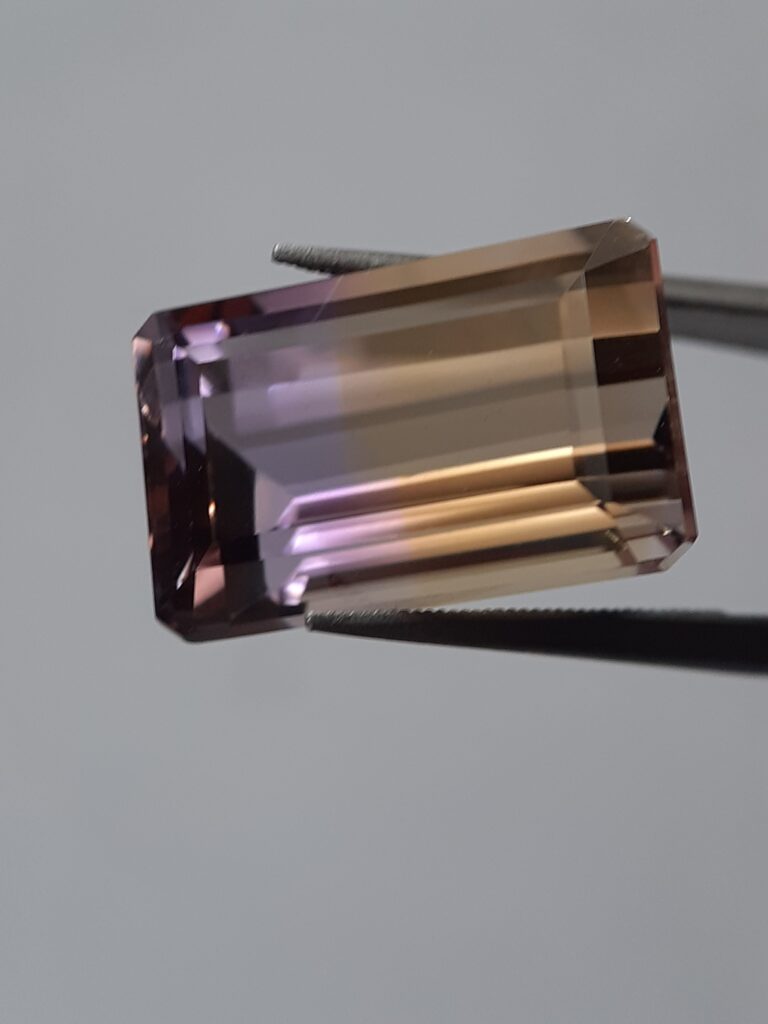
A gemstone’s colour may also vary within the crystal.
This uneven distribution is called colour zoning.
In many transparent faceted gemstones, an attractive, relatively even face-up colour is preferred.
However, the most desirable colour range differs between gemstone varieties.
A deeply saturated purple may be desirable in amethyst.
A vivid red is central to the appeal of fine ruby.
A rich blue with appropriate tone is prized in blue sapphire.
A vivid green is important in fine emerald.
The conditions required to produce these colours depend on the mineral’s chemical composition and geological history.
For example, chromium contributes to ruby’s red colour.
Chromium and vanadium can contribute to emerald’s green colour.
Iron and titanium are involved in important colour-producing mechanisms in blue sapphire.
However, simply containing a colouring element does not guarantee a desirable gem colour.
The element’s concentration, oxidation state, position within the crystal structure and interaction with other components can influence the resulting appearance.
A mineral species may therefore be widespread while crystals possessing a particular attractive colour remain scarce.
5. Transparency: Why a Beautiful Crystal May Not Be Faceting Grade
Transparency is another important distinction between ordinary mineral material and fine faceting rough.
A crystal may possess excellent colour but transmit relatively little light.
Numerous inclusions, fractures, growth features or other internal characteristics may reduce transparency.
In some gemstones, this can substantially limit their suitability for transparent faceted cuts.
However, transparency requirements depend on the intended use.
A translucent gemstone may be excellent material for a cabochon.
An opaque mineral may be desirable for a carving or decorative object.
A crystal containing visible inclusions may still be an attractive collector’s specimen.
Therefore, the expression gem quality should not automatically mean flawless or transparent.
It is more accurate to evaluate quality according to the material and its intended application.
For a fine transparent faceted gemstone, clarity and transparency can be especially important.
For a decorative crystal cluster, natural form and overall presentation may matter more.
For a phenomenal gemstone displaying a star or cat’s-eye effect, particular inclusions may actually be necessary.
6. Natural Inclusions: Imperfections or Valuable Characteristics?
Inclusions are frequently described as imperfections.
That description can be misleading.
Inclusions are natural characteristics that may record aspects of a gemstone’s formation history.
They can include enclosed mineral crystals, fluid inclusions, growth features and other internal structures.
Their significance depends on the gemstone and the intended use.
In a transparent faceted stone, a large fracture may reduce durability or interfere with light transmission.
In an emerald, visible inclusions are common and often accepted within the trade.
In certain sapphires and rubies, fine needle-like inclusions can produce attractive optical effects.
For example, appropriately oriented inclusions may create asterism, the star-like reflection visible in some cabochons.
Other inclusions can contribute to chatoyancy, commonly called the cat’s-eye effect.
GIA’s 2025 review of phenomenal gemstones explains how microscopic structures produce several of these optical phenomena.
Consequently, inclusion-free material is not always the most desirable material.
A natural characteristic can reduce value in one context and contribute positively in another.
Rarity must therefore be assessed with reference to the gemstone’s particular properties.
7. Crystal Size: Why Larger Fine Gems Can Be Disproportionately Scarce
Gemstone size introduces another dimension of rarity.
Small crystals may be relatively common within a deposit.
Larger crystals may occur less frequently.
However, the important commercial question is not simply how large a crystal grows.
It is how much usable gem-quality material the crystal contains.
A large rough crystal may have extensive fractures.
Its attractive colour may be confined to a small zone.
Its transparency may vary throughout the specimen.
The crystal may contain structural weaknesses that limit cutting options.
A smaller crystal may yield a more attractive finished gemstone than a much larger but heavily included specimen.
GIA’s quality-factor guidance confirms that the relationship between size and value differs significantly among gemstone materials.
Fine-quality large rubies are especially scarce.
Large blue sapphires are more available than comparable fine rubies, although exceptional large sapphires are still rare.
Amethyst, by contrast, is available in substantial sizes, and its price per carat does not generally increase as dramatically with size.
This demonstrates why a universal size-based rarity rule would be scientifically and commercially misleading.
8. Cutting Yield: The Hidden Difference Between Rough and Finished Gems
A rough gemstone’s weight is not the same as its finished weight.
Cutting removes material.
The cutter may need to eliminate fractures, damaged surfaces, unattractive colour zones or poorly positioned inclusions.
The original crystal shape can also limit the possible finished shapes.
Some material is lost during sawing, grinding and polishing.
The proportion of rough weight retained in the finished gemstone is called cutting yield.
It can vary substantially.
GIA’s research on coloured gemstone cutting describes how yield depends on crystal shape, clarity, colour distribution and cutting decisions.
A cutter may choose to produce one larger stone rather than several smaller ones.
Alternatively, a fractured crystal may need to be divided into smaller pieces.
The cutter may sacrifice weight to improve face-up colour or optical performance.
For expensive rough material, this decision can have substantial financial consequences.
A large piece of rough is therefore not necessarily capable of producing a large, high-quality finished gemstone.
This is an important reason why exceptional faceted gems can be much scarcer than the total quantity of mineral material recovered from a deposit might suggest.
9. Amethyst: A Beautiful Gemstone That Demonstrates Relative Abundance
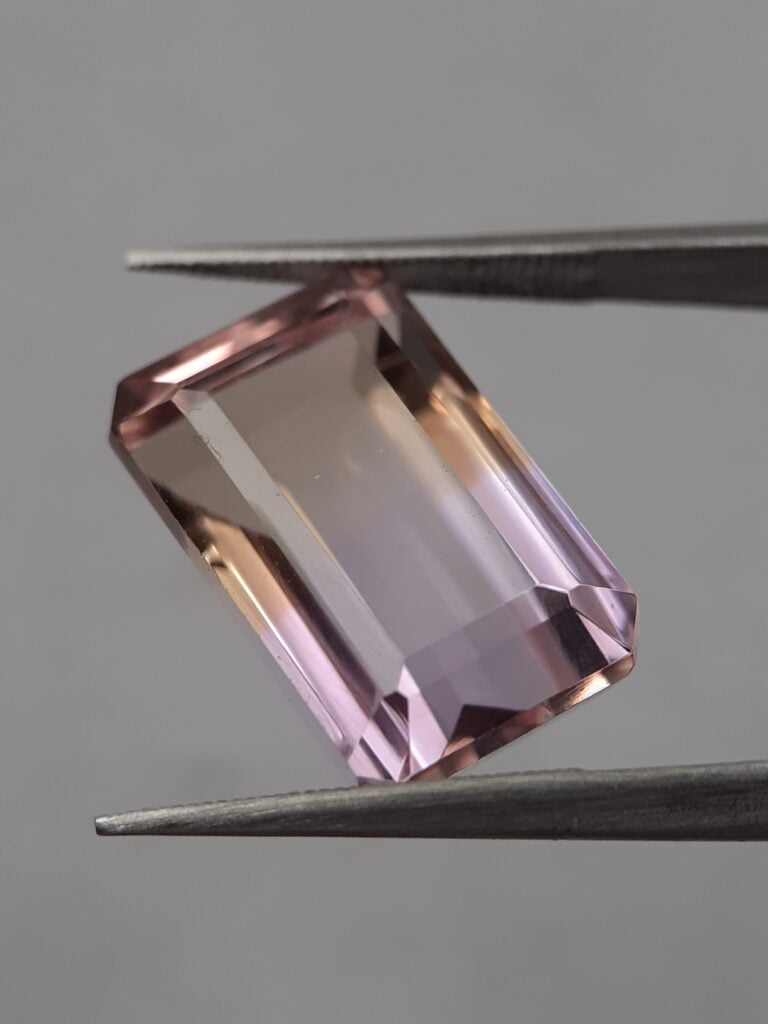
Amethyst is the purple variety of quartz.
It provides one of the clearest examples of the difference between beauty and commercial rarity.
Amethyst can display attractive purple colour, good transparency and substantial crystal size.
Large faceted amethysts are available.
Natural amethyst geodes and crystal clusters can also reach impressive dimensions.
GIA notes that even fine amethyst generally remains relatively affordable and that its price per carat does not rise dramatically with increasing size.
This does not mean that every amethyst is equally desirable.
Fine colour, attractive crystal form, natural transparency and minimal damage still distinguish better specimens.
A deeply coloured, well-formed amethyst crystal may be more appealing than a pale, fractured specimen.
Likewise, an exceptional geode can possess substantial decorative or collector value because of its size, crystal arrangement, colour and presentation.
However, the broad availability of amethyst helps explain why high-quality examples can remain accessible.
Amethyst demonstrates an essential principle.
A gemstone does not need to be exceptionally rare to be beautiful, natural or worthy of appreciation.
10. Garnet: One Mineral Group, Very Different Levels of Rarity
Garnet is not a single mineral species.
It is a group of related minerals with different chemical compositions and a wide range of colours.
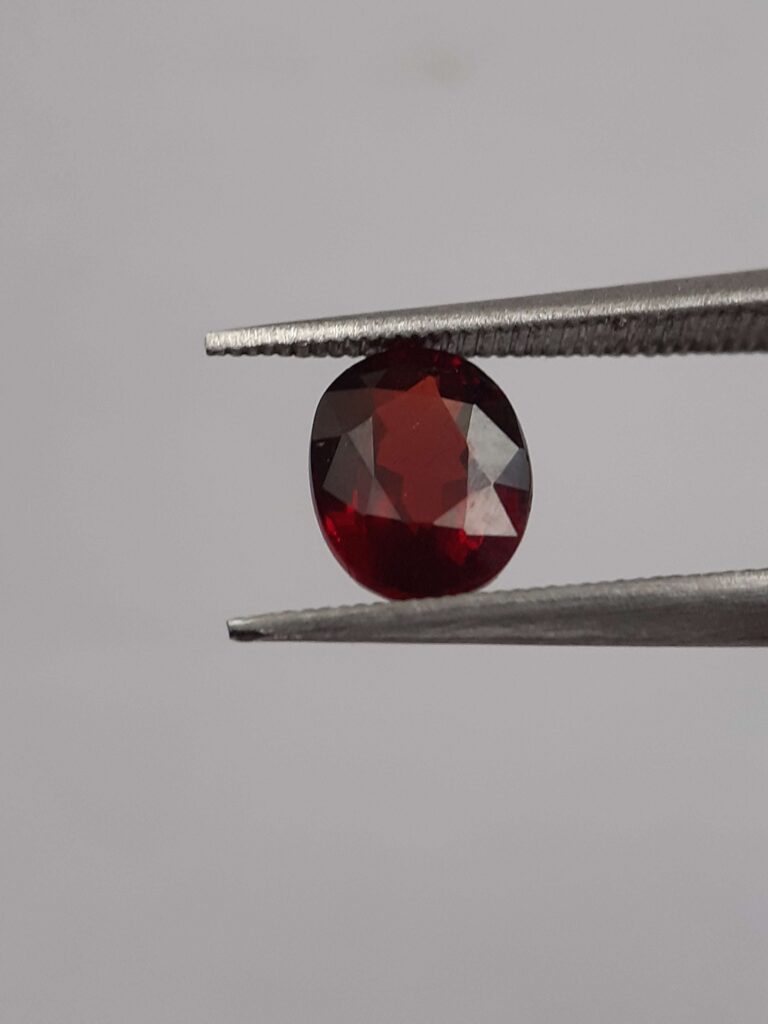
Some red garnets are relatively common.
Others are much less abundant in gem-quality material.
GIA identifies red garnet as one of the more widespread gemstone materials.
However, green varieties such as tsavorite and demantoid are more unusual.
Tsavorite is a green variety of grossular garnet.
Demantoid is a green variety of andradite garnet.
These varieties differ from ordinary red garnets in chemistry, geological occurrence and commercial availability.
The contrast becomes particularly apparent when size is considered.
GIA explains that demantoid and tsavorite are more commonly encountered in smaller sizes, so larger fine specimens can command substantial premiums.
Almandine, by contrast, is available in larger sizes more readily, and its value does not necessarily increase as sharply with weight.
The word garnet therefore provides insufficient information for evaluating rarity.
The species, variety, colour, clarity and size must also be considered.
A statement such as “garnet is common” may be broadly accurate for certain materials while being misleading for others.
11. Ruby: Why Fine Quality Becomes Exceptional
Ruby is the red variety of corundum.
Corundum consists primarily of aluminium oxide, Al₂O₃.
Ruby’s red colour is associated with chromium.
The mineralogical identity of ruby is straightforward, but its quality distribution is not.
Many natural rubies contain inclusions.
Some possess extensive fractures.
Others have colour that is too dark, too light or less saturated than the most desirable examples.
Fine-quality ruby requires an attractive combination of colour, transparency, internal characteristics and cutting potential.
GIA explains that large, fine-colour, eye-clean rubies are extremely rare.
The price per carat can increase dramatically as size increases, especially in better-quality material.
This illustrates how rarity becomes more pronounced when several favourable characteristics must occur together.
A ruby crystal may be natural and correctly identified without possessing exceptional gem quality.
A smaller number of specimens will meet the highest commercial expectations.
An even smaller number will combine those characteristics with substantial finished size.
The rarity of these combinations helps explain the extraordinary prices sometimes achieved by exceptional rubies.
However, not every ruby is valuable merely because it belongs to the ruby variety.
Individual quality remains essential.
12. Sapphire: A Wider Range of Quality and Availability
Sapphire is another variety of corundum.
Although blue is its most familiar colour, sapphire occurs in many colours other than the red assigned to ruby.
Natural sapphire deposits produce a broad range of material.
Some stones are pale.
Others are strongly coloured.
Some are transparent and suitable for faceting.
Others are translucent, opaque or heavily included.
Fine blue sapphires require an attractive combination of colour, clarity and cut.
GIA notes that large blue sapphires are more available than large rubies, but exceptional fine-quality examples become increasingly scarce as size increases.
Colour zoning and inclusions can also influence the appearance of the finished gemstone.
A large sapphire may be less attractive than a smaller stone with more balanced colour and cutting.
The relationship between size and value therefore depends on quality.
Sapphire also demonstrates why geological origin and rarity should not be confused.
A gemstone from a historically prestigious source is not automatically superior.
Likewise, a sapphire from a less famous deposit can possess exceptional beauty.
The individual specimen must be evaluated on its actual characteristics.
13. Emerald: When Transparency Is Especially Difficult to Achieve
Emerald is the green variety of beryl.
Its colour is associated primarily with chromium and/or vanadium.
Natural emeralds frequently contain visible inclusions and fractures.
GIA notes that emeralds without eye-visible inclusions are very rare.
For this reason, the trade generally accepts a greater degree of visible internal characteristics in emerald than in some other transparent gemstones.
The most desirable emeralds combine attractive green colour, strong transparency and a pleasing overall appearance.
Large specimens with these characteristics can be exceptionally valuable.
However, the existence of a large emerald crystal does not guarantee that it can produce a large transparent faceted stone.
Fractures and inclusions can significantly reduce usable cutting volume.
Emerald also demonstrates the importance of treatment disclosure.
Clarity enhancement may improve the apparent transparency of fractured material.
The presence and extent of treatment can affect commercial evaluation.
An emerald’s rarity and value therefore cannot be assessed from colour and weight alone.
Identity, transparency, internal characteristics, treatment and cutting quality all matter.
14. Tourmaline: Why Colour Variety Changes the Meaning of Rarity
Tourmaline belongs to a complex mineral supergroup.
Gem-quality tourmaline occurs in an extraordinary range of colours.
Green, pink, red, blue and multicoloured varieties are all known.
However, their commercial availability differs substantially.
Some tourmaline colours are relatively accessible.
Others are more difficult to obtain in attractive quality.
Copper-bearing tourmalines with vivid blue-to-green colours, commonly associated with the Paraíba trade category, provide an important example.
GIA’s tourmaline research describes how the distinctive colour of fine copper-bearing material contributed to strong demand and high prices.
Size also matters.
Tourmaline crystals can grow to substantial dimensions, but large transparent pieces with desirable colour may be much less common.
The orientation of the crystal is another consideration.
Tourmaline can display strong pleochroism, meaning that different crystal directions may show different colour appearances.
Cutters must consider colour orientation, transparency and potential weight loss.
A large rough crystal may therefore produce a smaller finished gemstone than its dimensions initially suggest.
Tourmaline demonstrates that rarity must be evaluated at the level of the particular variety and quality, not simply the mineral group’s name.
15. Alexandrite: When a Rare Optical Phenomenon Matters
Alexandrite is the colour-change variety of chrysoberyl.
Its most recognised characteristic is the change in apparent colour under different lighting conditions.
Fine alexandrite may appear green to bluish green under daylight-equivalent illumination and red to purplish red under incandescent light.
The strength and quality of this colour change are important value factors.
GIA notes that most fashioned alexandrites weigh less than one carat.
Fine-quality examples above five carats can be exceptionally expensive.
However, not every stone identified as alexandrite displays a dramatic colour change.
Some show less desirable hues or weak changes.
Others contain inclusions that reduce transparency.
The most exceptional examples combine an attractive colour-change effect, useful transparency, favourable cutting and substantial size.
Alexandrite therefore illustrates rarity at several levels.
The gemstone variety itself is uncommon.
Strong colour-change performance is more selective.
Large specimens combining excellent colour change and high clarity are more selective still.
This is a particularly clear example of exceptional-quality rarity.
16. Optical Phenomena Can Create a Different Type of Rarity
Not all gemstone rarity is associated with transparency or conventional faceting.
Some gemstones are prized for special optical effects.
These include asterism, chatoyancy, colour change and other phenomena.
Asterism produces a star-like pattern of reflected light.
Chatoyancy produces a concentrated band of reflected light resembling a cat’s eye.
Such effects depend on particular internal structures and their relationship to the cut.
GIA’s research on phenomenal gemstones explains how microscopic inclusions and structures can produce these appearances.
A star sapphire, for example, requires suitable oriented inclusions and an appropriate cabochon cut.
A crystal with insufficient inclusions may not display a star.
A crystal with excessive inclusions may lose desirable transparency or body colour.
The finest specimens therefore require a favourable balance.
This shows why the usual assumption that fewer inclusions always means greater value is incorrect.
In phenomenal gemstones, particular inclusions can be essential to the gemstone’s identity and appeal.
17. Geological Rarity Does Not Automatically Mean High Value
A mineral may be geologically rare without attracting strong commercial demand.
This is an important distinction.
A rare mineral may occur only in small crystals.
It may have unattractive colour.
It may be opaque or fragile.
It may be difficult to cut.
It may lack established consumer recognition.
Some rare minerals are valuable mainly to specialist collectors rather than jewellery buyers.
Conversely, a relatively widespread mineral can command significant prices when an individual specimen possesses exceptional colour, crystal form or aesthetic qualities.
Market value depends on more than geological scarcity.
It reflects the interaction between supply, demand, desirability, quality, cutting, documentation and commercial conditions.
A mineral’s rarity can contribute to its appeal, but it does not establish a universal minimum price.
Similarly, a high asking price does not independently prove that a gemstone is rare.
Rarity claims should be supported by meaningful information rather than inferred from price alone.
18. How New Discoveries Can Change Commercial Scarcity
Gemstone supply is not static.
New deposits are discovered.
Existing mines may increase or reduce production.
Some deposits become exhausted or uneconomic.
Others may be temporarily inaccessible.
A gemstone variety that was once difficult to obtain can become more widely available after a major discovery.
Likewise, a material may become less accessible when production declines.
These changes affect commercial scarcity.
They do not alter the mineral’s chemical composition or its geological formation history.
A natural gemstone remains the same mineral regardless of whether new deposits are discovered elsewhere.
However, its relative availability in the market can change.
This is why historical prices cannot automatically be used as permanent measures of rarity.
GIA’s geological research on gem-bearing pegmatites demonstrates that gem material may be concentrated in irregular pockets, while the USGS tracks changes in gemstone production and supply.
Commercial availability must therefore be understood as a changing condition rather than a fixed mineralogical property.
19. The Difference Between Scarcity and Demand
Supply and demand are both important in gemstone markets.
A gemstone may be scarce but have limited demand.
Another may be relatively available but highly desirable.
The relationship between these factors influences pricing.
A well-known gemstone variety may benefit from established consumer recognition and a broad jewellery market.
An obscure rare mineral may attract a much smaller audience.
This does not make the obscure mineral less interesting scientifically.
It means that geological rarity and commercial popularity are different.
The USGS Mineral Commodity Summaries document how gemstone markets can be affected by changes in production, imports, consumer demand and competition from laboratory-grown material.
Its 2026 report also illustrates that market conditions can change substantially over relatively short periods.
Such changes should not be interpreted as changes in the physical rarity of the minerals themselves.
A responsible gemstone evaluation should therefore distinguish geological facts from market conditions.
20. Natural, Treated and Laboratory-Grown: Three Different Questions
Gemstone rarity discussions frequently become confused when natural and laboratory-grown materials are compared.
A natural gemstone forms through geological processes.
A laboratory-grown gemstone is produced through an artificial growth process.
Some laboratory-grown materials have essentially the same chemical composition and physical properties as their natural counterparts.
However, their formation histories differ.
Treatment introduces another distinction.
A natural gemstone may have undergone heating, clarity enhancement or another process intended to modify its appearance.
Treatment does not necessarily make the gemstone synthetic.
Nor does every treatment have the same effect on value.
The commercial significance depends on the gemstone, the treatment and the market.
GIA’s treatment guidance explains the importance of identifying and disclosing relevant enhancements.
For rarity evaluation, the precise category matters.
A natural untreated gemstone with exceptional characteristics may occupy a different commercial category from a treated natural gemstone or a laboratory-grown counterpart.
However, treatment status alone does not establish overall quality.
Each specimen still requires individual evaluation.
21. Collector Specimens: Rarity Beyond Faceted Gemstones
Gemstone rarity is not limited to faceted stones.
Mineral collectors may value exceptional natural crystal forms, unusual associations, attractive colour zoning or rare geological occurrences.
A crystal cluster may be prized because of its composition and presentation.
A well-formed crystal may possess collector value even when it contains inclusions that make faceting impractical.
A specimen may also be scientifically important because it documents an unusual mineral association or geological environment.
Gem-bearing pegmatites provide particularly interesting examples.
GIA’s 2025 research describes how pegmatite pockets can produce large, well-formed crystals and significant mineral specimens.
The collector value of such material may depend on different characteristics from those used to evaluate faceted gemstones.
Crystal form, damage, matrix association, aesthetics and documented locality can all matter.
A mineral specimen should therefore not be judged solely by the quantity of transparent material it could yield.
Preserving its natural form may be the more appropriate choice.
22. Why Gemstone Rarity Cannot Be Expressed as One Universal Percentage
It may be tempting to ask what percentage of all natural crystals are gem quality.
However, there is no scientifically defensible universal percentage covering every gemstone species, deposit and quality category.
Different minerals form in different environments.
Deposits vary in their quality distribution.
Some produce large quantities of transparent material.
Others yield mostly opaque or fractured crystals.
The definition of gem quality also changes according to intended use.
A piece of rough unsuitable for faceting may be excellent carving material.
A crystal that cannot produce a fine faceted stone may be an exceptional collector’s specimen.
Even within one gemstone variety, quality distribution may differ significantly between deposits.
Therefore, statements such as “only one in a thousand crystals is gem quality” should not be presented as universal facts without a clearly defined population and supporting data.
Such figures may occasionally describe a particular deposit or study.
They should not automatically be applied to an entire gemstone species.
Scientific accuracy requires recognising the limits of available information.
23. A Practical Framework for Understanding Gemstone Rarity
When assessing a gemstone’s rarity, begin by asking what is actually being claimed.
| Question | What it helps establish |
|---|---|
| Is the mineral species itself uncommon? | Geological rarity |
| Is the particular colour unusual? | Colour rarity |
| Is the specimen unusually transparent? | Gem-quality rarity |
| Is the finished size difficult to obtain? | Size rarity |
| Does it display a special optical effect? | Phenomenal rarity |
| Is the material available from only a limited number of producing sources? | Supply concentration |
| Is the quality exceptional for that particular gemstone? | Exceptional-quality rarity |
| Is current commercial supply restricted? | Market scarcity |
| Is there strong collector or consumer demand? | Commercial desirability |
These questions should be considered together.
No single answer establishes the entire rarity profile of a gemstone.
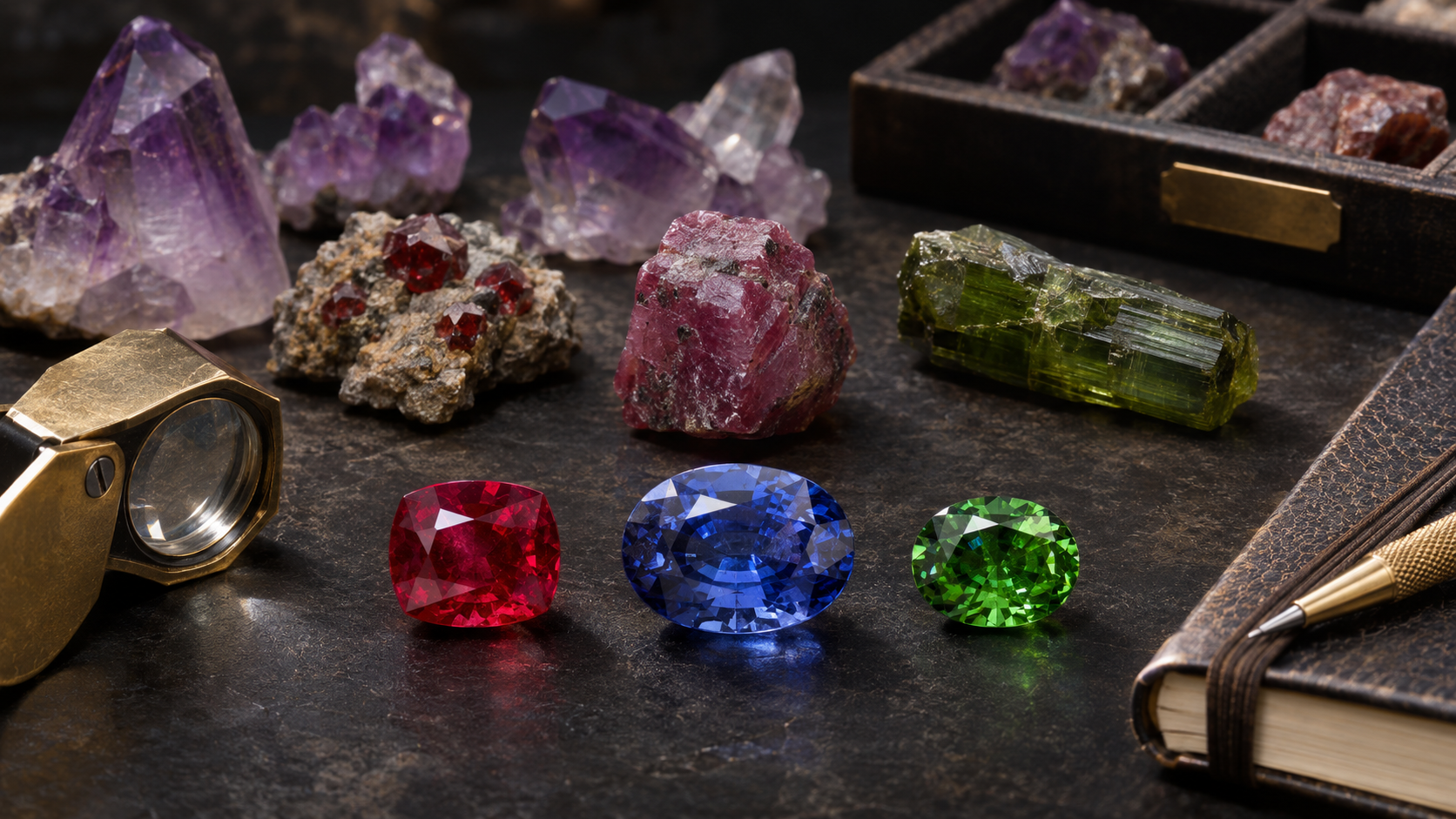
For example, a large amethyst may be impressive but not particularly rare in the broader market.
A fine large ruby may be exceptionally scarce because of the difficulty of obtaining the required combination of characteristics.
A rare mineral specimen may be scientifically important but have limited jewellery demand.
The correct conclusion depends on the specific material and the purpose of the evaluation.
24. Common Misconceptions About Gemstone Rarity
A rare mineral is always an expensive gemstone.
Incorrect. Geological rarity does not guarantee commercial demand or desirable gem quality.
A common mineral cannot produce an exceptional gemstone.
Incorrect. Widespread minerals can produce unusually attractive individual specimens.
A larger gemstone is always rarer than a smaller one.
Incorrect. Size rarity depends on the material, quality and available supply.
Every inclusion reduces a gemstone’s value.
Incorrect. Some inclusions contribute to desirable optical phenomena or collector interest.
A gemstone’s country of origin determines its quality.
Incorrect. Quality varies within every producing region.
An untreated gemstone is automatically superior to a treated one.
Incorrect. Treatment status is one factor; overall quality must still be evaluated.
A high price proves that a gemstone is rare.
Incorrect. Prices also reflect demand, marketing, quality and market conditions.
Every crystal from a rare deposit is rare in the same way.
Incorrect. Different specimens may vary substantially in colour, clarity, size and quality.
The total quantity mined determines the number of fine gemstones available.
Incorrect. Cutting yield and quality distribution strongly influence finished gemstone supply.
Rarity can be determined from appearance alone.
Incorrect. Mineral identity, quality, treatment and supply context may require additional information.
25. What Rarity Means for the Gemstone Buyer
For buyers, rarity is most useful when it is described precisely.
Instead of relying on a general statement that a gemstone is rare, consider the specific characteristics that distinguish it.
Is the colour unusually attractive for the variety?
Is the transparency exceptional?
Is the size uncommon at that quality level?
Does the stone display a rare optical phenomenon?
Has the material been correctly identified?
Are treatments disclosed?
Is the claimed geographical origin supported by appropriate evidence?
Does the price reflect the actual specimen rather than an unsupported marketing description?
These questions help separate meaningful rarity from promotional language.
They also prevent buyers from overlooking excellent gemstones simply because the mineral species is relatively common.
A carefully cut garnet can possess outstanding beauty.
A natural amethyst can be an exceptional decorative or collector specimen.
A tourmaline can display remarkable colour even when its particular variety is not among the rarest.
Rarity may contribute to value, but it is not the only reason to appreciate a gemstone.
26. Why Individual Evaluation Matters More Than General Labels
A gemstone’s mineral identity provides essential scientific information.
However, it does not fully describe the individual specimen.
Two stones of the same species can differ dramatically in colour, clarity, cut and appearance.
Two rough crystals of similar weight may have very different cutting potential.
Two mineral clusters may differ in natural form, damage and aesthetic appeal.
This is why specimen-specific evaluation is important.
For faceted gemstones, colour, clarity, cut quality, optical performance and overall appearance provide meaningful information.
For rough faceting material, internal characteristics, usable geometry and cutting potential become especially relevant.
For decorative rough and mineral specimens, natural character, form, colour and presentation may be more important.
A consistent evaluation system can help communicate these distinctions.
However, a quality score should not be interpreted as a direct measurement of geological rarity.
A gemstone can receive an excellent quality assessment without being geologically uncommon.
Likewise, a rare mineral can receive a modest quality assessment if its individual characteristics are less desirable.
Quality and rarity should be evaluated separately, even when both contribute to commercial value.
27. The Scientific Meaning of Exceptional
In gemstone descriptions, the word exceptional should be used carefully.
It may refer to an unusually attractive specimen.
It may describe uncommon colour, size or clarity.
It may identify a particularly fine example of a mineral variety.
However, without a defined comparison, the term remains subjective.
A scientifically responsible description should explain which characteristics justify the assessment.
For example, a transparent ruby with vivid colour and limited visible inclusions may be exceptional relative to typical ruby material.
A well-formed amethyst crystal with attractive colour and minimal damage may be exceptional as a mineral specimen.
A large tsavorite with fine colour and high transparency may be exceptional because that combination is difficult to obtain.
These examples describe different kinds of excellence.
They should not be collapsed into one universal ranking of rarity.
The strongest gemstone descriptions communicate observable characteristics first and use rarity terminology only when it is justified.
Conclusion: Rarity Is a Combination, Not a Label
Natural gemstone rarity is more complex than the abundance of a mineral in the Earth’s crust.
A mineral may be widespread while fine gem-quality examples remain scarce.
A particular colour may occur only under specialised geological conditions.
Large transparent crystals may be uncommon even when smaller crystals are plentiful.
Cutting can further reduce the amount of material suitable for a fine finished gemstone.
Optical phenomena may require unusual internal structures.
Commercial supply can change as deposits are discovered, developed or exhausted.
And market value depends not only on scarcity but also on demand, desirability, quality and documentation.
Amethyst demonstrates that beauty and natural origin do not require extreme rarity.
Garnet demonstrates that different varieties within one mineral group can have very different levels of scarcity.
Ruby, sapphire and emerald illustrate how exceptional colour, transparency and size become increasingly selective.
Tourmaline and alexandrite demonstrate the importance of particular colours and optical characteristics.
The central principle is straightforward.
A gemstone is not exceptional merely because its mineral name is rare. It becomes exceptional through the specific combination of characteristics that distinguishes the individual specimen.
Understanding this distinction encourages more accurate gemstone descriptions, better-informed purchasing decisions and a deeper appreciation of natural mineral diversity.
It also reinforces an important principle of responsible gemmology.
A gemstone should be valued for what can actually be observed, identified and supported by evidence—not simply for how rare it is claimed to be.
References & Further Reading
The following sources were selected from the Gemological Institute of America, its peer-reviewed journal Gems & Gemology, and the United States Geological Survey.
They provide authoritative scientific and professional information on gemstone quality, geological occurrence, crystal formation, colour, clarity, size, cutting yield, treatments and market supply.
All references link to informational or scientific resources rather than gemstone product listings.
1. Gilbertson, Al – Colored Gemstone Value Factors
Published: 9 August 2018
Institution: Gemological Institute of America
A detailed examination of coloured gemstone value factors, including hue, tone, saturation, colour zoning, clarity, cutting, size and geographical origin. Particularly useful for understanding how individual quality characteristics interact with commercial value.
2. United States Geological Survey – Gemstones Statistics and Information
Institution: USGS National Minerals Information Center
Provides an institutional overview of gemstone materials, worldwide supply, demand and commercial material flows.
3. United States Geological Survey — Mineral Commodity Summaries 2026: Gemstones
Published: February 2026; revised May 2026
Institution: United States Geological Survey
Official mineral commodity statistics covering gemstone production, imports, market conditions and changes in supply and demand.
https://pubs.usgs.gov/periodicals/mcs2026/mcs2026-gemstones.pdf
4. Gemological Institute of America – Amethyst
Institution: Gemological Institute of America
Explains the mineralogical identity, colour, clarity, size availability and value characteristics of amethyst, including the relatively modest effect of increasing size on its price per carat.
5. Gemological Institute of America – Garnet Description
Institution: Gemological Institute of America
Describes the garnet mineral group, its species and varieties, and the contrast between widespread red garnets and less common green varieties such as tsavorite and demantoid.
https://www.gia.edu/articles/garnet-description
6. Gemological Institute of America – Garnet Quality Factors
Institution: Gemological Institute of America
Explains how garnet colour, clarity, cut and size influence quality and commercial value, including differences between common and rarer varieties.
https://www.gia.edu/garnet-quality-factor
7. Gemological Institute of America – Ruby Quality Factors
Institution: Gemological Institute of America
A detailed guide to ruby colour, clarity, inclusions, cutting and carat weight, including the exceptional scarcity of large, fine-quality, transparent rubies.
https://www.gia.edu/ruby-quality-factor
8. Gemological Institute of America – Sapphire Quality Factors
Institution: Gemological Institute of America
Explains sapphire colour, clarity, size distribution, cutting and optical phenomena, including the relative scarcity of fine-quality large blue sapphires.
https://www.gia.edu/sapphire-quality-factor
9. Gemological Institute of America – Emerald Quality Factors
Institution: Gemological Institute of America
Describes emerald colour, typical inclusions, clarity enhancement, cutting challenges and the rarity of highly transparent, fine-quality large specimens.
https://www.gia.edu/emerald-quality-factor
10. Gemological Institute of America – Tourmaline Quality Factors
Institution: Gemological Institute of America
Explains tourmaline colour variation, pleochroism, clarity, cutting orientation and size-related value differences, including the commercial significance of fine copper-bearing tourmalines.
https://www.gia.edu/tourmaline-quality-factor
11. Gemological Institute of America – Alexandrite Buyer’s Guide
Institution: Gemological Institute of America
Explains the significance of colour change, clarity, cutting and carat weight in alexandrite, including the exceptional scarcity of large, fine-quality stones.
https://www.gia.edu/alexandrite/buyers-guide
12. Palke, Aaron C., and Shigley, James E. – Gem Granitic Pegmatites
Publication: Gems & Gemology, Summer 2025, Volume 61, Number 2
Institution: Gemological Institute of America
A scientific review of granitic pegmatites, mineralogical diversity, gemstone formation, crystal growth and the irregular occurrence of valuable gem pockets.
https://www.gia.edu/gems-gemology/summer-2025-colored-stones-unearthed
13. Structures Behind the Spectacle: A Review of Optical Effects in Phenomenal Gemstones and Their Underlying Nanotextures
Publication: Gems & Gemology, Summer 2025
Institution: Gemological Institute of America
Reviews the microscopic structures responsible for important optical phenomena, including asterism, and explains why particular inclusions can be essential to a gemstone’s appearance.
https://www.gia.edu/gems-gemology/summer-2025-phenomenal-gemstones
14. Gemological Institute of America – An Introduction to Gem Treatments
Institution: Gemological Institute of America
Provides an educational overview of gemstone treatments, their purposes and their effects on appearance, supporting the distinction between natural origin, treatment status and overall gemstone quality.
https://www.gia.edu/gem-treatment
Scientific Interpretation and Limitations
Gemstone rarity is not a single universally measurable property.
Its interpretation depends on the mineral species, variety, geological occurrence, specimen quality, size, intended use and available commercial information.
No universal percentage can accurately describe the proportion of gem-quality material across all mineral species and deposits.
The relationship between size and price differs substantially among gemstones and may change with quality and market conditions.
Commercial value is influenced by supply and demand and should not be treated as a direct scientific measure of geological rarity.
Gemstone treatments and laboratory-grown materials require accurate identification and appropriate disclosure.
A gemstone quality assessment is not automatically a geological rarity assessment.
Claims concerning exceptional rarity should be supported by relevant comparative evidence and should not be inferred solely from price, geographical origin or promotional terminology.
This article is intended for gemmological education and informed gemstone evaluation. It does not provide specimen-specific identification, laboratory certification, market valuation or investment advice.