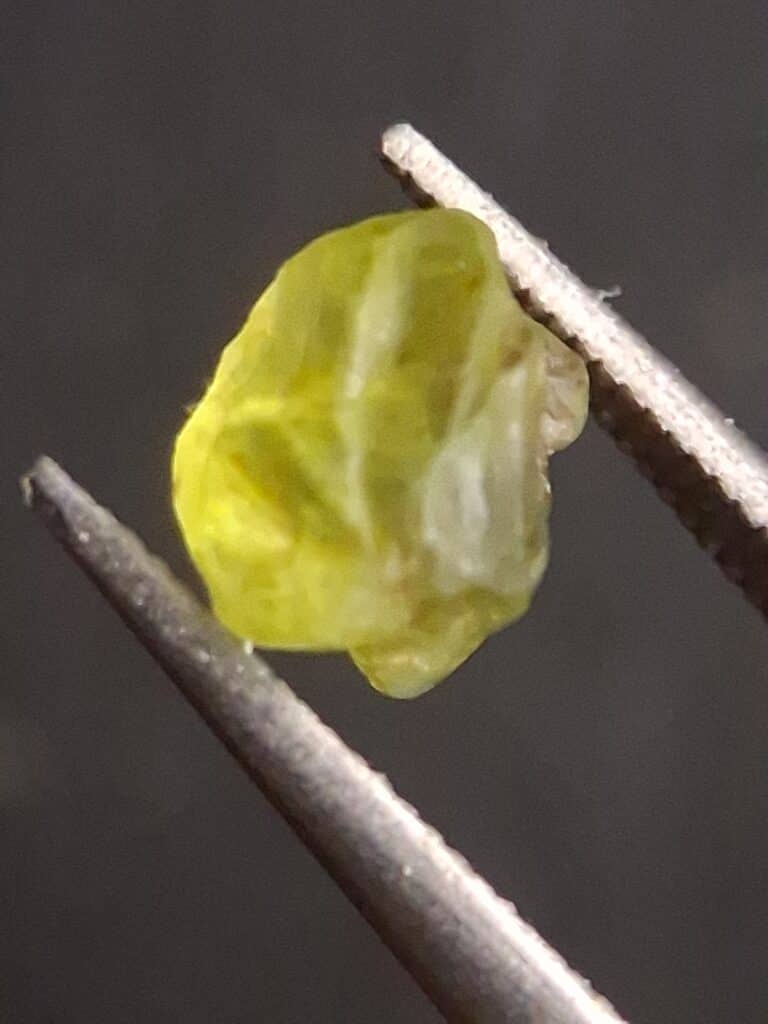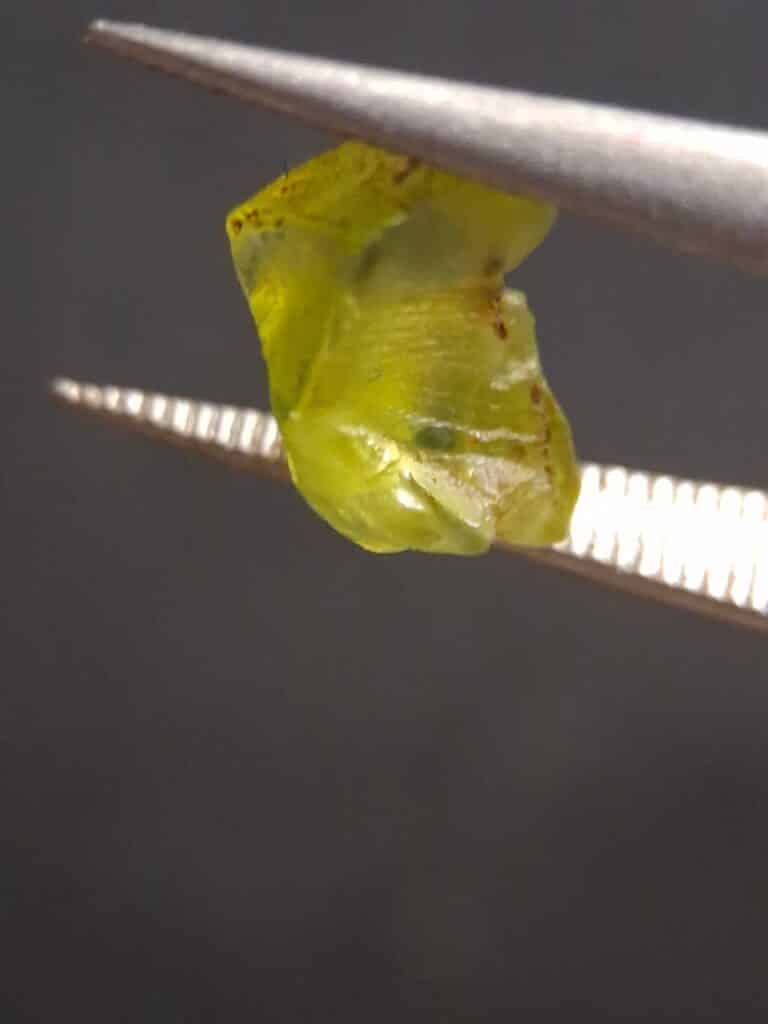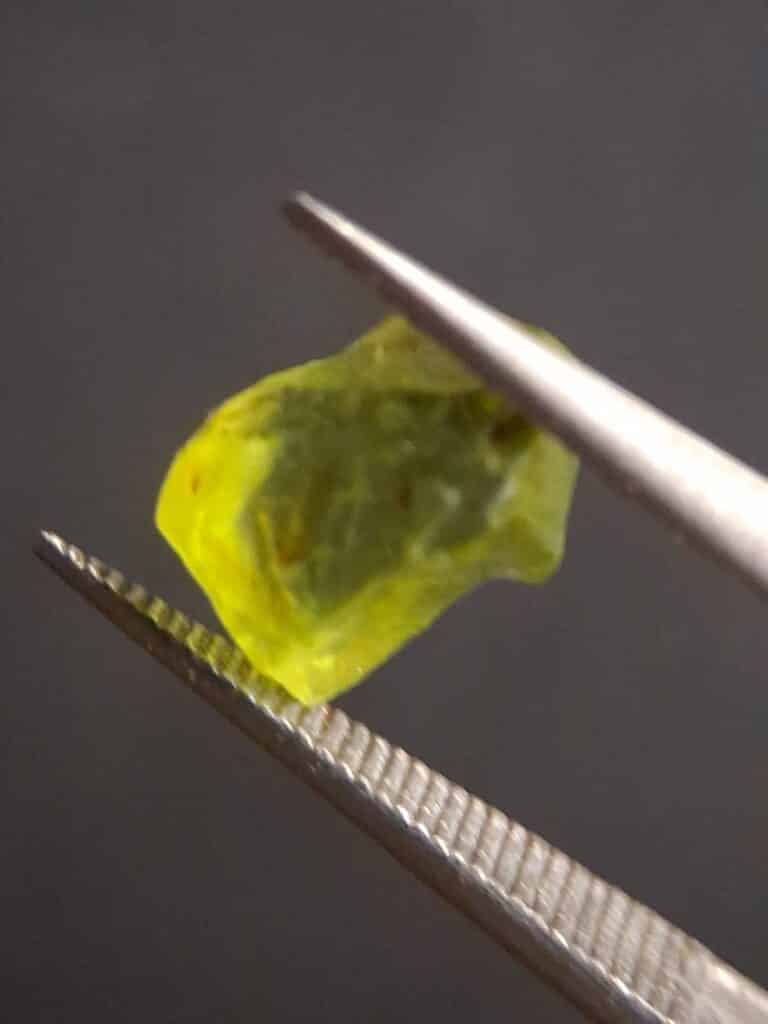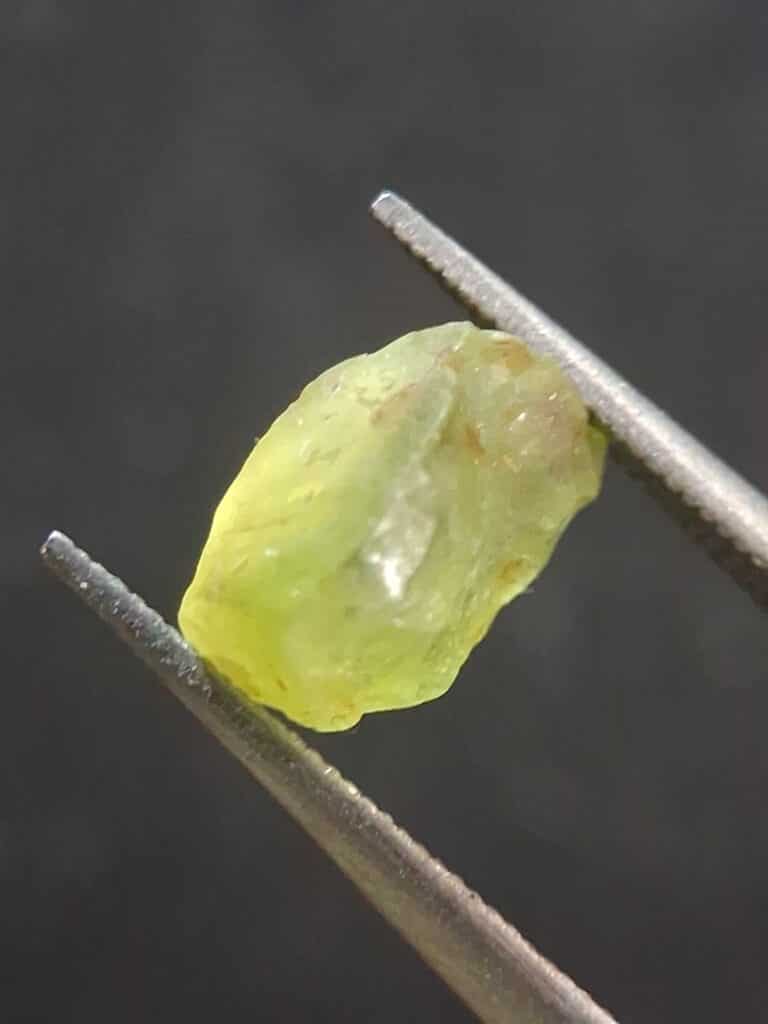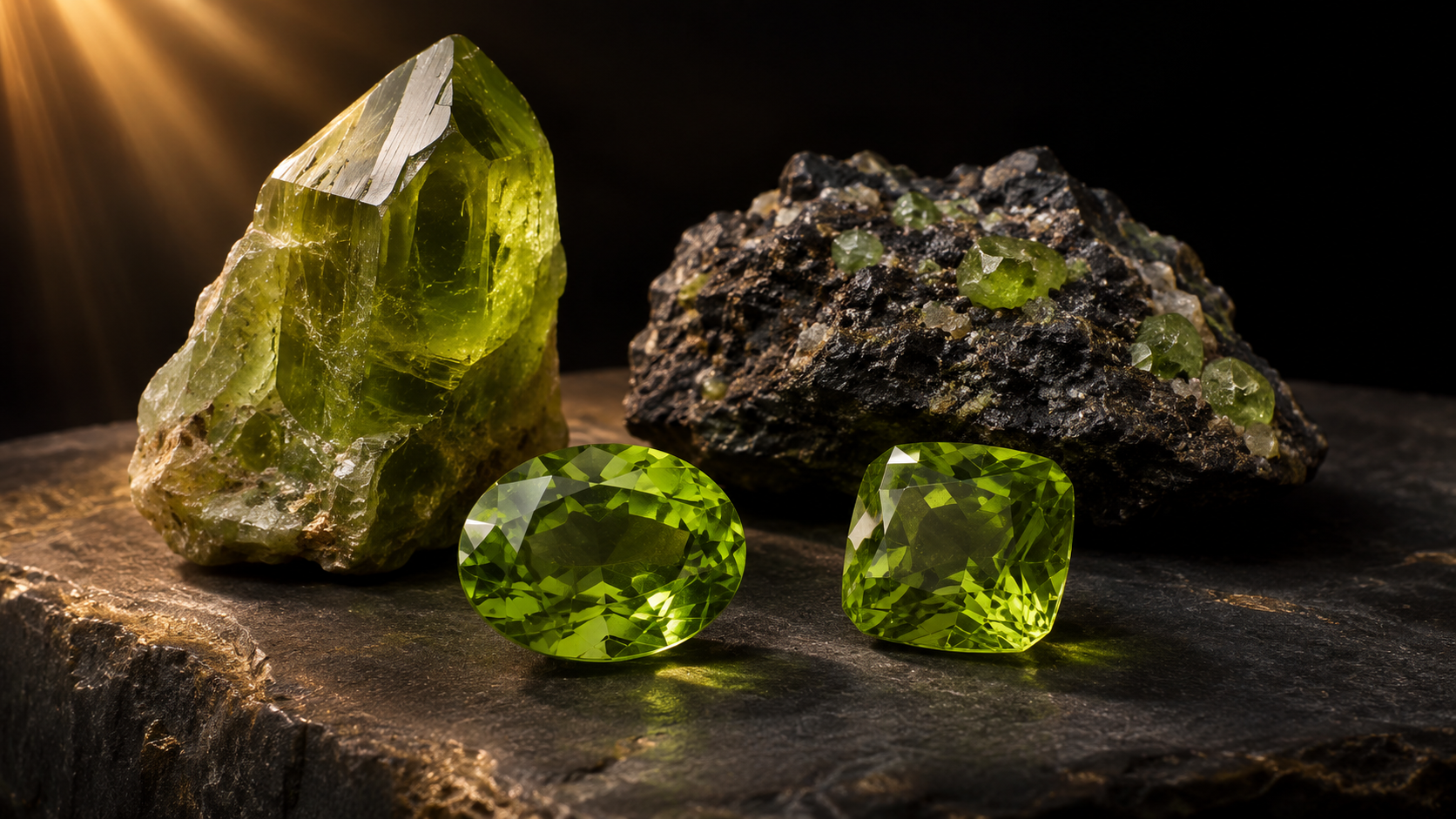
From the depths of Earth’s mantle to ancient protective talismans, discover the remarkable gemstone associated with sunlight, compassion, renewal and spiritual energy.
Table of Contents
The Peridot August birthstone symbolizes growth and renewal, making it a popular choice for those celebrating their birthday in this vibrant month.
Introduction: The Green Gemstone of Summer
August is traditionally associated with sunshine, warmth, abundance and the transition toward the final weeks of summer.
Its best-known green birthstone, peridot, reflects many of these themes through its vibrant yellowish-green colour and remarkable geological origins.
Unlike many gemstones whose colours result from small quantities of foreign trace elements, peridot owes its characteristic green appearance to iron that forms part of its mineral composition.
It is a gemstone with an extraordinary natural history.
Some peridot originates from rocks formed deep within Earth’s upper mantle. Other specimens have been identified within meteorites, connecting the mineral not only to our planet’s interior but also to the wider solar system.
Throughout history, peridot has acquired symbolic associations with sunlight, protection, prosperity and renewal.
In modern crystal traditions, it is often described as a stone of compassion, emotional release and positive energy. It is also associated with the heart chakra and practices intended to encourage personal growth.
But how much of this is supported by scientific evidence?
Can peridot genuinely influence human emotions or physical health? Does its crystal structure produce a special healing energy? And why have people associated this green gemstone with spiritual protection for so many centuries?
To understand peridot fully, we must explore its mineralogy, geology, cultural history and metaphysical traditions while distinguishing measurable physical properties from personal beliefs.
1. Peridot: The Birthstone of August
Peridot is one of the officially recognised birthstones for August, known as the Peridot August birthstone.
Modern birthstone lists also recognise spinel and sardonyx, giving people born in August several gemstones with different colours, properties and historical associations.
Peridot is particularly popular because of its distinctive green colour.
While many coloured gemstones occur in numerous hues, gem-quality peridot is consistently associated with the green colour family, ranging from yellowish green to olive green and occasionally more saturated grass-green shades.
Why is peridot associated with August?
The association between gemstones and calendar months developed through religious, cultural and commercial traditions.
Birthstone systems have changed throughout history, and different societies have sometimes assigned different gemstones to particular months.
The modern association between August and peridot is a recognised convention rather than a relationship established by astronomy or mineral physics.
Nevertheless, its green colour creates a compelling symbolic connection with the vitality of the natural world.
In contemporary spiritual interpretations, peridot is associated with:
- Growth and renewal
- Compassion and emotional openness
- Prosperity and abundance
- Optimism and positive thinking
- Protection from negative influences
- Personal transformation
These meanings form part of gemstone symbolism rather than scientifically demonstrated effects.
Peridot and the zodiac
August overlaps with the Western astrological signs of Leo and Virgo.
In some contemporary gemstone traditions, peridot is associated with Leo because of its historical connection with sunlight, confidence and vitality.
Other traditions associate it with Virgo through themes of renewal, balance and personal development.
There is no single universally accepted astrological gemstone system.
Neither astronomy nor experimental psychology has established that wearing peridot produces different physical or psychological effects according to a person’s zodiac sign.
For many people, however, its association with August provides a meaningful connection with their birthday, identity and personal history.
2. What Is Peridot? The Scientific Identity of the Gemstone
Peridot belongs to the olivine mineral group
Peridot is the gem-quality variety of olivine, generally belonging to the magnesium-rich part of the forsterite–fayalite solid-solution series.
Its general chemical formula is:
(Mg,Fe)₂SiO₄
This represents a magnesium-iron silicate.
The two principal end-members of the series are:
Forsterite: Mg₂SiO₄
Fayalite: Fe₂SiO₄
Magnesium and iron can substitute for one another within the crystal structure.
Gem-quality peridot is typically magnesium-rich, with sufficient iron to produce its characteristic colour.
Gemmological properties of peridot
| Property | Scientific characteristics |
|---|---|
| Gemstone name | Peridot |
| Mineral group | Olivine |
| Principal composition | Magnesium-iron silicate |
| Chemical formula | (Mg,Fe)₂SiO₄ |
| Crystal system | Orthorhombic |
| Colour | Yellowish green to olive green |
| Mohs hardness | 6.5–7 |
| Refractive index | Approximately 1.65–1.69 |
| Birefringence | Approximately 0.035–0.038 |
| Specific gravity | Approximately 3.34 |
| Lustre | Vitreous |
| Transparency | Transparent to translucent |
| Optical character | Biaxial positive, typically |
| Common cutting styles | Oval, cushion, round, emerald and mixed cuts |
The exact optical properties can vary with chemical composition.
These measurable characteristics allow gemmologists to distinguish peridot from other green gemstones, including emerald, green tourmaline and certain varieties of garnet.
Why is peridot green?
Peridot’s colour is primarily associated with iron within its crystal structure.
In gemmology, peridot is generally considered an idiochromatic gemstone, meaning that its characteristic colour is related to an essential constituent of the mineral rather than an incidental trace impurity.
Iron influences how the crystal absorbs visible light.
The wavelengths that are transmitted produce the gemstone’s distinctive green appearance.
Differences in composition and absorption behaviour can influence whether a specimen appears bright yellowish green, olive green or more saturated green.
This colour is a consequence of mineral chemistry and interactions with light.
It is not evidence of an invisible healing field or a chakra-specific vibration.
3. Peridot: A Gemstone Born Deep Within the Earth
One of the most remarkable aspects of peridot is its geological origin.
Olivine is a major constituent of many rocks within Earth’s upper mantle.
The mantle lies beneath the crust and extends to great depths within our planet.
Under suitable conditions, olivine crystallises in magnesium- and iron-rich geological environments.
Some mantle-derived rocks contain olivine crystals that may be sufficiently transparent and well formed to produce gem-quality material.
How does peridot reach Earth’s surface?
Volcanic processes can transport mantle-derived material toward the surface.
Certain magmas carry fragments of mantle rock, known as xenoliths, which may contain olivine.
As the magma rises and eventually cools, these materials can become incorporated into volcanic deposits.
Subsequent weathering and erosion may release individual olivine crystals.
Not every peridot gemstone forms through exactly the same geological pathway.
Olivine can also crystallise directly from suitable magmas, and gem-quality occurrences may be associated with different geological environments.
Important sources of peridot
Recognised geographical sources include:
- Myanmar
- Pakistan
- China
- Vietnam
- Tanzania
- United States, particularly Arizona
- Egypt, historically associated with Zabargad Island
Each locality has its own geological characteristics.
Colour, crystal size, transparency and inclusions can vary between deposits.
The geographic origin of a gemstone does not automatically establish its quality.
4. Peridot from Outer Space: The Scientific Cosmic Connection
Peridot has a genuinely extraordinary relationship with the cosmos.
Olivine occurs not only on Earth but also in certain extraterrestrial materials.
Some meteorites contain crystals of olivine that can be sufficiently transparent and attractive to qualify as gem-quality peridot.
Pallasite meteorites
Pallasites are a rare class of stony-iron meteorites.
They commonly contain olivine crystals embedded within a metallic iron-nickel matrix.
In some specimens, these crystals display attractive yellowish-green colours.
Certain crystals can be cut into small gemstones.
This means that some peridot specimens have an extraterrestrial origin.
What does this mean scientifically?
Meteorites provide valuable information about the formation and evolution of bodies within the early solar system.
Their mineral compositions can reveal processes that occurred billions of years ago.
The presence of olivine in extraterrestrial material demonstrates that the mineral can form under conditions beyond Earth.
However, this does not establish that peridot can transmit cosmic consciousness, communicate with planetary energies or influence human destiny.
The scientific cosmic connection is real: olivine occurs in meteorites. The metaphysical interpretation of cosmic energy remains a matter of belief.
This distinction makes peridot especially fascinating because its genuine astronomical history is remarkable without requiring supernatural explanations.
5. Peridot in Ancient Egypt: The Gem of the Sun
Peridot has a long and culturally significant history.
One of its most famous historical sources is Zabargad Island in the Red Sea, which belongs to Egypt.
The island was known in antiquity and became an important source of green gemstones.
Historical mining activity is documented from the Hellenistic period, with traditions linking the island’s gemstones to ancient Egyptian culture.
The gemstone of sunlight
Peridot is often described in gemstone literature as the Gem of the Sun.
Its luminous green colour and historical Egyptian associations contributed to its reputation as a stone connected with light and protection.
Some historical and later traditions attributed protective qualities to the gemstone, including the ability to guard against harmful spirits or frightening dreams.
These beliefs reflect cultural interpretations of gemstones.
They are not evidence of supernatural protective abilities.
Peridot, topaz and emerald: Historical confusion
Ancient gemstone terminology differed considerably from modern mineralogical classification.
The island of Zabargad was historically associated with the name Topazios.
However, the gemstone produced there was peridot rather than the mineral now scientifically identified as topaz.
Peridot was also sometimes confused with emerald because of its green appearance.
This demonstrates why historical gemstone descriptions must be interpreted carefully.
A gemstone named in an ancient document cannot always be identified with certainty using modern mineralogical terminology.
6. Peridot as a Protective Talisman
Throughout parts of its history, peridot has been associated with protection.
In traditional gemstone lore, it was believed to guard against negative influences, fear and spiritual disturbances.
Protective gemstone traditions were widespread in the ancient and medieval worlds.
People used gemstones in jewellery, religious objects, ceremonial ornaments and personal amulets.
The meaning of these objects was often influenced by religious beliefs, local customs and the perceived symbolism of their colours.
The spiritual interpretation
In modern metaphysical traditions, peridot is sometimes described as a gemstone that creates a protective energetic environment around its wearer.
Practitioners may believe that it helps release unwanted emotional influences or encourages a more positive state of mind.
The scientific interpretation
No reproducible scientific evidence demonstrates that peridot creates an invisible protective energy field around the human body.
Nor has it been shown to block supernatural influences or prevent negative events.
However, symbolic objects can provide psychological reassurance.
A gemstone associated with protection may serve as a reminder of personal intentions, values or emotional resilience.
The feeling of reassurance can be meaningful even when the proposed supernatural mechanism has not been demonstrated.
7. The Metaphysical Properties of Peridot
In contemporary crystal-healing traditions, peridot is often associated with compassion, emotional renewal and positive energy.
It is sometimes described as a stone that encourages the release of jealousy, resentment, anger and emotional tension.
These interpretations are especially common in modern spiritual literature.
Compassion and emotional openness
Peridot is believed by some practitioners to encourage empathy, kindness and understanding.
Its green colour is symbolically associated with growth, harmony and the natural world.
Within this framework, the gemstone may represent a willingness to approach others with greater compassion.
Releasing negative emotions
Some traditions describe peridot as a stone that helps individuals release emotional burdens.
These may include resentment, jealousy or feelings associated with past experiences.
In a spiritual practice, the gemstone may serve as a symbolic focus for forgiveness and emotional renewal.
Prosperity and abundance
Peridot is also associated with prosperity in some contemporary crystal traditions.
Its vibrant green colour may symbolise fertility, growth and abundance.
Such associations can be meaningful as personal intentions.
However, there is no scientific evidence that wearing peridot increases income, attracts financial opportunities or changes external events through an energetic mechanism.
The scientific perspective
Compassion, emotional regulation and psychological well-being are complex human processes.
They involve cognition, learning, social relationships, physiological responses and environmental influences.
Research into mindfulness, psychotherapy and other psychological interventions provides evidence for some methods of supporting emotional well-being.
That evidence cannot automatically be transferred to gemstones.
There is currently no reliable clinical evidence that peridot itself produces the emotional changes attributed to it in crystal-healing traditions.
8. Peridot and the Heart Chakra
One of peridot’s most familiar associations in modern crystal spirituality is with the heart chakra.
In contemporary chakra systems, the heart chakra is commonly called Anahata.
It is symbolically associated with love, compassion, connection and emotional balance.
The heart chakra is frequently represented by the colour green.
Because peridot is naturally green, it is often incorporated into modern heart-chakra practices.
The spiritual interpretation
Practitioners may believe that peridot supports the energetic balance of the heart chakra.
It may be used during meditation or personal rituals focused on forgiveness, kindness and emotional openness.
Some people place a peridot gemstone near the chest or wear it as a pendant.
The practice may be understood as an expression of personal intention or spiritual connection.
Historical context
Chakra concepts originate from diverse South Asian religious and philosophical traditions.
The modern system of seven colour-coded chakras, each associated with particular gemstones and psychological themes, developed through multiple stages of interpretation and adaptation.
It should not automatically be treated as a single unchanged ancient tradition.
The specific association between peridot and the heart chakra is best understood within modern crystal spirituality.
The scientific perspective
Modern anatomy and physiology have not established the existence of the heart chakra as a measurable anatomical structure or physical energy centre.
There is also no demonstrated mechanism by which peridot can alter cardiovascular function through chakra alignment.
However, a person may use the gemstone as a symbolic focus during meditation.
The meaning assigned to the object may contribute to the individual’s subjective experience.
This is different from demonstrating a gemstone-specific biological effect.
9. Does Peridot Have Healing Properties?
Traditional and contemporary crystal-healing literature sometimes attributes physical healing abilities to peridot.
Claims may include benefits for digestion, respiratory health, stress and general vitality.
These claims require particular care because they concern medical conditions.
Peridot and digestive health
Some crystal-healing traditions suggest that peridot may relieve indigestion, heartburn or stomach discomfort.
Others associate it with the digestive system more generally.
Scientific assessment:
There is no reliable clinical evidence that wearing, carrying or meditating with peridot treats indigestion, gastroesophageal reflux, ulcers or other digestive disorders.
These conditions have recognised physiological causes and require appropriate medical evaluation when symptoms persist.
Peridot and respiratory health
Some metaphysical sources claim that peridot improves breathing or supports lung function.
Scientific assessment:
No established clinical evidence demonstrates that peridot improves respiratory capacity, treats asthma or clears the lungs.
Respiratory symptoms should be assessed using evidence-based medical approaches.
Peridot and stress reduction
Peridot is frequently described as a calming or grounding gemstone.
Some individuals may experience relaxation while holding the stone during meditation.
Scientific assessment:
Meditation and relaxation practices can influence perceived stress and attention.
However, the available evidence does not establish that peridot itself adds a specific therapeutic effect.
A calming experience may result from focused breathing, expectation, a quiet environment or personal associations with the gemstone.
A useful distinction
A gemstone can have cultural, aesthetic and personal value without possessing medically demonstrated healing properties.
Responsible crystal education should preserve this distinction.
10. What Does Scientific Research Say About Crystal Healing?
The scientific evaluation of crystal healing requires controlled studies.
Researchers must distinguish effects attributable to the crystal itself from those associated with expectation, suggestion, attention and other contextual influences.
A controlled study of healing crystals
A 2025 study indexed in PubMed investigated anxiety-related responses to crystal-healing practices.
The researchers included 138 adults and compared rose quartz with a visually matched placebo.
Participants followed a structured protocol over 14 days.
The study found that reported anxiety improvements occurred among participants who already believed in crystal efficacy, regardless of whether they received the designated crystal or the placebo.
The researchers did not identify a specific anxiety-reducing effect attributable to the healing crystal beyond placebo-related responses.
This study investigated rose quartz, not peridot.
Therefore, it does not constitute a direct experimental test of peridot.
Nevertheless, it provides relevant evidence about the importance of expectation and belief in reported crystal-healing experiences.
What is the placebo effect?
The placebo effect describes changes in symptoms or experience associated with expectations and the context of an intervention rather than its proposed specific active mechanism.
Such effects can involve genuine psychological and physiological processes.
They do not demonstrate that the tested object possesses the supernatural properties attributed to it.
What remains unknown?
Scientific evidence concerning the specific psychological effects of individual gemstones remains limited.
The absence of convincing evidence for peridot-specific healing effects should not be presented as proof that every possible subjective experience has been investigated.
However, claims of therapeutic effectiveness require reliable evidence before they can be treated as established facts.
Personal testimonials alone cannot determine whether an effect was caused by a gemstone.
11. Peridot Crystal Energy: Spiritual Vibrations Versus Physics
The word energy is central to many crystal-healing traditions.
However, its meaning in spiritual practice differs from its meaning in physics.
Spiritual energy
In metaphysical interpretations, peridot is sometimes described as emitting positive vibrations that influence the human aura or emotional state.
Practitioners may believe that the gemstone resonates with the heart chakra or helps restore energetic balance.
These concepts belong to spiritual belief systems.
Energy in physics
In physics, energy is a measurable property of physical systems.
Crystals interact with light, heat, mechanical forces and electromagnetic radiation according to their composition and structure.
Peridot possesses measurable optical properties, including refractive index, birefringence and absorption characteristics.
Its crystal lattice also exhibits physical vibrational modes, as do other crystalline materials.
These phenomena can be investigated using scientific instruments.
Can these physical properties explain spiritual energy?
No scientifically validated relationship has been established between peridot’s ordinary crystal vibrations and its proposed ability to influence emotions, chakras or supernatural forces.
The fact that a crystal has a measurable structure does not demonstrate that it transmits beneficial metaphysical energy.
Similarly, the fact that a gemstone interacts with light does not establish that it can influence human consciousness through an unknown energetic field.
The two uses of the term energy should not be confused.
12. Meditation with Peridot: Tradition and Personal Experience
Peridot can be incorporated into contemporary meditation practices as a symbolic object.
Its green colour may be associated with renewal, harmony and compassion.
A simple peridot meditation practice
A practitioner may choose to sit comfortably in a quiet environment while holding a polished peridot gemstone.
The stone can serve as a focus for attention.
During the practice, the individual may reflect on an intention such as:
“I choose to approach myself and others with greater compassion.”
Attention can then return to breathing, bodily sensations or quiet reflection.
The gemstone acts as a tangible reminder of the intention.
The spiritual interpretation
Within crystal traditions, the practice may be understood as an opportunity to connect with the heart chakra or release negative energy.
The psychological interpretation
From a scientific perspective, the exercise involves focused attention, intentional reflection and potentially relaxation.
The gemstone may function as an attentional cue or personally meaningful object.
Meditation research provides evidence for certain benefits of structured contemplative practices, although results vary.
There is no established evidence that using peridot produces additional benefits beyond the meditation practice itself.
13. Why Do People Experience Warmth, Tingling or Calmness with Crystals?
Some individuals report physical sensations while holding gemstones.
These may include warmth, tingling, relaxation or a sense of emotional connection.
Such experiences can be genuine without necessarily supporting the proposed metaphysical explanation.
Physical contact and temperature
A gemstone’s temperature, surface texture and pressure against the skin can influence tactile sensations.
A stone may initially feel cool and gradually warm through contact with the body.
Attention and bodily awareness
Focused attention can increase awareness of subtle physical sensations.
During meditation, people may notice sensations that ordinarily receive little attention.
Expectation and personal meaning
Beliefs and expectations can influence how experiences are interpreted.
A person who associates peridot with compassion or calmness may find that holding the stone reinforces those intentions.
Scientific interpretation
These explanations do not mean that all subjective experiences are identical or fully understood.
They do, however, provide plausible mechanisms that do not require an unverified external energy field.
The important distinction is between the reality of a person’s experience and the evidence supporting its proposed cause.
14. Peridot in Jewellery, Spiritual Practice and Everyday Life
Peridot can be appreciated for its natural beauty, symbolic meaning and geological significance.
Peridot jewellery
Faceted peridot is used in rings, pendants, earrings and bracelets.
Its vibrant green colour works particularly well with yellow gold, although silver and white metals can create attractive contrasting designs.
Some wearers choose peridot as an August birthstone.
Others select it for its traditional associations with prosperity, compassion or protection.
Peridot in meditation
A small polished gemstone may be used as a focus during reflection or mindfulness exercises.
Its symbolic role can be personally meaningful without requiring a scientifically demonstrated healing mechanism.
Peridot as a collector’s gemstone
Natural peridot crystals and specimens from historically significant localities can be of considerable mineralogical interest.
Collectors may appreciate crystal morphology, inclusions, transparency and geological provenance.
Extraterrestrial olivine from meteorites offers an additional area of scientific and collecting interest.
Peridot in the home
A natural peridot specimen can be displayed as a decorative mineral object.
In spiritual traditions, it may symbolise harmony and renewal.
Scientifically, its presence has not been demonstrated to change the metaphysical energy of a room.
Its aesthetic and personal significance can nevertheless contribute to the atmosphere a person wishes to create.
15. How to Choose a Quality Peridot Gemstone
Whether purchasing peridot for jewellery, collecting or spiritual symbolism, gemmological quality remains important.
Colour
Fine peridot is often valued for an attractive, saturated green appearance with minimal undesirable brown tones.
Yellowish-green colours are characteristic of the gemstone and can also be highly appealing.
Transparency
Faceted peridot is generally expected to display good transparency.
Many attractive gemstones are relatively free from eye-visible inclusions.
Natural inclusions
Some peridot specimens contain characteristic inclusions, including distinctive disc-like or lily-pad patterns associated with stress features around inclusions.
These may provide useful gemmological observations.
However, no single inclusion should automatically be treated as definitive proof of natural origin or geographical provenance.
Cut
Peridot’s relatively high birefringence can cause visible doubling of certain facet reflections when viewed through the gemstone.
Cutting orientation, proportions, symmetry and polish influence its final appearance.
Durability
Peridot has a Mohs hardness of approximately 6.5–7.
This provides reasonable scratch resistance but does not make the gemstone immune to damage.
Peridot can be vulnerable to impacts, certain chemicals and sudden temperature changes.
Protective jewellery settings are advisable for rings.
Cleaning
Warm water, mild soap and a soft brush are generally recommended.
Ultrasonic and steam cleaning should be avoided because of the risk of damage.
16. Spiritual Beliefs and Scientific Evidence: A Comparison
| Subject | Spiritual interpretation | Scientific perspective |
|---|---|---|
| August birthstone | Symbol of vitality, abundance and renewal | Recognised cultural birthstone designation |
| Green colour | Associated with compassion and positive energy | Produced by iron-related light absorption in olivine |
| Heart chakra | Believed to encourage love and emotional openness | No demonstrated gemstone–chakra energy mechanism |
| Emotional healing | Believed to release jealousy, anger and resentment | No established peridot-specific therapeutic effect |
| Stress reduction | Associated with calmness and grounding | Meditation and expectation may influence subjective relaxation |
| Digestive health | Traditionally claimed to support digestion | No reliable evidence that peridot treats digestive conditions |
| Respiratory health | Believed to improve breathing | No established clinical respiratory benefit |
| Protection | Traditionally used against negative influences | Symbolic reassurance is possible; supernatural protection is unproven |
| Prosperity | Believed to attract abundance and success | No evidence of a direct effect on financial outcomes |
| Cosmic connection | Associated with universal or celestial energy | Olivine genuinely occurs in some meteorites, but this does not establish metaphysical powers |
| Crystal vibrations | Believed to influence human energy fields | Physical crystal vibrations exist; claimed spiritual effects are not demonstrated |
This comparison does not seek to dismiss spiritual traditions.
Its purpose is to clarify the difference between cultural symbolism, personal experience and scientifically established properties.
17. The Remarkable Dual Identity of Peridot
Peridot is unusual because its scientific history is at least as fascinating as its spiritual symbolism.
From a geological perspective, it connects us with Earth’s mantle, volcanic processes and the chemistry of silicate minerals.
From an astronomical perspective, olivine found in meteorites provides evidence of mineral formation beyond our planet.
From a historical perspective, peridot reflects ancient relationships between gemstones, sunlight, protection and religious symbolism.
From a spiritual perspective, it continues to represent compassion, renewal, positive energy and personal growth for many practitioners.
These interpretations need not be treated as interchangeable.
Each addresses a different dimension of the gemstone’s significance.
The mineral’s chemical composition explains its physical properties.
Its history explains why cultures assigned it particular meanings.
Its personal significance depends on the individual.
Recognising these differences allows peridot to be appreciated without exaggerating what scientific research has demonstrated.
18. Conclusion: The True Beauty and Meaning of Peridot
Peridot is far more than a beautiful green gemstone.
As an August birthstone, it carries cultural associations with summer, sunlight, vitality and renewal.
Its mineralogical identity reveals the chemistry of magnesium-iron silicates and the extraordinary processes that occur within Earth’s interior.
Its presence in meteorites provides a genuine connection with the wider solar system.
Its historical traditions reveal how human societies have interpreted gemstones as symbols of protection, prosperity and spiritual significance.
In contemporary crystal spirituality, peridot remains associated with compassion, emotional balance and the heart chakra.
These meanings can hold genuine personal and cultural importance.
However, claims that peridot heals medical conditions, transmits cosmic energy or directly alters human emotions have not been established through reliable scientific research.
A gemstone does not need scientifically unproven healing powers to be meaningful.
Peridot’s geological origins, natural beauty, cultural history and personal symbolism already make it extraordinary.
For the scientifically curious, it offers a window into the structure and evolution of our planet.
For spiritually interested readers, it can remain a symbol of compassion, renewal and personal intention.
For those born in August, it provides a distinctive connection between personal identity, gemstone tradition and the natural world.
Natural Gems Belgium — Our Gemmological Perspective
At Natural Gems Belgium, we approach gemstones through scientific gemmology, geological understanding, transparent descriptions and respect for cultural traditions.
We recognise that gemstones may hold spiritual, symbolic or emotional significance for individuals.
At the same time, we distinguish those meanings from measurable physical properties and scientifically demonstrated effects.
Our Learning Center brings these perspectives together so readers can explore the natural beauty, history and traditional symbolism of gemstones while remaining informed about the limits of scientific evidence.
Understanding a gemstone means appreciating both what nature has created and what humanity has come to associate with it.
References & Further Reading
The following sources are selected for their scientific, educational or institutional value. No competing gemstone webshop or crystal-healing retailer is included.
1. Gemological Institute of America (GIA) – August Birthstones
Authoritative information about peridot, spinel and sardonyx, including birthstone history, geological sources and care.
https://www.gia.edu/birthstones/august-birthstones
2. Gemological Institute of America (GIA) – Peridot Gem Encyclopedia
Gemmological reference covering peridot’s chemical composition, physical properties, optical characteristics and geological significance.
3. Gemological Institute of America (GIA) – Peridot Description
Educational material on the mineralogical characteristics and appearance of peridot.
https://www.gia.edu/peridot-description
4. Gemological Institute of America (GIA) – Peridot Quality Factors
Information on gemstone colour, clarity, cut and carat-weight considerations.
https://www.gia.edu/peridot-quality-factor
5. Encyclopaedia Britannica – Olivine
Scientific background concerning the olivine mineral group, crystal chemistry and geological occurrence.
https://www.britannica.com/science/olivine
6. Encyclopaedia Britannica – Peridotite
Geological information about mantle-derived rocks containing olivine and other minerals.
https://www.britannica.com/science/peridotite
7. NASA – Stardust Mission
Scientific information about NASA’s Stardust mission, which collected extraterrestrial dust for laboratory investigation.
8. National Center for Complementary and Integrative Health (NCCIH), U.S. National Institutes of Health – Meditation and Mindfulness: Effectiveness and Safety
Evidence-based discussion of meditation, psychological well-being and the limitations of current research.
https://www.nccih.nih.gov/health/meditation-and-mindfulness-effectiveness-and-safety
9. National Center for Complementary and Integrative Health (NCCIH) — Placebo Effect
Educational information about the relationship between expectation, contextual influences and reported therapeutic responses.
https://www.nccih.nih.gov/health/placebo-effect
10. Placebo Effects in Alternative Medical Treatments for Anxiety: False Hope or Healing Potential? (2025)
PubMed-indexed controlled study examining anxiety responses associated with rose quartz and a visually matched placebo. Relevant to the evaluation of crystal-healing claims, although it did not specifically test peridot.
https://pubmed.ncbi.nlm.nih.gov/40855750
11. Encyclopaedia Britannica – Chakra
Historical and religious context concerning chakra concepts in South Asian traditions.
https://www.britannica.com/topic/chakra
Educational disclaimer: Spiritual, metaphysical and traditional healing associations are presented as cultural beliefs and personal practices. They do not constitute established medical effects or substitute for evidence-based healthcare.
© Natural Gems Belgium — NGB 2.0 Learning Center