
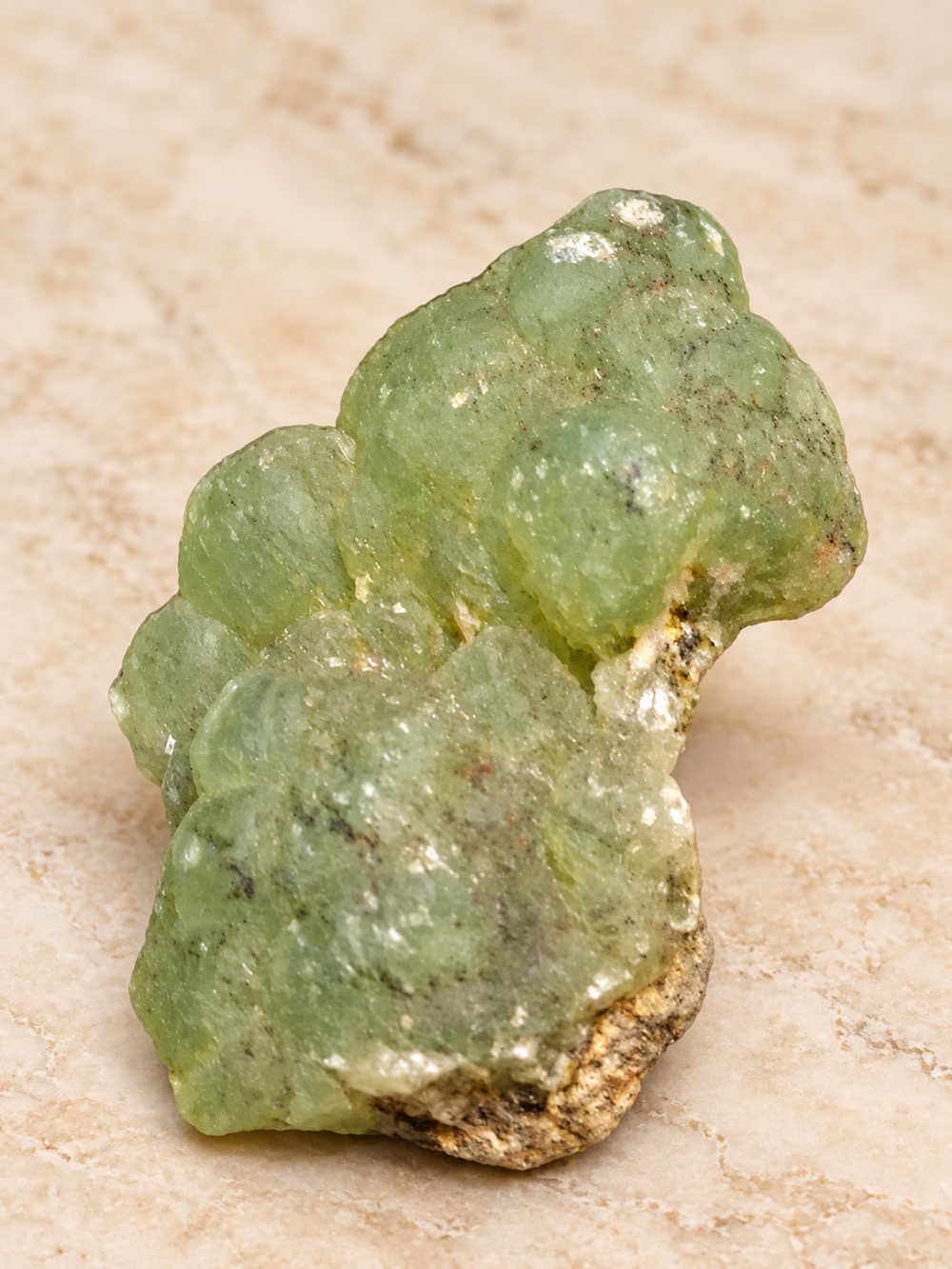
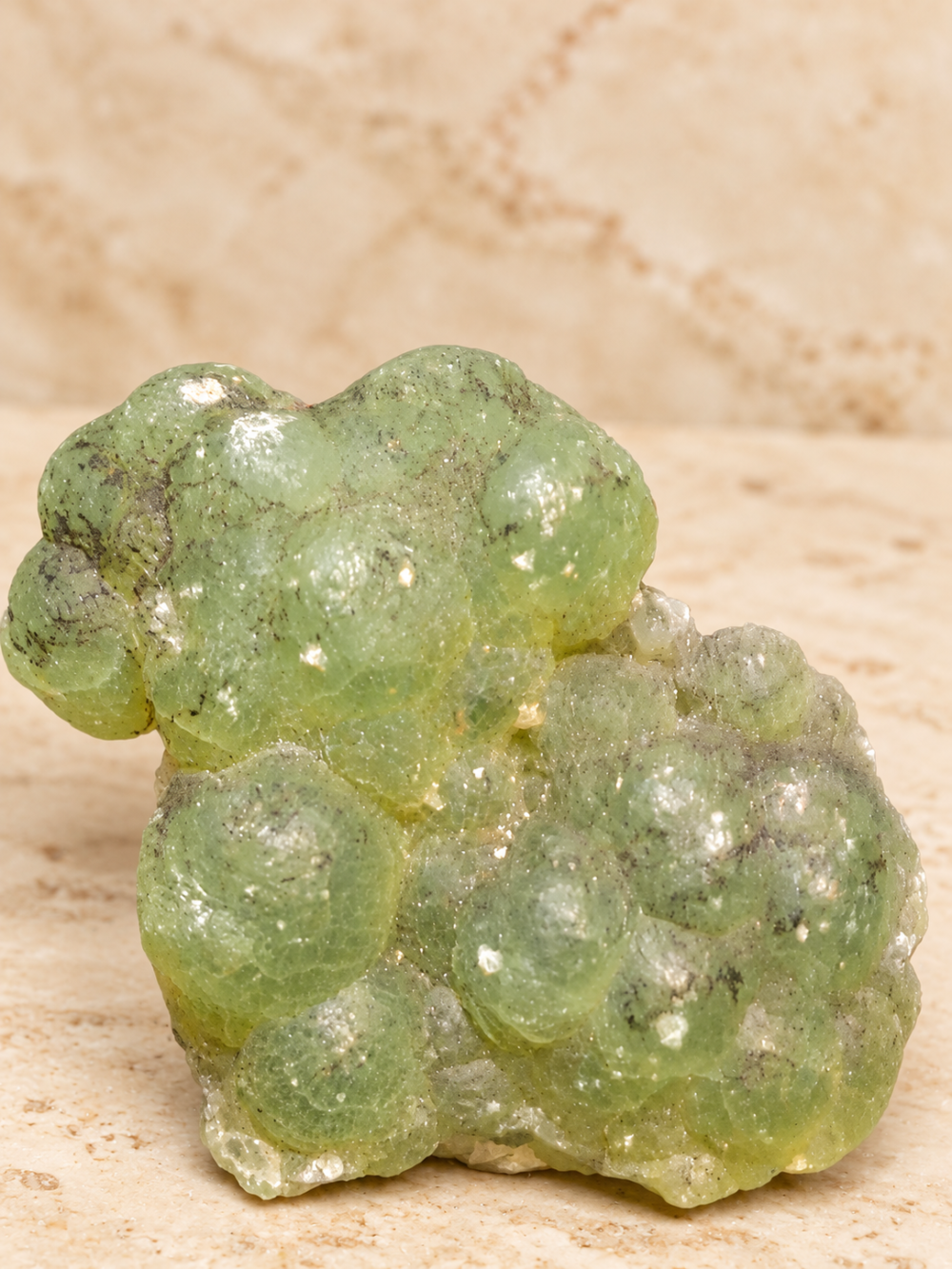
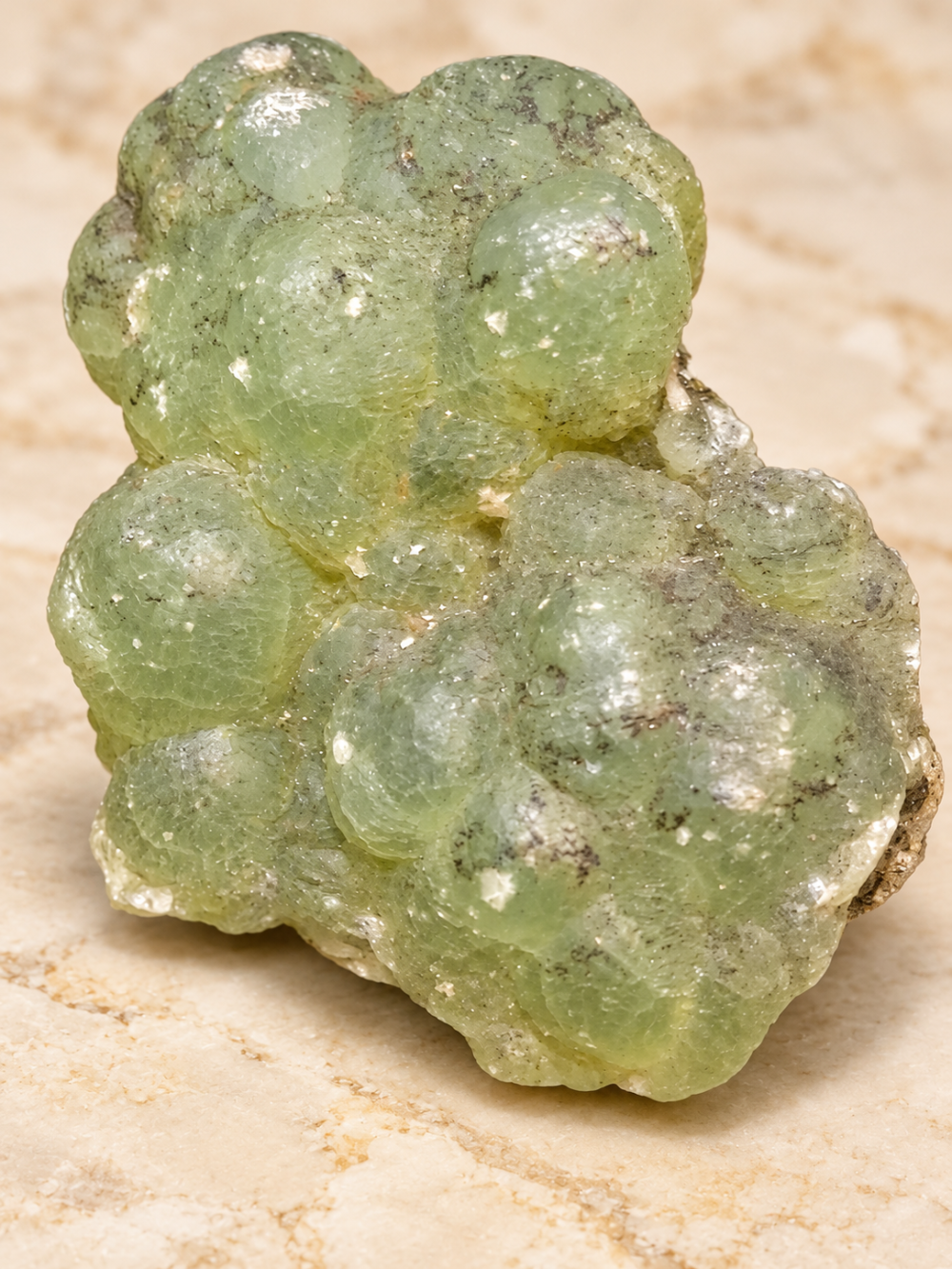
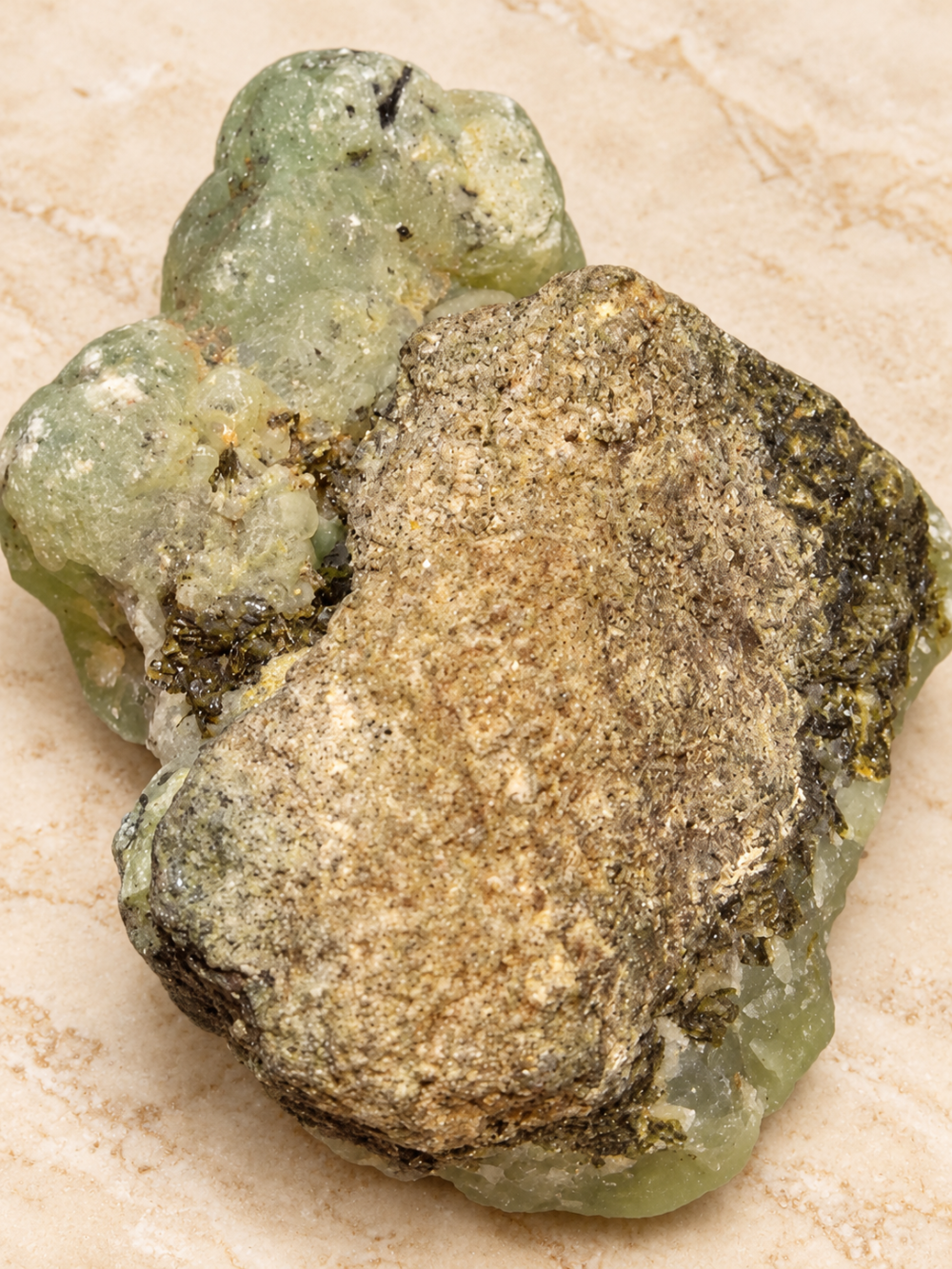
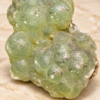
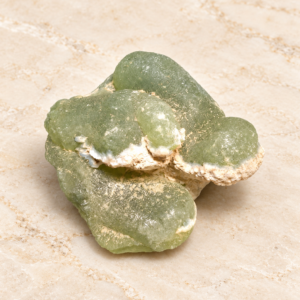
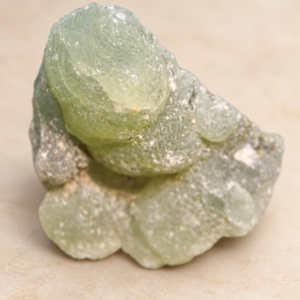
This natural 𝐏𝐫𝐞𝐡𝐧𝐢𝐭𝐞 is a substantial rough mineral specimen measuring approximately 𝟖𝟒.𝟒 × 𝟔𝟏.𝟕 × 𝟑𝟔.𝟔 𝐦𝐦. It displays a soft clear-green colour, semi-translucent character and strongly developed rounded growth forms, making it particularly attractive as both a 𝐜𝐨𝐥𝐥𝐞𝐜𝐭𝐢𝐛𝐥𝐞 𝐦𝐢𝐧𝐞𝐫𝐚𝐥 and a decorative display specimen.
The principal display surface consists of numerous overlapping 𝐛𝐨𝐭𝐫𝐲𝐨𝐢𝐝𝐚𝐥 𝐭𝐨 𝐠𝐥𝐨𝐛𝐮𝐥𝐚𝐫 𝐏𝐫𝐞𝐡𝐧𝐢𝐭𝐞 𝐠𝐫𝐨𝐰𝐭𝐡𝐬. Their rounded, grape-like morphology gives the specimen its characteristic appearance and explains the informal trade description 𝐆𝐫𝐚𝐩𝐞 𝐒𝐭𝐨𝐧𝐞 or grape-like Prehnite.
The Prehnite varies from pale clear green to slightly yellowish-green, with natural differences in saturation and translucency between the individual rounded aggregates. Several areas allow light to penetrate the outer material, while denser sections remain more opaque, producing a layered and naturally variable appearance.
Fine crystalline surface texture covers much of the botryoidal growth. Under directional lighting, the rounded surfaces produce numerous small reflective points and soft flashes, adding visual depth without altering the naturally rough character of the specimen.
Prehnite is a calcium aluminium silicate hydroxide mineral that commonly develops pale green, yellowish-green and occasionally nearly colourless material. Botryoidal Prehnite forms when successive mineral growth produces rounded and interconnected aggregates, creating the distinctive grape-like morphology seen prominently in this specimen.
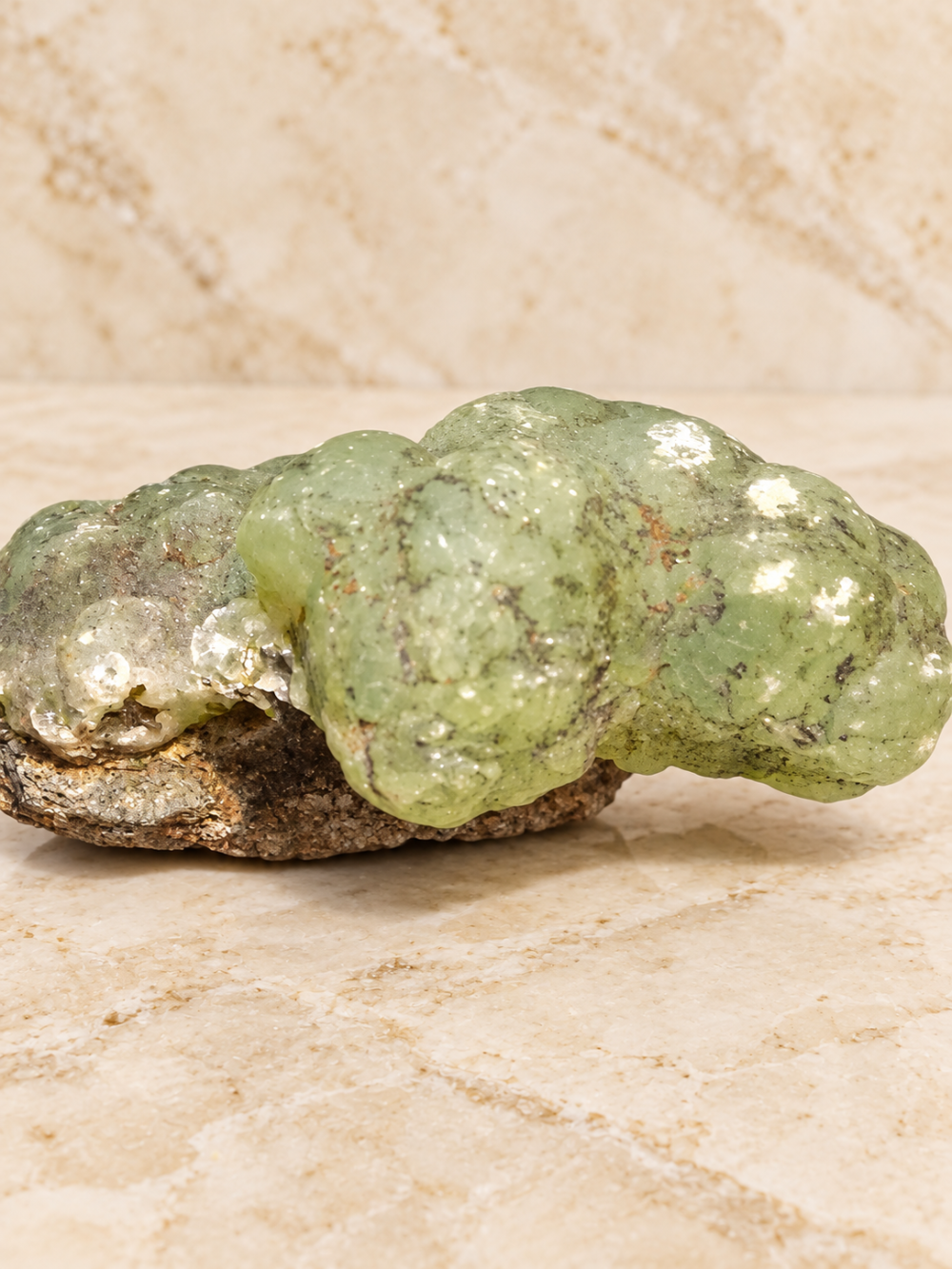
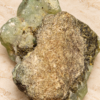
The specimen retains a significant 𝐧𝐚𝐭𝐮𝐫𝐚𝐥 𝐦𝐚𝐭𝐫𝐢𝐱 on its reverse side. This brownish to beige host material forms a broad natural base and provides clear contrast with the pale green Prehnite growth. Small mineral contacts and transitional areas remain visible around the edges where the Prehnite meets the matrix.
Natural irregularities, contact areas, minor cavities, uneven growth boundaries and variations in surface texture are present throughout the piece. These characteristics are consistent with an untreated mineral specimen and contribute to its geological individuality rather than representing artificial finishing.
At more than 8 cm in its longest dimension, this specimen has strong cabinet and display presence. Its broad botryoidal surface can be presented as the principal viewing side, while the preserved matrix on the reverse provides additional geological context and demonstrates how the Prehnite developed on its host material.
The specimen is 𝐮𝐧𝐡𝐞𝐚𝐭𝐞𝐝 𝐚𝐧𝐝 𝐮𝐧𝐭𝐫𝐞𝐚𝐭𝐞𝐝, preserving its natural colour, growth structure and surface characteristics.
𝐏𝐫𝐢𝐦𝐚𝐫𝐲 𝐔𝐬𝐞: Mineral collection, cabinet display and decorative specimen
With its 𝐥𝐚𝐫𝐠𝐞 𝐠𝐫𝐚𝐩𝐞-𝐥𝐢𝐤𝐞 𝐏𝐫𝐞𝐡𝐧𝐢𝐭𝐞 𝐠𝐫𝐨𝐰𝐭𝐡𝐬, soft semi-translucent green colour and substantial preserved natural matrix, this specimen combines decorative presence with clear mineralogical character. Its size and well-developed botryoidal structure make it particularly suitable as an individual collector or display piece.
Reviews
There are no reviews yet.