Not every meaningful journey requires travelling somewhere new.
Sometimes, the experience lies in the way we move through a familiar place.
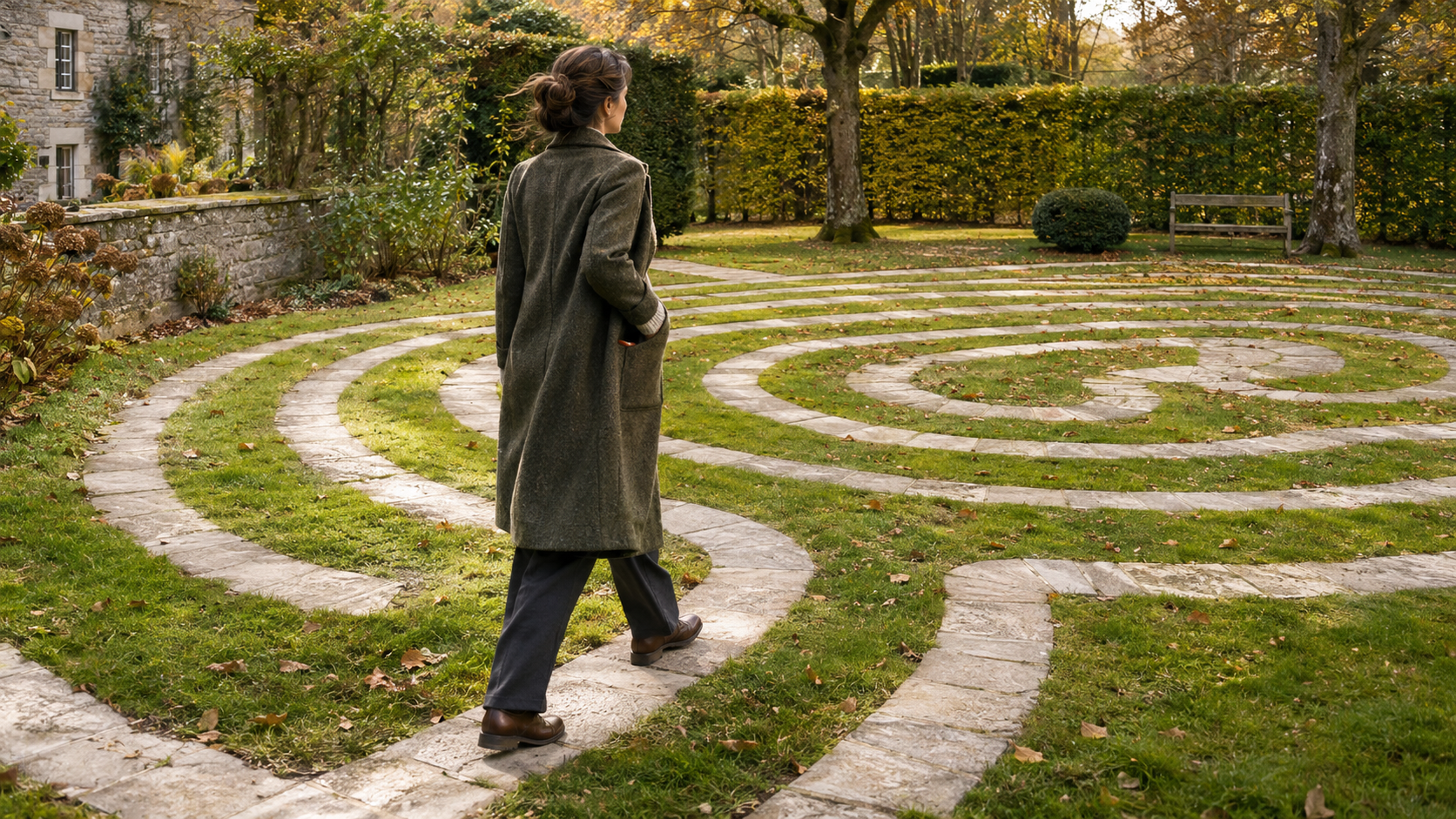
A path curves.
Our direction changes.
We approach a point that appears close, only to discover that the route continues elsewhere.
Eventually, we arrive.
And then we begin the journey back.
For centuries, labyrinths have provided a distinctive setting for religious symbolism, contemplation and ritual movement.
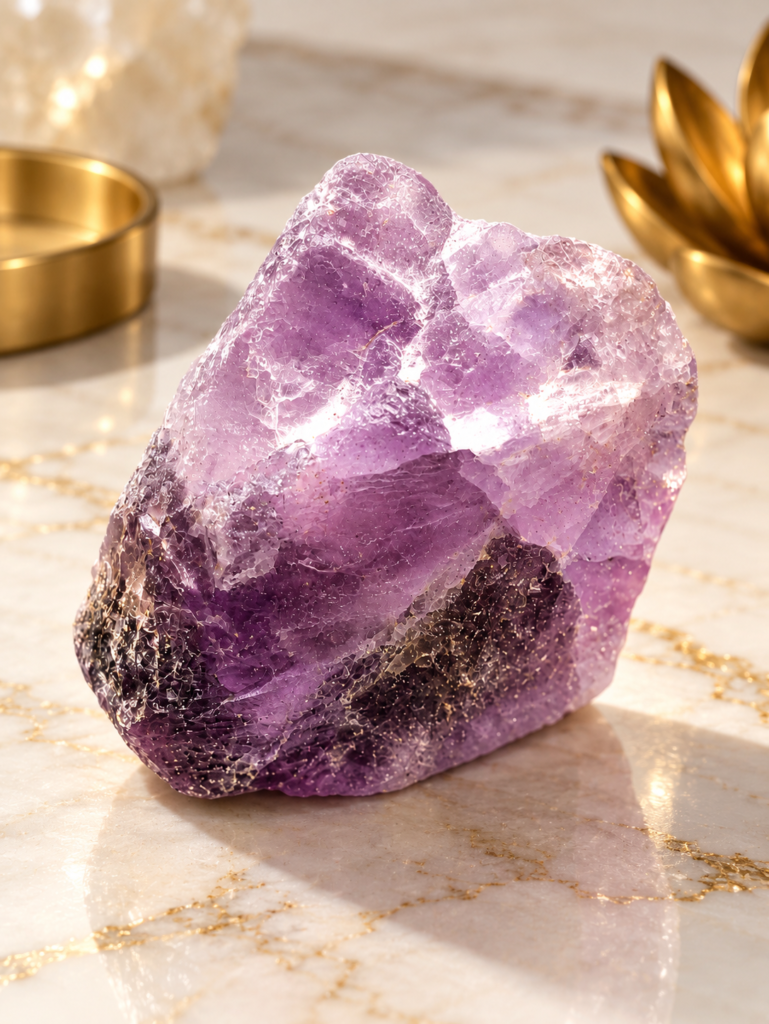
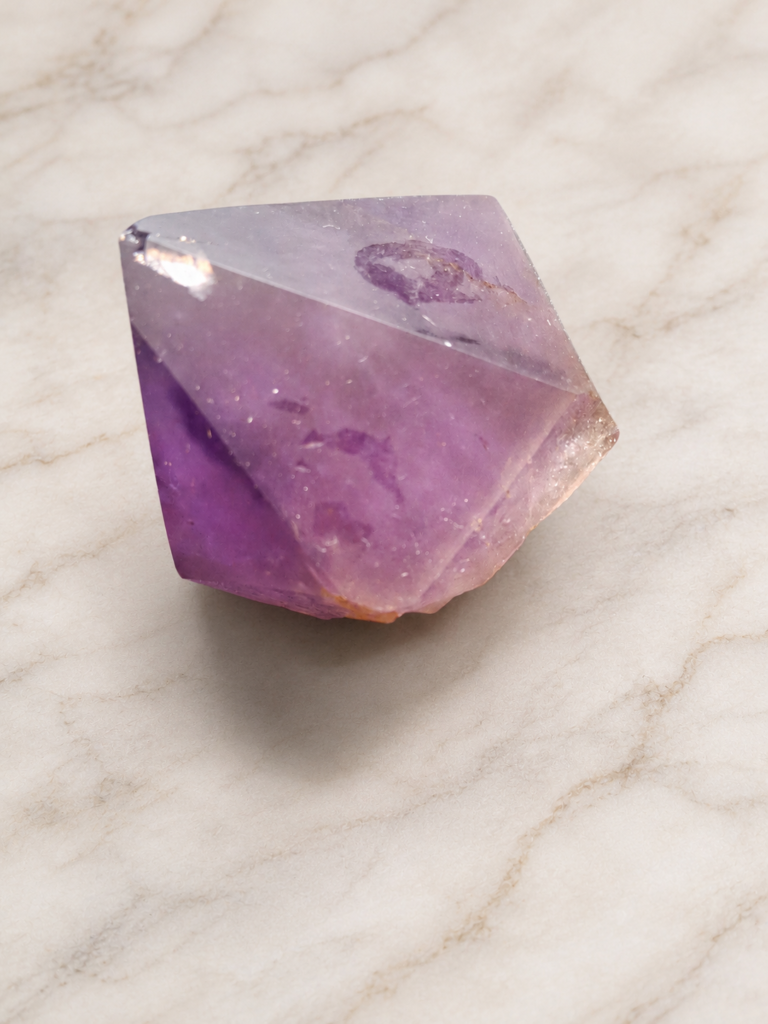
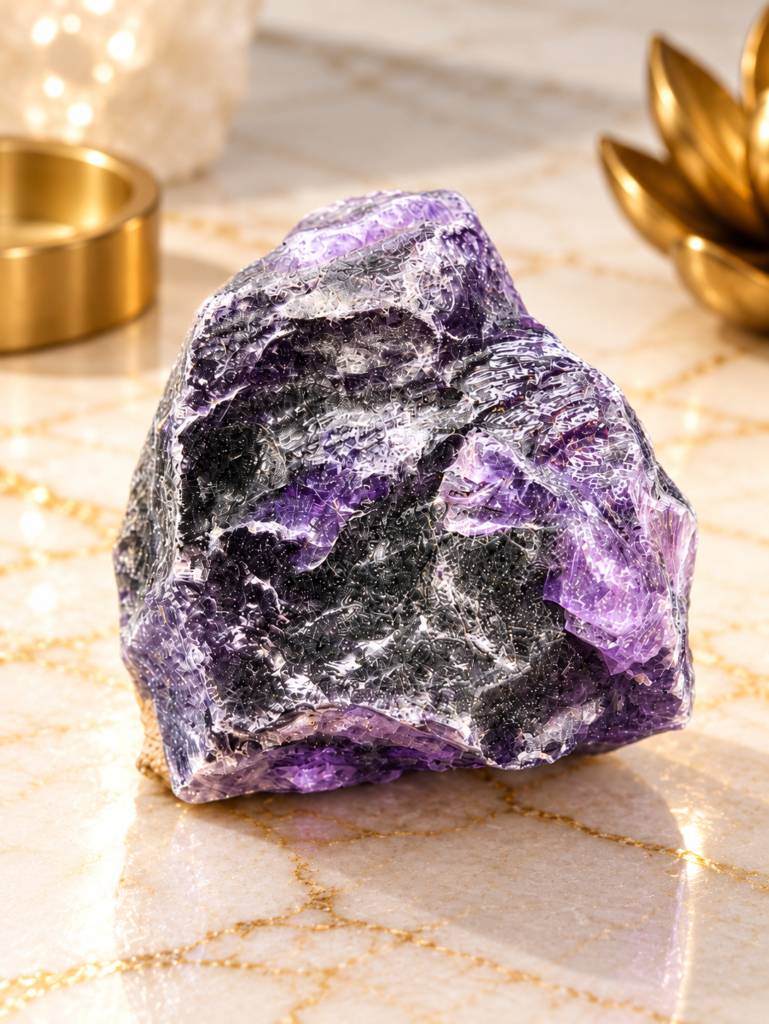
Within contemporary crystal spirituality, Red Jasper is frequently associated with grounding, steadiness, endurance and connection to the Earth.
Some practitioners believe that it strengthens personal stability, supports courage or helps balance the energetic qualities associated with the root chakra.
Others carry Red Jasper as a pocket stone, hold it during meditation or place it within symbolic arrangements intended to represent protection and stability.
These interpretations belong to contemporary spiritual belief systems.
There is no reliable scientific evidence that Red Jasper transmits grounding energy, stabilises emotions through supernatural mechanisms or balances anatomical energy centres.
Nevertheless, a gemstone can serve as a meaningful personal symbol.
And a walking path can provide a physical setting for reflection.
This article brings these two elements together in an original contemporary practice:
By integrating the red jasper walking labyrinth ritual into your practice, you can enhance your connection to the earth and promote mindfulness.
The Red Jasper Stone and Path Ritual.
The exercise does not promise healing.
It does not require a sacred location.
And it does not claim that Red Jasper was historically used in medieval labyrinth ceremonies.
Instead, it explores a simple idea:
Sometimes, steadiness is not about remaining still. It is about learning to move deliberately.
Table of Contents
Red Jasper in Contemporary Crystal Spirituality
Red Jasper is commonly associated with grounding in modern crystal traditions.
Practitioners sometimes describe it as a stone of stability, determination or physical connection with the Earth.
Its warm red appearance has inspired symbolic associations with strength, endurance and the practical realities of everyday life.
Some contemporary spiritual systems connect Red Jasper with the root chakra.
Others recommend carrying it during periods when someone wishes to feel more settled or personally anchored.
These beliefs vary between practitioners.
They should not be presented as scientifically established properties.
Nor should modern Red Jasper meanings automatically be described as ancient teachings shared by every culture that historically used red stones.
For the Stone and Path Ritual, Red Jasper represents a simple intention:
To move at a manageable pace and remain attentive to the path immediately ahead.
The gemstone does not create this experience through supernatural energy.
Its role is symbolic.
What Is a Walking Labyrinth?
A walking labyrinth is a pathway arranged in a pattern of turns and curves, traditionally leading toward a centre.
Unlike a conventional puzzle maze, a classical or medieval unicursal labyrinth generally has one continuous route.
There are no branching decisions to solve.
The participant follows the path.
The route may appear complicated.
It may turn away from the centre before returning toward it.
But the walker does not need to discover a hidden exit.
This difference has important symbolic possibilities.
A maze may challenge someone to find the correct route.
A unicursal labyrinth invites someone to experience a route that is already established.
The experience can therefore become less about solving a problem and more about the act of walking.
This is one reason labyrinths have been incorporated into contemplative and religious practices.
However, labyrinth traditions are diverse.
Their meanings depend on historical period, cultural context and the intentions of the people using them.
The Labyrinth at Chartres Cathedral
One of the most important surviving medieval labyrinths is found in Chartres Cathedral in France.
The cathedral’s labyrinth was constructed during the early thirteenth century.
It forms part of the remarkable architectural and religious environment of the Gothic cathedral.
The official Chartres Cathedral website explains that the labyrinth was commissioned within a specifically Christian context.
Its historical symbolism relates to pilgrimage, redemption, liturgical practice and the spiritual journey of the believer.
Research presented by the cathedral also discusses its possible connection with medieval Easter liturgy.
This is important because contemporary spiritual interpretations sometimes detach labyrinths entirely from their historical settings.
The Chartres labyrinth was not originally created as a modern crystal-healing grid.
Nor was it designed around Red Jasper or contemporary chakra associations.
Its historical significance belongs to the religious world in which it was constructed.
Today, the cathedral continues to welcome people who wish to walk the labyrinth within its established traditions and visitor arrangements.
The cathedral explicitly asks visitors to respect the religious significance of the space and the needs of other participants.
Walking as Prayer and Meditation
Within Christian contemplative traditions, walking can become a form of prayer.
The movement itself may express pilgrimage.
The journey may symbolise spiritual development.
And the destination may represent an encounter with the sacred.
At Chartres, the labyrinth’s meaning is rooted in Christian theology and liturgy.
This should be respected rather than rewritten as a universal ancient crystal ceremony.
Contemporary labyrinth walking has also developed beyond explicitly Christian settings.
Grace Cathedral in San Francisco, for example, maintains two Chartres-style labyrinths.
The cathedral describes labyrinth walking as a practice of prayer, walking meditation and mindfulness.
Its modern labyrinth programme has played an influential role in the contemporary revival of labyrinth walking.
Participants may approach the experience through different spiritual or reflective perspectives.
These practices demonstrate how the same general pathway form can acquire different meanings in different contexts.
The Red Jasper Stone and Path Ritual is a separate, modern symbolic adaptation.
It does not claim to reproduce the religious practices of Chartres or Grace Cathedral.
Why Walking Changes the Experience of Reflection
Many contemporary crystal rituals involve sitting.
A person may hold a gemstone.
Observe its appearance.
Repeat an intention.
Or place it at the centre of a symbolic arrangement.
Walking introduces movement.
The body changes position.
The surrounding environment changes.
And the participant must remain aware of the ground beneath their feet.
This creates a different relationship with attention.
A walking practice does not require someone to remain motionless.
Nor does it require complete mental silence.
The person simply moves through a chosen space while observing the experience.
For some people, movement may feel more natural than seated contemplation.
For others, seated meditation may be preferable.
Neither approach is universally superior.
The Stone and Path Ritual offers one optional way to combine symbolic reflection with gentle movement.
The Difference Between Grounding and Crystal Energy
The word grounding has several meanings.
Within contemporary crystal spirituality, grounding may refer to a believed energetic connection between a person and the Earth.
Practitioners may describe particular gemstones as capable of absorbing negative energy or stabilising an individual’s spiritual energy field.
These are metaphysical interpretations.
They are not scientifically established effects.
In ordinary psychological or contemplative language, grounding may also describe directing attention toward immediate sensory experience.
A person may notice the floor beneath their feet.
Observe nearby objects.
Or become aware of their surroundings.
These are different uses of the same word.
The Red Jasper ritual uses grounding primarily in the second, practical sense.
The gemstone represents steadiness.
The walking activity provides an opportunity to notice the present environment.
No supernatural energy transfer is required.
What Research Says About Labyrinth Walking
Labyrinth walking has attracted scientific interest.
Researchers have examined whether structured walking experiences may influence mood, physiological responses or subjective wellbeing.
A 2006 pilot study by M. Kay Sandor and Robin D. Froman investigated the effects of labyrinth walking in a small sample of 25 community participants.
The study examined physiological measurements and affect before and after labyrinth walking.
The findings were mixed.
The researchers reported little change in blood-pressure measures and varying effects across other outcomes.
Because the study was small, its findings cannot establish broad therapeutic effectiveness.
A later 2018 study involving 25 young participants investigated physiological and subjective responses during a projected-light labyrinth walk.
The researchers observed changes in measures associated with physiological arousal and recovery.
Many participants also described the experience as calming or relaxing.
However, the small sample and study design limit the conclusions that can be drawn.
These studies concern labyrinth walking.
They do not investigate Red Jasper.
A 2026 Review of Labyrinth-Walking Research
A 2026 scoping review published in the Therapeutic Recreation Journal examined research on labyrinth-based interventions.
The review identified 25 research articles published between 2000 and 2025.
It considered reported outcomes across mental, cognitive, physical and spiritual dimensions.
The author described promising findings across several settings while acknowledging that the evidence base remains limited.
A scoping review maps existing research.
It does not necessarily establish the effectiveness of an intervention in the way that large, well-controlled clinical trials might.
The available research therefore supports continued investigation rather than definitive claims.
Labyrinth walking may be personally meaningful.
It may offer opportunities for movement and reflection.
But it should not be promoted as a guaranteed treatment for psychological or medical conditions.
There is no evidence that adding Red Jasper creates additional therapeutic benefits.
Introducing the Red Jasper Stone and Path Ritual
The Stone and Path Ritual is an original contemporary symbolic exercise.
It combines a Red Jasper gemstone with a simple walking practice.
It is not an ancient ceremony.
It is not a recognised clinical treatment.
And it does not require belief in supernatural crystal energy.
The exercise can take approximately ten to fifteen minutes, depending on the location and individual circumstances.
You will need:
- One small Red Jasper pocket stone or palm stone.
- A safe, accessible walking route.
- Comfortable footwear.
- A place to pause before and after the walk.
A dedicated labyrinth is optional.
A simple garden path or suitable indoor walking area can also be used.
If visiting a religious labyrinth, follow the site’s instructions and respect its spiritual purpose.
The gemstone should remain in a pocket or pouch while walking.
There is no need to carry it visibly or continually look at it.
Safety and awareness of the surroundings take priority.
Stage One – Choosing the Path
Begin by choosing a suitable location.
A public garden may offer a quiet route.
A private courtyard may provide a simple walking circuit.
A designated labyrinth may be available nearby.
Alternatively, a clear indoor space may be sufficient.
The route should be appropriate for your mobility and physical circumstances.
Avoid uneven or slippery surfaces if they present a risk.
Do not create a walking pattern that obstructs public pathways or other people.
There is no requirement to reproduce the elaborate geometry of a medieval labyrinth.
The purpose is to walk deliberately.
Stage Two – The Red Jasper Intention
Before beginning, hold the Red Jasper briefly if you wish.
Notice its weight and shape.
Consider a simple question:
What would it mean to move through the next few minutes without rushing?
There is no need to produce a complicated answer.
The question is not a magical affirmation.
It does not activate the gemstone.
It simply establishes the theme of the exercise.
Place the Red Jasper securely in your pocket or pouch.
Then prepare to walk.
Stage Three – Entering the Path
Begin walking at a comfortable pace.
There is no required speed.
You do not need to count your steps.
Nor must you synchronise walking with a particular breathing pattern.
Pay attention to the route.
Notice where it turns.
Observe the surrounding environment.
If the path curves away from your destination, simply follow it.
There is no need to interpret every change of direction as a spiritual message.
The experience is physical and immediate.
You are walking.
The route is unfolding.
And the gemstone remains a symbolic reminder of steadiness.
Stage Four – Following Without Rushing
As you continue, notice whether you feel an urge to accelerate.
Perhaps you want to reach the centre quickly.
Perhaps you are thinking about what comes after the walk.
Or perhaps you simply prefer a faster pace.
None of these responses is wrong.
The exercise does not require unusually slow movement.
Instead, consider whether your pace is comfortable and deliberate.
A labyrinth offers an interesting metaphor.
The route may appear indirect.
Yet the walker continues to make progress along it.
This does not mean that every indirect path in life leads to a desirable outcome.
It is simply a symbolic observation.
Sometimes, a journey can be experienced without trying to shorten it.
Stage Five – Arriving at the Centre
If you are using a labyrinth, eventually you will reach its centre.
If you are following an ordinary walking route, choose a safe point at which to pause.
Do not block other participants.
Take a moment to observe your surroundings.
There is no requirement to kneel, close your eyes or perform a ceremonial gesture.
If you are in a religious setting, respect the practices and instructions of that location.
For the original Stone and Path Ritual, the centre represents a pause rather than a supernatural destination.
Consider the question:
What have I noticed while moving?
Perhaps you noticed the environment.
Perhaps you became aware of impatience.
Or perhaps nothing particularly meaningful occurred.
All are acceptable experiences.
The ritual does not require a revelation.
Stage Six – The Return Journey
When appropriate, begin walking back.
In a traditional unicursal labyrinth, the return journey follows the same pathway in reverse.
In an ordinary garden or indoor route, return safely to your starting point.
Notice whether the path feels different.
The surroundings may be familiar now.
Your attention may have changed.
Or the experience may feel much the same.
There is no correct response.
The return journey is part of the exercise.
The ritual does not end at the centre.
It ends when the participant has returned to ordinary activity.
Stage Seven – Completing the Ritual
At the starting point, remove the Red Jasper from your pocket if convenient.
Place it on a stable surface or return it to its pouch.
Consider one final question:
What would I like to carry from this experience into the rest of my day?
The answer might be patience.
An appreciation of movement.
A reminder to avoid unnecessary rushing.
Or simply the memory of a pleasant walk.
No special conclusion is required.
The stone does not store the experience as measurable spiritual energy.
Its meaning remains personal.
The ritual is complete.
Why the Return Journey Matters
Many symbolic practices focus on reaching a destination.
A goal is established.
An outcome is imagined.
And the ritual ends when the participant arrives.
Labyrinth walking introduces a different structure.
The journey continues after the centre.
The walker must return.
This can offer a useful metaphor for contemplative practice.
A moment of reflection is not separate from ordinary life forever.
Eventually, a person returns to daily responsibilities.
The experience may influence how they think about those responsibilities.
Or it may simply remain a quiet personal memory.
The Red Jasper ritual does not promise transformation.
It invites a return to everyday life with awareness of the journey that has just taken place.
Red Jasper and the Root Chakra
Within contemporary seven-chakra spirituality, Red Jasper is commonly associated with the root chakra.
This chakra is often described in modern spiritual systems as representing stability, security, belonging and connection to the Earth.
Some practitioners believe that Red Jasper helps balance this energy centre.
Others use it during grounding meditation or place it near the lower body in symbolic arrangements.
These interpretations are not universal.
Historical South Asian chakra traditions developed within diverse religious and philosophical contexts.
Modern gemstone-to-chakra charts should not automatically be presented as faithful reproductions of ancient teachings.
There is no reliable biomedical evidence that Red Jasper balances an anatomical root-chakra energy centre.
For the Stone and Path Ritual, the root-chakra association is optional.
Readers who appreciate the symbolism may interpret the stone as representing stability.
Others may simply use it as a reminder to walk attentively.
Why the Stone Stays in the Pocket
Some contemporary crystal practices encourage participants to hold a gemstone continuously.
This may be appropriate during seated reflection.
However, walking requires awareness of the environment.
A person should not become so focused on an object that they overlook obstacles or other people.
Keeping the Red Jasper securely in a pocket allows both hands to remain available.
It also avoids the need to look down repeatedly at the stone.
The gemstone’s symbolic role does not depend on continuous physical contact.
There is no evidence that holding Red Jasper more tightly or for longer periods increases grounding energy.
The walking experience remains the primary activity.
A Red Jasper Palm Stone for Seated Reflection
Not everyone can or wishes to walk a labyrinth.
A seated variation is possible.
Place a Red Jasper palm stone on a table.
Choose a comfortable chair.
Imagine the three broad stages of a journey:
Beginning.
Arriving.
Returning.
You may reflect on a familiar journey or simply observe the stone for a few minutes.
There is no need to visualise supernatural energy.
Nor must the exercise involve complex imagery.
The purpose is to consider movement and return as symbolic themes.
This variation is not equivalent to physical walking.
It should not be assumed to produce the same outcomes as walking-based activities.
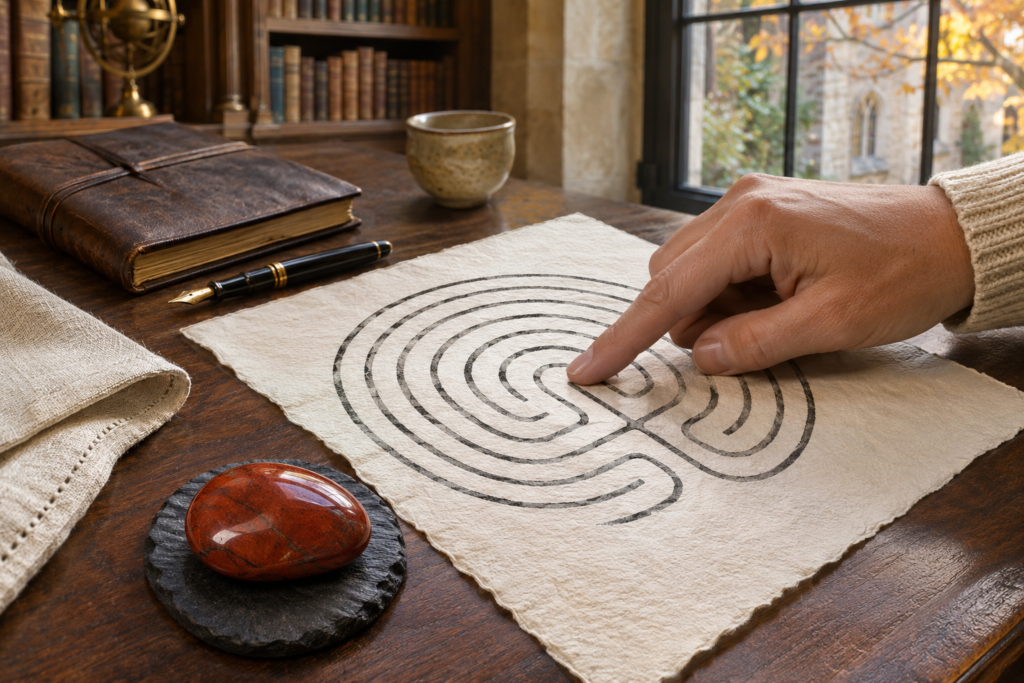
A Finger Labyrinth With Red Jasper
A finger labyrinth offers another accessible alternative.
A finger labyrinth is a small labyrinth pattern that can be traced with a fingertip rather than walked.
Such patterns are used in some contemporary contemplative settings.
For this adaptation, place a printed unicursal labyrinth design on a stable surface.
Position the Red Jasper beside the page.
Slowly trace the path from the entrance toward the centre.
Pause briefly.
Then follow the same path back.
The gemstone remains separate from the design.
It does not need to be placed directly on the centre.
The practice can be completed while seated.
It should remain comfortable and optional.
No therapeutic effect is guaranteed.
Red Jasper as a Centre Stone
Within contemporary crystal-grid practices, gemstones are sometimes arranged around a central stone.
Practitioners may believe that the arrangement concentrates or directs spiritual energy.
These claims have not been scientifically demonstrated.
A Red Jasper centre stone can nevertheless be used symbolically.
For example, a small Red Jasper may be placed beside a printed labyrinth design.
The stone represents steadiness.
The labyrinth represents the journey.
No additional gemstones are required.
The arrangement does not create a measurable energetic field.
It serves as a visual representation of the participant’s intention.
The Difference Between a Labyrinth and a Crystal Grid
Labyrinths and crystal grids can both involve geometric arrangements.
However, they should not be treated as historically identical practices.
A labyrinth is a pathway or pathway representation.
Its historical uses include religious symbolism, architecture and contemplative movement.
A contemporary crystal grid is generally an arrangement of gemstones according to a chosen symbolic pattern.
Practitioners may assign energetic meanings to the positions of individual stones.
There is no reliable scientific evidence that such arrangements amplify supernatural energy.
The Stone and Path Ritual does not require a crystal grid.
Its primary focus is movement.
The Red Jasper is a symbolic companion rather than an energetic component of the pathway.
Walking, Movement and Wellbeing
Walking is a familiar form of physical activity.
The US Centers for Disease Control and Prevention explains that regular physical activity can support physical and mental health.
Its educational guidance describes benefits associated with appropriate physical activity, including aspects of mood, sleep and long-term health.
However, the effects depend on factors such as activity intensity, duration, frequency and individual circumstances.
A short, gentle labyrinth walk should not automatically be equated with a structured exercise programme.
Nor should research into physical activity be used as evidence that Red Jasper has therapeutic effects.
The Stone and Path Ritual may provide a personally meaningful reason to engage in gentle movement.
Its symbolic component remains separate from the established benefits of physical activity.
When Walking Does Not Feel Peaceful
Contemporary wellness culture sometimes presents walking meditation as universally calming.
But individual experiences differ.
Some people may enjoy a quiet labyrinth.
Others may feel impatient, distracted or uncomfortable.
A person may find the turns confusing.
They may dislike the environment.
Or they may prefer a more direct route.
These responses do not indicate spiritual failure.
There is no obligation to continue a practice that feels unsuitable.
The ritual should not be used to pressure someone into ignoring discomfort or physical limitations.
If the activity becomes unpleasant, it can be stopped.
A meaningful spiritual practice should remain voluntary.
The Importance of Respecting Sacred Spaces
Historical labyrinths are not simply decorative patterns.
Some belong to active religious communities.
Others form part of protected cultural heritage.
Visitors should respect the meaning and rules of the location.
At Chartres Cathedral, the labyrinth is explicitly connected with Christian faith and liturgical history.
The cathedral asks participants to walk respectfully and avoid interfering with others.
The Red Jasper Stone and Path Ritual should not be imposed upon such a space.
Do not place gemstones on the cathedral floor.
Do not obstruct the route.
Do not arrange crystal grids within religious sites without permission.
And do not present a personal gemstone ritual as an official practice of the religious community.
If visiting a sacred labyrinth, the appropriate approach is to follow the site’s guidance.
The original Red Jasper adaptation is best practised in a suitable personal or secular setting.
Creating a Simple Personal Walking Route
A dedicated labyrinth is not essential.
A personal route can be created using an existing safe pathway.
For example, choose a short garden walk with a clear beginning and return point.
You may use a courtyard or accessible park.
The route does not need to contain elaborate turns.
Avoid drawing or installing permanent patterns on public surfaces without permission.
Do not leave stones or other objects behind.
The intention is to create a temporary personal practice, not to alter the environment.
The Red Jasper can remain in your pocket throughout.
The path provides the movement.
The stone provides the symbolism.
An Indoor Version for Limited Space
When outdoor walking is impractical, a short indoor variation may be possible.
Choose a clear area free from obstacles.
Identify a starting point and a destination.
Walk slowly between them at a comfortable pace.
Pause.
Then return.
The route does not need to imitate a historical labyrinth.
It can be as simple as moving safely between two points.
The Red Jasper remains in a pocket or on a nearby table.
The exercise should not be attempted in spaces where movement creates a risk of falling or collision.
If walking is not appropriate, the seated finger-labyrinth variation may be preferable.
A Three-Stage Reflection Without Walking
The symbolism can also be explored without physical movement.
Place the Red Jasper on a stable surface.
Consider three questions.
Beginning: What am I approaching today?
Centre: What deserves a moment of attention?
Return: What will I do when this reflection ends?
There is no need to write lengthy answers.
The questions may be considered silently.
This adaptation preserves the symbolic structure of the journey.
It does not reproduce the physical experience of labyrinth walking.
Nor does it provide a clinically validated psychological intervention.
Why the Path Does Not Need to Be Perfect
Some people may feel that a spiritual ritual must follow precise instructions.
The gemstone must be positioned correctly.
The walking pattern must be exact.
The timing must be perfect.
And every stage must be completed.
The Stone and Path Ritual does not require this rigidity.
A safe route is more important than an elaborate pattern.
Comfort is more important than ceremonial precision.
And the participant’s circumstances matter more than a fixed number of steps.
The gemstone does not lose spiritual power if the route changes.
There is no established supernatural power to lose.
The exercise is intended to remain flexible.
The Symbolism of Moving at Your Own Pace
Modern life often places considerable emphasis on speed.
Tasks should be completed quickly.
Decisions should be made efficiently.
Progress should be visible.
A labyrinth offers a different visual structure.
The pathway may turn repeatedly.
The destination may appear close without being immediately accessible.
Yet the walker continues along the route.
This can serve as a metaphor for patience.
However, the metaphor should not be taken too literally.
Not every delay is beneficial.
Not every difficult journey leads to a positive outcome.
And some situations require direct, timely action.
The ritual simply invites reflection on pace.
It does not recommend passivity.
A Seven-Day Red Jasper Movement Practice
Readers who appreciate structured routines may experiment with a short weekly variation.
This is an original personal exercise, not a clinically validated intervention.
Day One — Beginning
Choose a short, safe route and walk it comfortably.
Day Two — Observation
Notice one feature of the environment that you overlooked previously.
Day Three — Pace
Consider whether you are walking faster or slower than feels comfortable.
Day Four — Direction
Observe how the route changes direction.
Day Five — Arrival
Pause briefly at a safe destination.
Day Six — Return
Notice the experience of travelling back along a familiar route.
Day Seven — Reflection
Consider whether the practice felt personally meaningful or useful.
There is no obligation to complete all seven days.
The practice can be adapted or discontinued at any time.
Repetition does not increase the gemstone’s supernatural energy.
Environmental Responsibility
A practice centred on connection with the Earth should also consider its environmental impact.
Gemstones are physical materials obtained from the natural world.
Their extraction, processing and transportation can involve environmental and social consequences.
The spiritual association between Red Jasper and the Earth does not automatically make gemstone use environmentally beneficial.
For the Stone and Path Ritual, one stone is sufficient.
There is no need to purchase additional specimens.
Do not leave gemstones in forests, parks, rivers or other natural environments as offerings.
Do not disturb protected habitats.
And do not remove stones or plants from locations where collecting is prohibited.
The practice should respect the spaces through which people move.
What Scientific Research Does Not Establish
The available research on labyrinth walking is interesting but limited.
Small studies have investigated physiological responses and subjective experiences.
A 2026 scoping review identified a developing body of research.
However, these findings do not establish that every labyrinth walk improves mental health.
They do not prove that the practice is suitable for everyone.
And they do not demonstrate that Red Jasper adds therapeutic benefits.
There is no reliable scientific evidence that Red Jasper balances root-chakra energy, absorbs negative emotions or produces physical grounding effects through supernatural mechanisms.
The Stone and Path Ritual has not been experimentally evaluated.
Its significance is symbolic and personal.
It should not replace medical treatment, psychological care or appropriate physical-activity guidance.
Final Reflection: The Path Beneath Our Feet
Red Jasper cannot create stability through scientifically demonstrated crystal energy.
It cannot guarantee emotional balance.
It cannot remove uncertainty.
And it cannot transform a walking route into a medical treatment.
Yet within contemporary crystal spirituality, its association with grounding and steadiness provides a meaningful symbolic starting point.
The labyrinth introduces another element.
Movement.
The participant begins.
Follows the path.
Arrives at a centre or destination.
And eventually returns.
The experience does not require a supernatural explanation.
It can be appreciated as an opportunity to move deliberately, observe the environment and reflect on the relationship between journey and destination.
The Red Jasper remains a symbol.
The pathway provides the experience.
And the participant decides what, if anything, the journey means.
Grounding does not have to mean standing still.
Sometimes, it can mean taking the next step with awareness of the ground beneath your feet.
References & Further Reading
The following sources provide historical, religious, scientific and educational context for labyrinth walking, contemplative movement, mindfulness and wellbeing.
They are drawn from cathedral institutions, peer-reviewed academic research and US government health organisations.
None establishes supernatural grounding, healing or chakra-balancing properties of Red Jasper.
1. Chartres Cathedral – The Labyrinth
Institution: Cathédrale Notre-Dame de Chartres, France
Type: Official cathedral heritage and religious education
Language: French
The cathedral’s official resource explains the labyrinth’s historical development, religious symbolism and contemporary use.
It describes the labyrinth within its Christian context, including pilgrimage, meditation and liturgical significance.
It also provides practical guidance for visitors.
Direct source:
https://www.cathedrale-chartres.org/cathedrale/monument/le-labyrinthe
2. Chartres Cathedral – Cathedral Labyrinth Walking
Institution: Cathédrale Notre-Dame de Chartres
Type: Official English-language visitor and spiritual guidance
This resource explains the meaning of labyrinth walking within the cathedral’s Christian tradition.
It discusses pilgrimage, prayer, reflection and the significance of moving along the labyrinth’s path.
It is particularly useful for distinguishing historical religious practice from modern gemstone-based adaptations.
Direct source:
https://www.cathedrale-chartres.org/en/hospitalite-labyrinthe-qr-code-gb
3. Grace Cathedral – Our Labyrinths
Institution: Grace Cathedral, San Francisco, United States
Type: Religious and contemplative education
Grace Cathedral maintains two Chartres-style labyrinths and has played an influential role in the modern labyrinth movement.
Its educational resource describes labyrinth walking as prayer, walking meditation and mindfulness.
It also explains the difference between a labyrinth and a maze.
Direct source:
4. Wenzel – Walking the Path to Well-Being: A Scoping Review of Labyrinth Walking Outcomes
Author: Karen Carnicello Wenzel
Publication: Therapeutic Recreation Journal
Volume: 60, Issue 2
Published: 4 May 2026
DOI: 10.18666/TRJ-2026-V60-I2-13268
Type: Peer-reviewed scoping review
This review identified 25 research articles published between 2000 and 2025 investigating labyrinth-based interventions.
It examined reported outcomes across mental, cognitive, physical and spiritual domains.
The author identified promising findings while acknowledging limitations in the existing evidence.
Direct research abstract:
https://www.js.sagamorepub.com/index.php/trj/article/view/13268
DOI:
https://doi.org/10.18666/TRJ-2026-V60-I2-13268
5. Sandor & Froman – Exploring the Effects of Walking the Labyrinth
Authors: M. Kay Sandor and Robin D. Froman
Publication: Journal of Holistic Nursing
Volume: 24, Issue 2
Published: 2006
DOI: 10.1177/0898010105282588
Type: Peer-reviewed pilot study
This small study investigated physiological and affective responses associated with labyrinth walking.
The researchers examined measurements before and after labyrinth walks in 25 participants.
The findings were mixed and should be interpreted in light of the small sample size.
Direct research abstract:
https://doi.org/10.1177/0898010105282588
6. Short-Term Autonomic Nervous System and Experiential Responses During a Labyrinth Walk
Publication: Cogent Psychology
Published: 2018
DOI: 10.1080/23311908.2018.1495036
Type: Peer-reviewed experimental research
This study investigated physiological and subjective responses during labyrinth walking in a small sample of young participants.
The researchers reported changes in measures associated with physiological arousal and recovery, alongside participant descriptions of the experience.
The findings provide preliminary context rather than definitive evidence of therapeutic effectiveness.
Direct source:
https://doi.org/10.1080/23311908.2018.1495036
7. National Center for Complementary and Integrative Health – Meditation and Mindfulness: Effectiveness and Safety
Institution: US National Institutes of Health
Type: Government evidence-based health education
This resource reviews scientific research into meditation and mindfulness.
It discusses possible benefits, methodological limitations and potential adverse experiences.
It provides context for distinguishing symbolic contemplative practices from established clinical interventions.
Direct source:
https://www.nccih.nih.gov/health/meditation-and-mindfulness-effectiveness-and-safety
8. Centers for Disease Control and Prevention – Benefits of Physical Activity
Institution: US Centers for Disease Control and Prevention
Updated: 4 December 2025
Type: Government public-health education
This resource explains established benefits associated with regular physical activity.
It discusses immediate and long-term effects on physical and mental health, while distinguishing different activity levels and individual circumstances.
It provides scientific context for walking as physical activity, independently of gemstone spirituality.
Direct source:
https://www.cdc.gov/physical-activity-basics/benefits
Educational and Scientific Clarification
Red Jasper’s associations with grounding, steadiness, courage, Earth energy and the root chakra belong to contemporary crystal spirituality.
These interpretations are not scientifically established therapeutic or supernatural properties.
There is no reliable evidence that Red Jasper absorbs negative energy, balances anatomical energy centres, stabilises emotions through gemstone energy or improves the health effects of walking.
The Red Jasper Stone and Path Ritual described in this article is an original contemporary symbolic practice.
It is not a historically documented medieval ceremony.
It is not an official Christian labyrinth practice.
And it is not a clinically validated psychological or medical intervention.
Research into labyrinth walking, meditation and physical activity does not establish additional therapeutic benefits from Red Jasper.
Participation should remain voluntary and appropriate to individual physical abilities and circumstances.
Historical religious labyrinths should be approached with respect for their cultural and spiritual significance.
Gemstones and symbolic rituals should never replace appropriate medical treatment, psychological support or professional healthcare.