
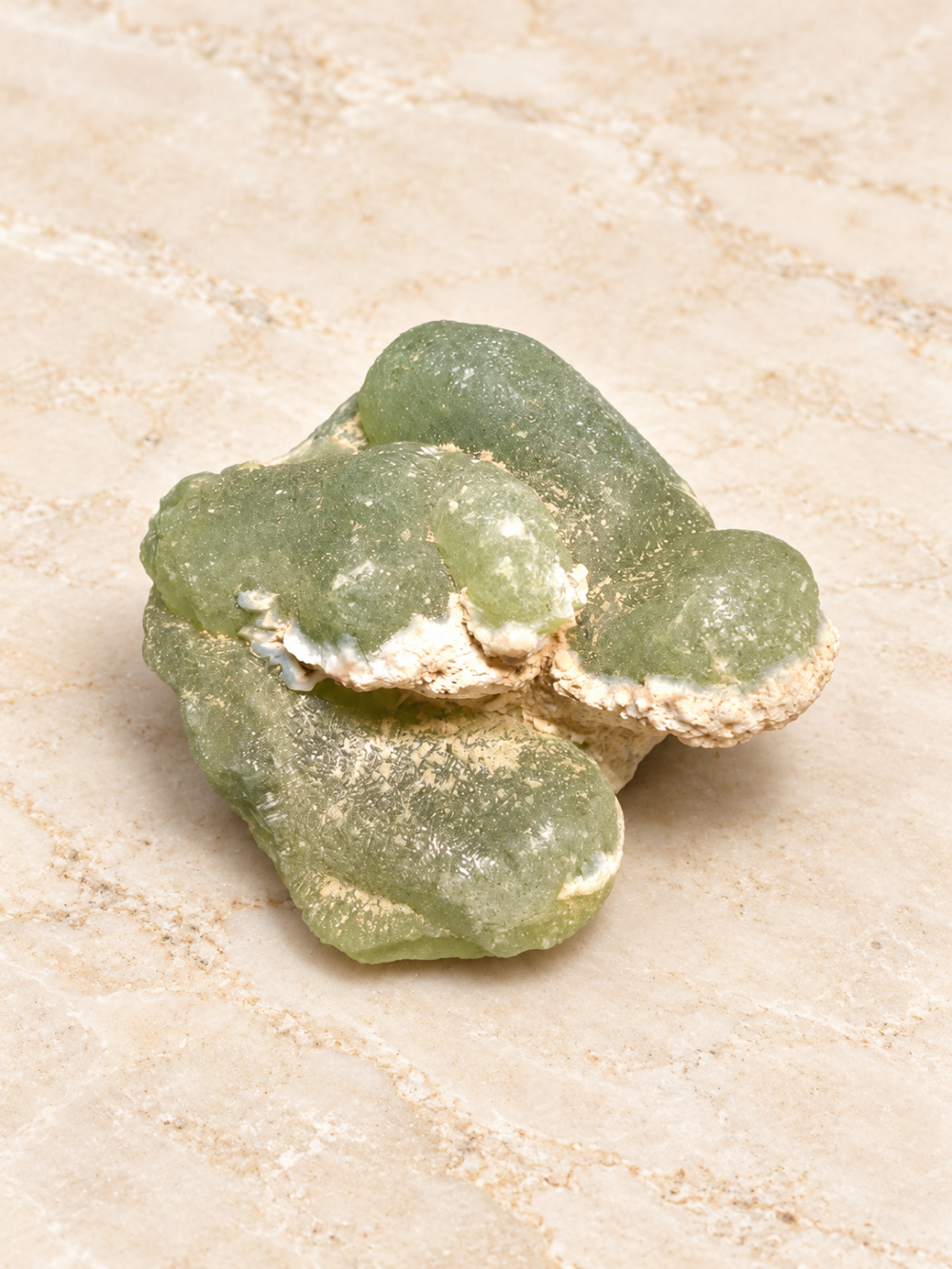
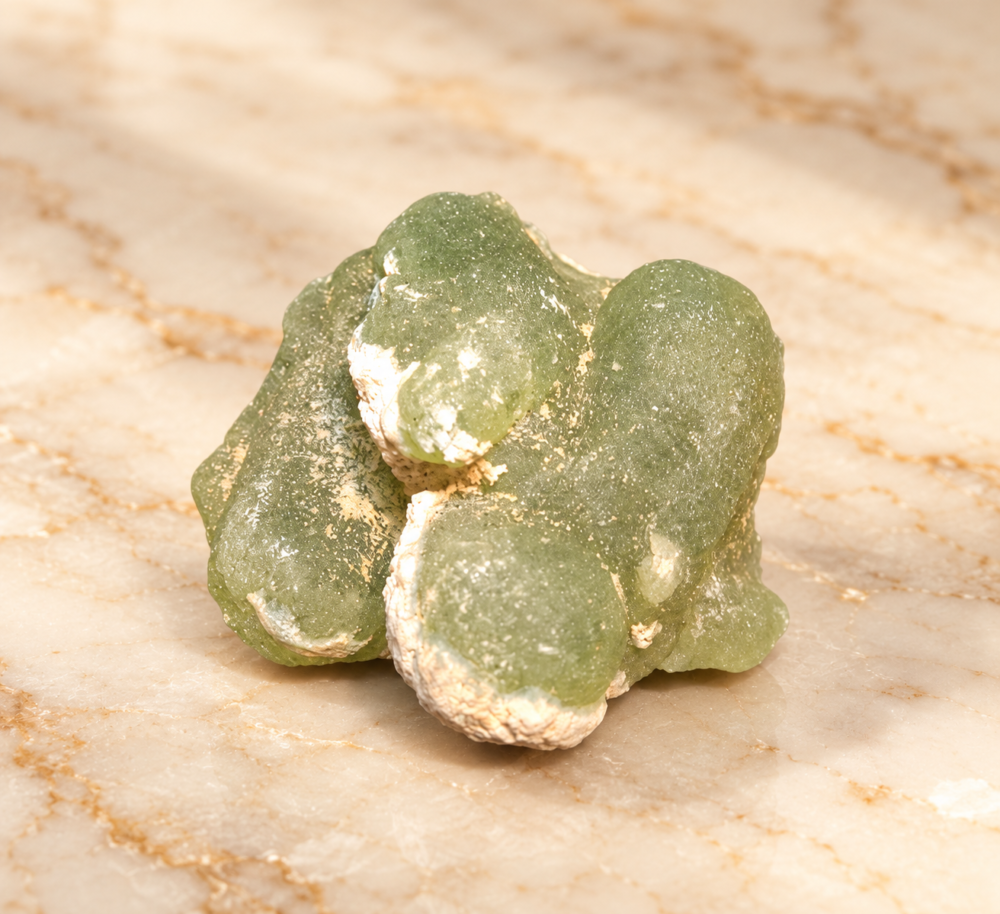
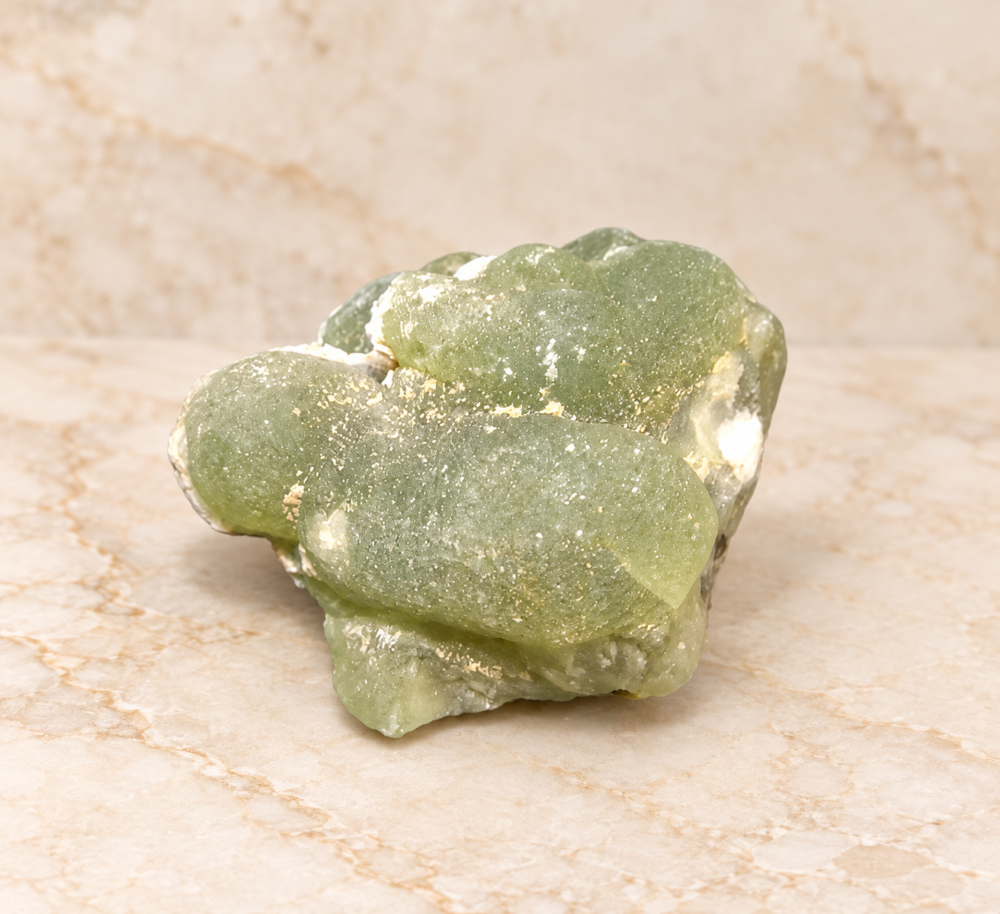
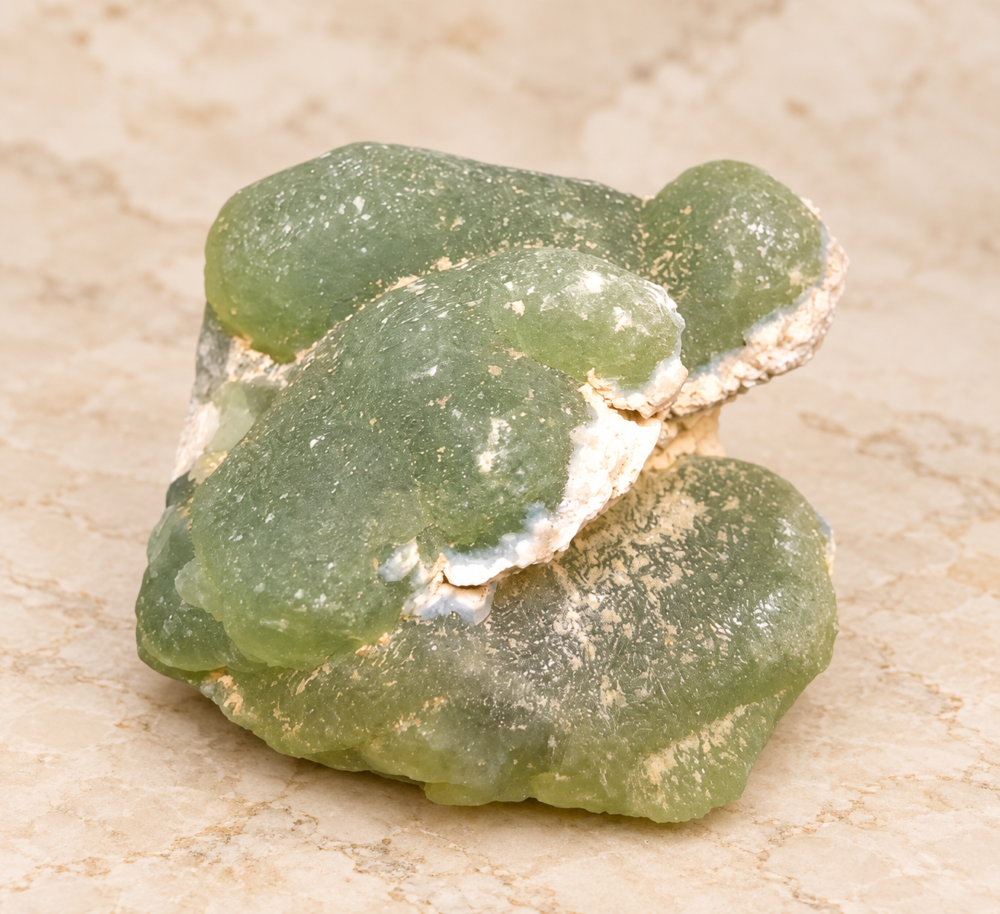
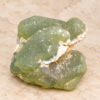
This natural 𝐏𝐫𝐞𝐡𝐧𝐢𝐭𝐞 is a highly decorative rough mineral specimen measuring approximately 𝟔𝟓.𝟖 × 𝟔𝟖.𝟗 × 𝟒𝟎.𝟓 𝐦𝐦. Its soft clear-green colour, semi-translucent character and strongly rounded natural growth form give the specimen considerable visual presence as a mineral display or collector piece.
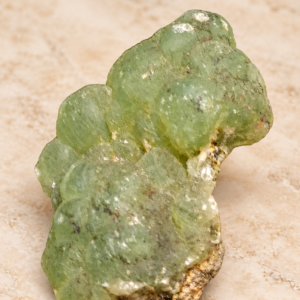
The upper surfaces are dominated by broad 𝐛𝐨𝐭𝐫𝐲𝐨𝐢𝐝𝐚𝐥 𝐭𝐨 𝐠𝐥𝐨𝐛𝐮𝐥𝐚𝐫 𝐏𝐫𝐞𝐡𝐧𝐢𝐭𝐞 𝐠𝐫𝐨𝐰𝐭𝐡𝐬. These naturally rounded aggregates overlap and merge into one another, producing the grape-like morphology for which similar specimens are sometimes informally described in the mineral trade as 𝐆𝐫𝐚𝐩𝐞 𝐒𝐭𝐨𝐧𝐞 or grape-like Prehnite.
The Prehnite displays a gentle green to slightly yellowish-green appearance with localized variation in saturation and translucency. Some outer portions allow light to penetrate the material, while denser areas remain more opaque, creating natural variation across the specimen.
Fine crystalline surface texture is visible across many of the rounded formations. Under directional light, these surfaces produce numerous small reflective points and a soft vitreous to pearly luster, emphasizing the natural contours of the specimen.
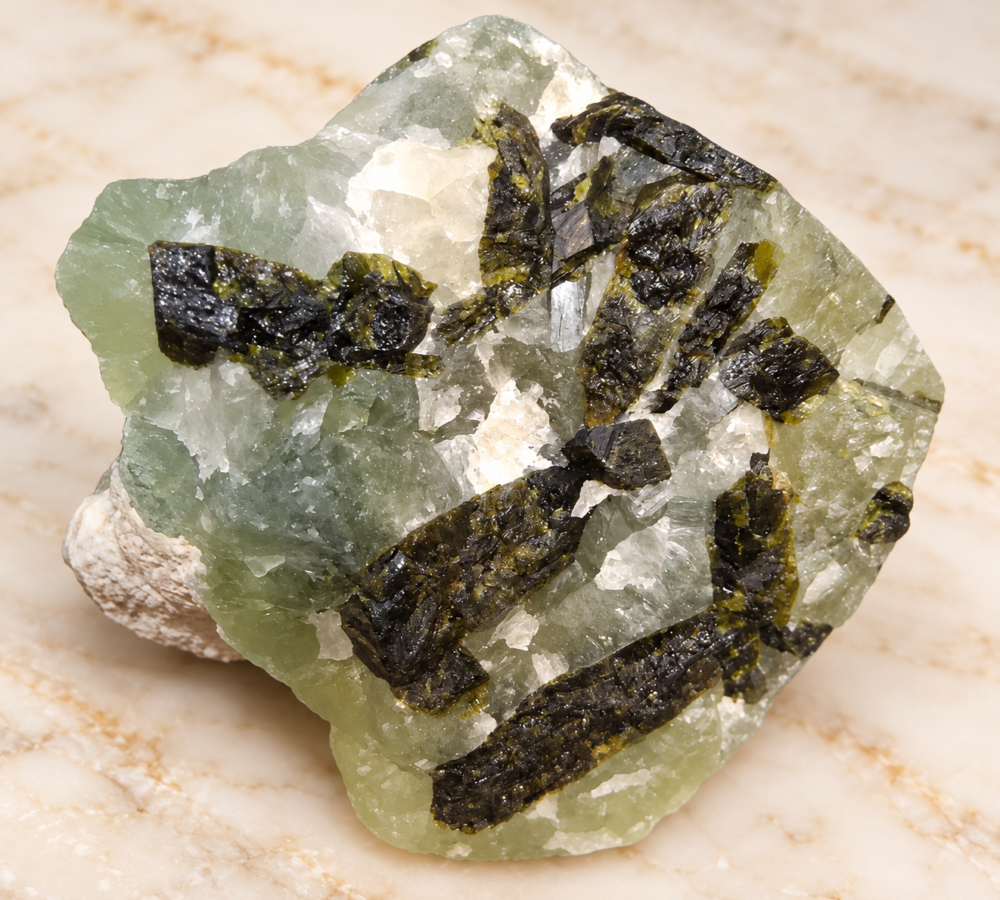
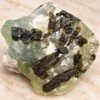
A particularly interesting feature becomes visible on the 𝐮𝐧𝐝𝐞𝐫𝐬𝐢𝐝𝐞 𝐨𝐟 𝐭𝐡𝐞 𝐬𝐩𝐞𝐜𝐢𝐦𝐞𝐧. Here, the Prehnite is associated with numerous 𝐝𝐚𝐫𝐤 𝐨𝐥𝐢𝐯𝐞-𝐠𝐫𝐞𝐞𝐧 𝐭𝐨 𝐧𝐞𝐚𝐫𝐥𝐲 𝐛𝐥𝐚𝐜𝐤 𝐄𝐩𝐢𝐝𝐨𝐭𝐞 𝐜𝐫𝐲𝐬𝐭𝐚𝐥𝐬 𝐚𝐧𝐝 𝐢𝐧𝐜𝐥𝐮𝐬𝐢𝐨𝐧𝐬. These occur as elongated to prismatic crystal forms partly embedded within and exposed between the Prehnite and associated lighter-coloured matrix material.
The contrast between the pale green Prehnite and the dark Epidote is especially pronounced on this side of the specimen. Some crystals occur individually, while others form small groups and intergrown concentrations. Their presence adds substantial mineralogical interest and means the underside is visually important rather than merely serving as a base.
Light cream to whitish associated mineral material and natural matrix are also visible between several of the Prehnite growths and around parts of the Epidote-bearing area. These features have been left in their natural state and form part of the original mineral association.
Prehnite is a calcium aluminium silicate hydroxide mineral and commonly forms pale green, yellowish-green and occasionally nearly colourless aggregates. Its characteristic botryoidal habit can develop when numerous small crystal growths combine into rounded masses, producing the characteristic grape-like surface seen prominently in this specimen.
The piece remains in its 𝐧𝐚𝐭𝐮𝐫𝐚𝐥 𝐫𝐨𝐮𝐠𝐡 𝐜𝐨𝐧𝐝𝐢𝐭𝐢𝐨𝐧. It has not been shaped into a polished decorative form, allowing its original mineral growth, contacts, surface irregularities, associated crystals and matrix to remain visible.
At nearly 7 cm across, this specimen has substantial display presence and offers two distinctly interesting viewing aspects: the rounded green botryoidal Prehnite formations on the principal display side and the contrasting Epidote-bearing mineral association visible on the underside.
𝐏𝐫𝐢𝐦𝐚𝐫𝐲 𝐔𝐬𝐞: Mineral collection, cabinet display and decorative specimen
The combination of 𝐠𝐫𝐚𝐩𝐞-𝐥𝐢𝐤𝐞 𝐠𝐫𝐞𝐞𝐧 𝐏𝐫𝐞𝐡𝐧𝐢𝐭𝐞, semi-translucent rounded growths and the contrasting dark Epidote crystals exposed on the underside gives this specimen considerably more mineralogical and decorative interest than a simple massive Prehnite rough. Both sides reveal different aspects of the specimen and make it particularly attractive for display or collection.
Reviews
There are no reviews yet.