
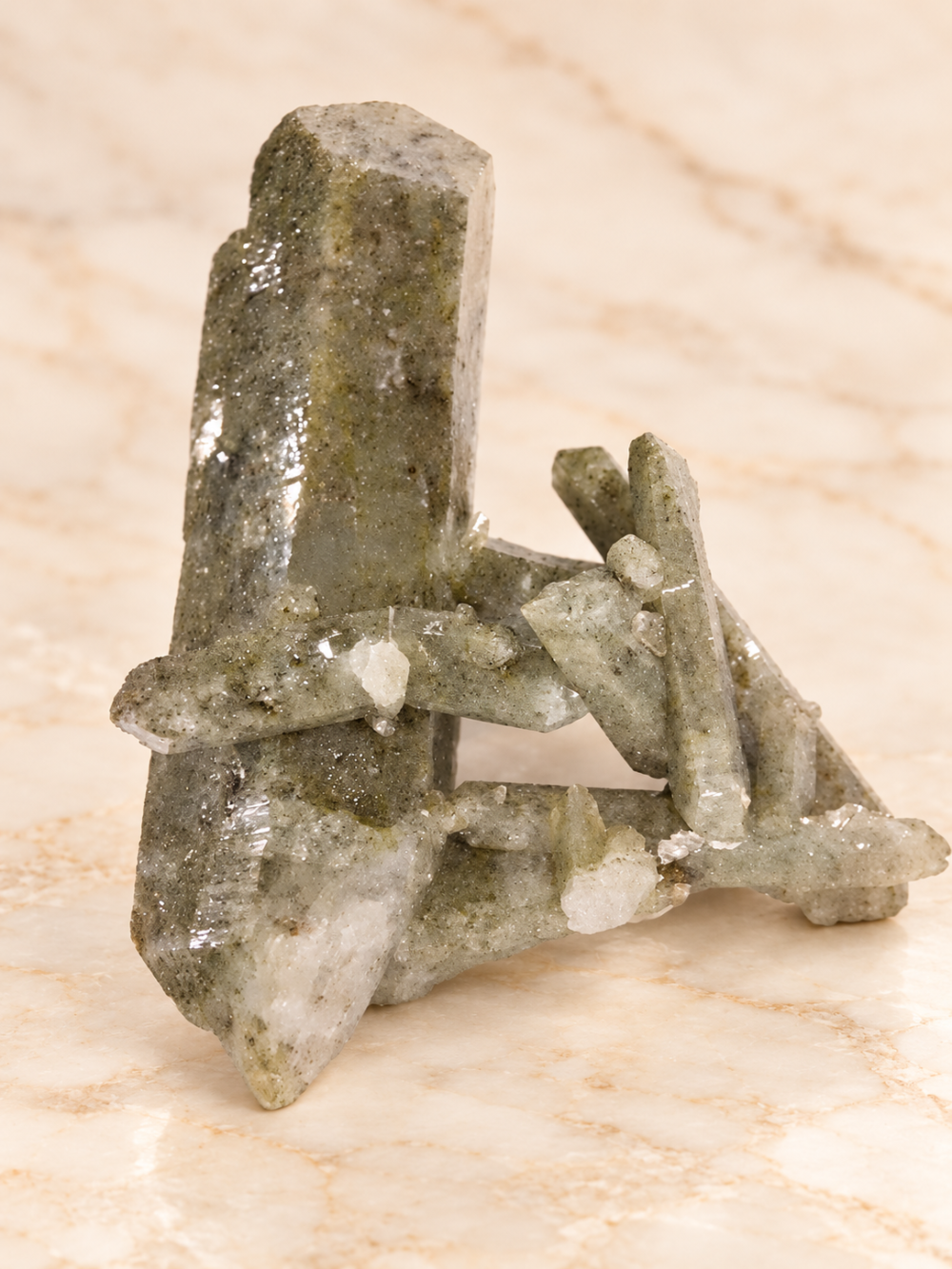
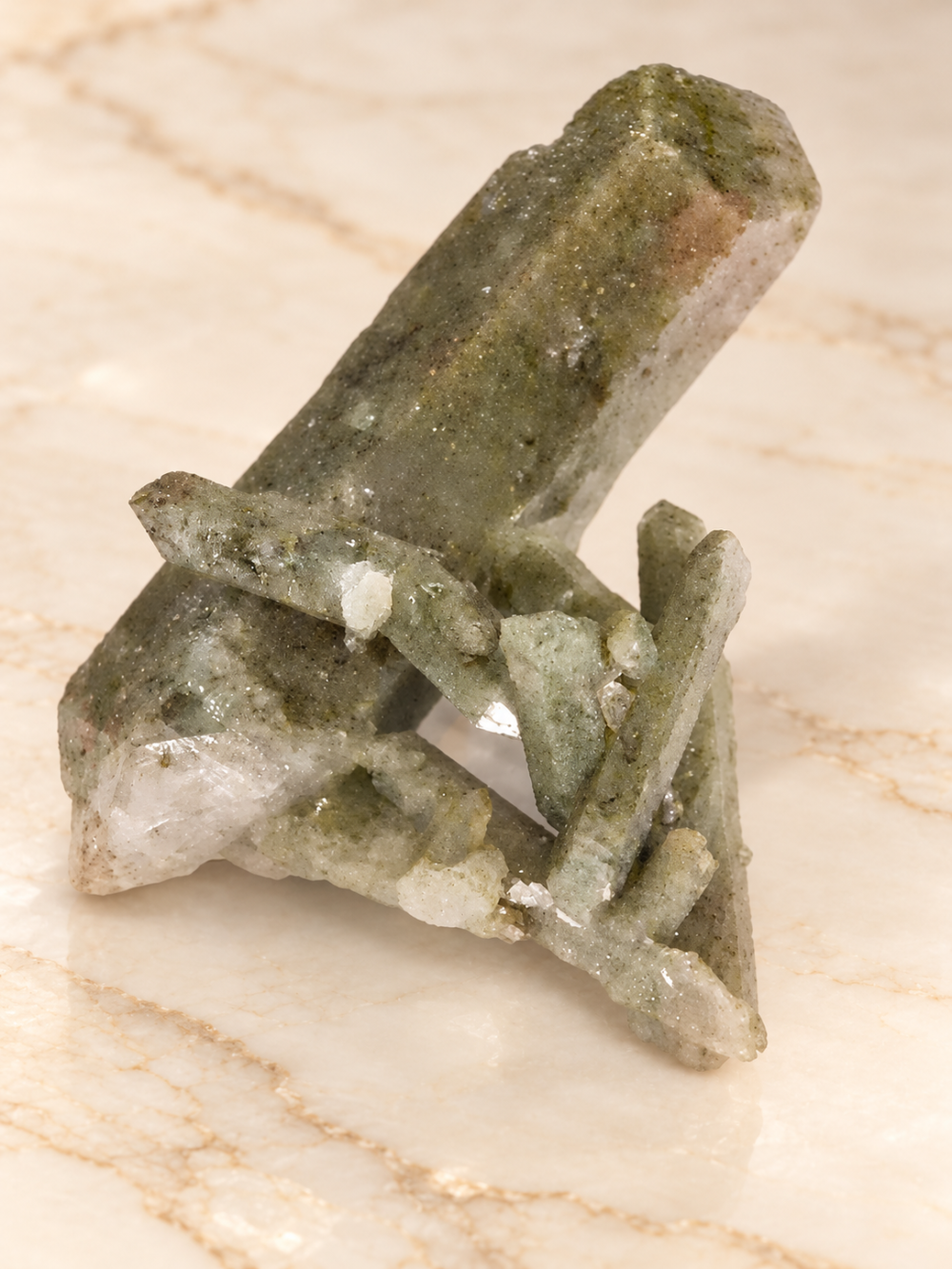
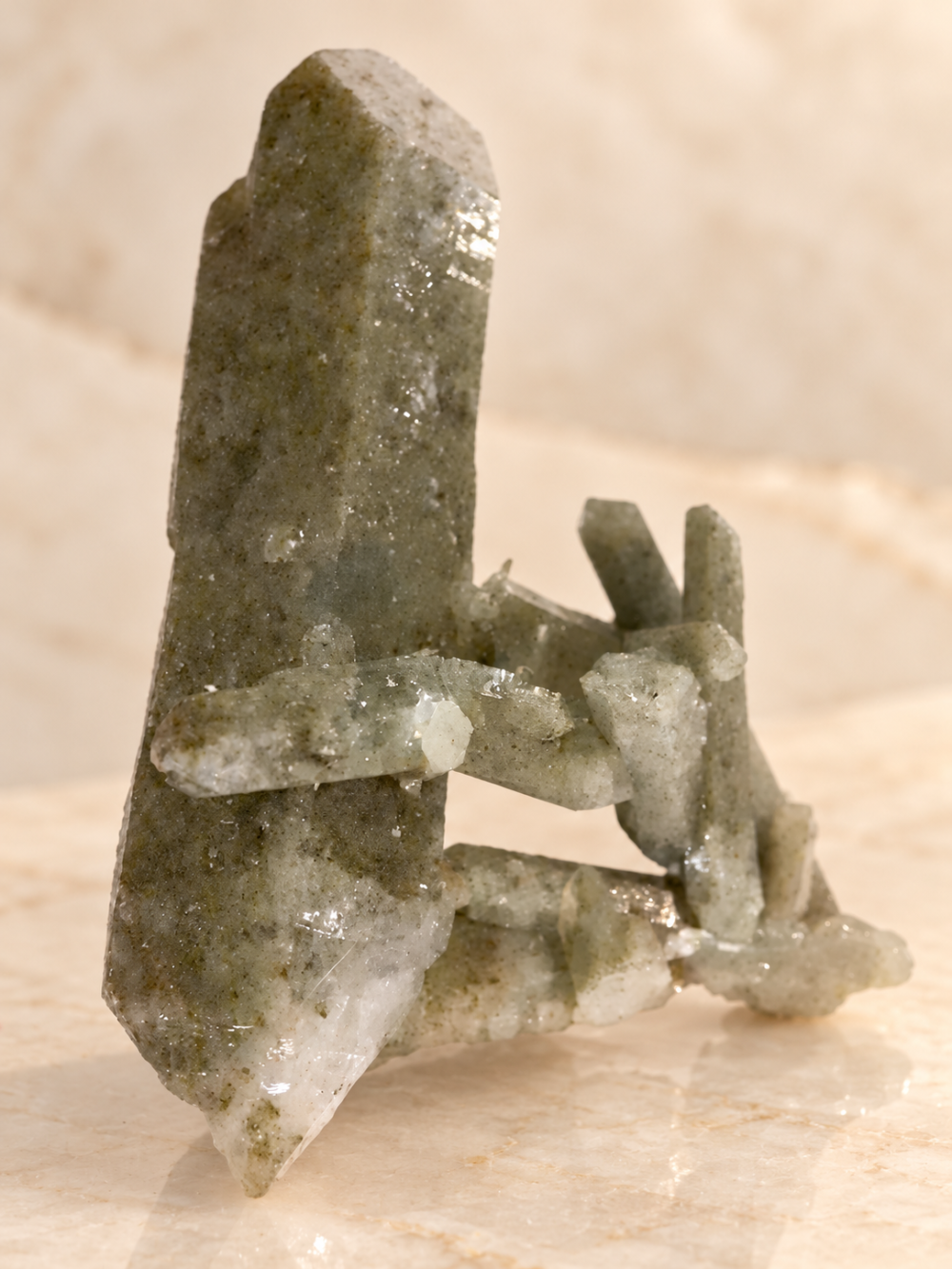
This natural Chlorite Phantom Quartz crystal cluster originates from Kharan, Balochistan, Pakistan, a locality recognised by mineral collectors for attractive Quartz specimens with distinctive internal mineral inclusions and complex growth structures.
Weighing approximately 91 carats / 18.20 grams, the specimen measures around 52.6 × 33.8 × 16.9 mm and presents a naturally formed cluster of Quartz crystals containing visible chlorite-related internal features.
The characteristic phantom structures developed during successive stages of Quartz crystal growth. At certain points during formation, fine chlorite-rich material accumulated on earlier crystal surfaces before additional Quartz continued to grow over them. These preserved internal outlines create the characteristic phantom-like layers visible within the crystals.
The contrast between the transparent to translucent Quartz and the darker greenish chlorite inclusions gives the specimen strong internal depth and allows its geological growth history to remain visually apparent.
Individual crystals may display natural growth lines, internal zoning, mineral inclusions, fine fissures and contact features resulting from their formation within the cluster. The specimen remains in its natural state, preserving original crystal faces and geological textures.
The cluster format adds further visual interest because the crystals interact at different orientations, producing changing reflections and revealing different aspects of the phantom structures depending on the viewing angle.
Because natural rough mineral specimens have irregular shapes, the stated dimensions are approximate and depend on the exact measuring points selected. They are provided as a practical indication of the specimen’s overall size.
Unique Piece: Natural individual formation
With its visible chlorite phantom structures, natural Quartz crystal development and documented Kharan, Balochistan provenance, this compact 18.20 g specimen offers both strong mineralogical interest and attractive collector character. The preserved internal growth stages provide a particularly clear visual record of the crystal’s natural geological development.
Reviews
There are no reviews yet.